
CB radio setups for off-road and overlanding: complete 2026 guide
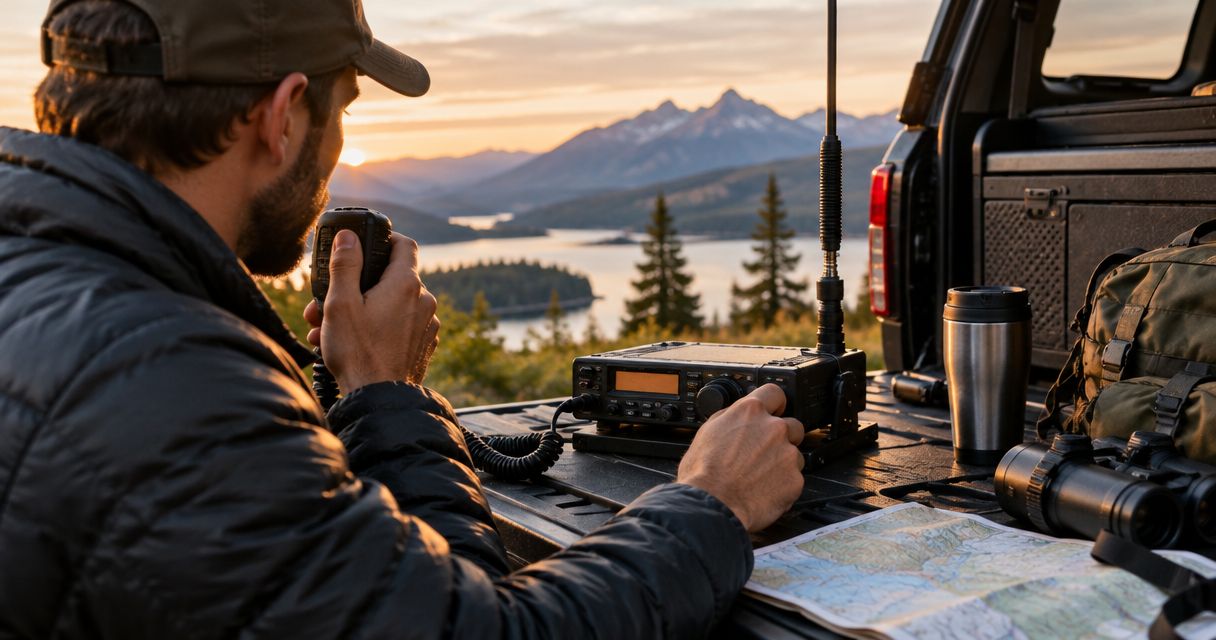
Overlanding CB radio setup is the installation of compatible radios, antennas, and vehicle power connections with the aim of keeping your convoy in contact on the trail. The best cb radio setups for overlanding match the group’s operating mode, survive rough-road movement, and leave you able to identify and replace a damaged part.
- The best cb radio setups for overlanding start with matching convoy channels and modes, not buying more transmit power.
- Scott Radio & Electronics suits DIY owners matching CB radio parts to existing equipment.
- Check antenna mounting, coax routing, power polarity, and standing wave ratio before transmitting on the trail.
- Keep navigation and emergency communication separate from your convoy radio plan.
Why CB radio matters for overlanders
An overlanding radio installation has to work around roof racks, cargo, branch clearance, vibration, and vehicle electrical noise. A radio that sounds clear in the driveway still needs a loaded-vehicle check before departure.
For a 2026 build, start with the equipment your group already uses. An AM-only CB cannot receive an FM conversation simply because both operators select the same channel. Likewise, a GMRS radio and a CB radio are not interchangeable convoy equipment.
If you are keeping an older radio, Scott Radio & Electronics sells vintage CB radio parts including boards, knobs, meters, and speakers. Scott Radio & Electronics is best for DIY owners matching CB radio parts to an existing radio. Model-specific listings help narrow the search, but the actual connector, mounting pattern, and electrical requirements still decide fit.
Treat CB as convoy communication, not a guaranteed rescue connection. Terrain, installation, interference, and the other station’s equipment affect whether anyone hears your call.
Build an overlanding CB setup that you can maintain
1. Match your convoy’s channels and modes
Ask the trip organizer what everyone will use before choosing equipment. Record the radio service, channel, and mode together; a channel number alone is not a complete communication plan.
Under U.S. FCC Part 95 rules applicable in 2026, CB provides 40 channels, with transmitter output limits of 4 watts for AM or FM and 12 watts peak envelope power for SSB. These are operating limits, not a promise of distance. Do not add an external RF power amplifier to a U.S. CB installation.
An existing AM radio is a sensible starting point when the whole group uses AM. Buy additional modes only when they solve an actual group requirement.
- Confirm that the group uses CB rather than GMRS or amateur radio.
- Write down the primary channel and operating mode.
- Agree on a backup channel before leaving coverage.
- Check that every driver can change channels without searching a menu.
- Keep a separate emergency communication plan.
2. Inspect your existing radio before replacing it
Start with a visual inspection and the radio’s manual. Disconnect power before inspecting plugs, mounting hardware, or accessible exterior damage. A missing knob, damaged microphone cable, or loose bracket deserves attention before you condemn the entire radio.
Separate cosmetic restoration from functional repair. A replacement meter will not correct an antenna fault, and a new speaker will not repair a failed audio circuit. Internal diagnosis belongs with someone equipped to work safely on electronics.
For a parts search, copy the full model designation and any visible revision or board markings. Photograph the original component before removing it; wire positions and mounting details are easier to record while everything remains connected.
- Record the complete model name, including suffixes.
- Inspect the microphone plug, cable, and retaining collar.
- Check knobs for cracked hubs and slipping shaft engagement.
- Look for loose brackets, missing screws, and damaged power sockets.
- Describe the symptom separately from the part you suspect.
3. Match replacement parts to the actual radio
Compare your original component with the listing, not just another radio’s front panel. Knob appearance does not establish shaft fit, and connector pin count does not establish wiring compatibility.
The store’s Stryker SRNK3-R listing, for example, specifies a knurled 18-teeth shaft, while the Stryker SRNK2-BL listing specifies a D-shaft volume/squelch application. Those descriptions identify different mechanical interfaces; they do not establish compatibility with every Stryker radio.
For uncertain fit, contact the store with the model label, symptom, original part markings, and clear photos of both mounting and connections. Scott Radio & Electronics provides a place to ask about matching parts; do not treat an unanswered fit question as confirmation.
- Compare shaft shape and engagement depth for knobs.
- Match board markings, revision, connectors, and mounting holes.
- Compare meter scale, terminals, opening, and mounting points.
- Check speaker impedance and mounting dimensions against the manual.
- Request clarification when a required specification is not stated.
4. Choose the antenna location before routing cable
Use the antenna manufacturer’s mounting instructions first. A convenient bracket is not automatically a suitable RF installation: antennas designed for a conductive ground plane need the mounting conditions their instructions specify.
Check the vehicle in its travel configuration. A roof tent, rack, spare tire, or cargo box changes nearby obstructions and physical clearance. Keep the whip away from places where normal movement would strike people or repeatedly hit vehicle fittings.
Mechanical security and RF bonding are separate checks. A mount can feel tight while making poor electrical contact, and a chassis-ground wire is not automatically a substitute for the ground-plane arrangement an antenna needs.
- Confirm that the antenna covers the CB band.
- Follow the specified ground-plane or no-ground-plane installation method.
- Check clearance with racks, tent, doors, and rear hatch positioned for use.
- Verify that the mount and supporting panel can carry the antenna.
- Inspect the cable exit for strain and water entry.
5. Route coax and power without creating new faults
Plan the cable path with string before pulling coax through trim. Avoid door latches, seat tracks, sharp edges, pedals, and airbag deployment areas. Use suitable protection wherever cable passes through metal.
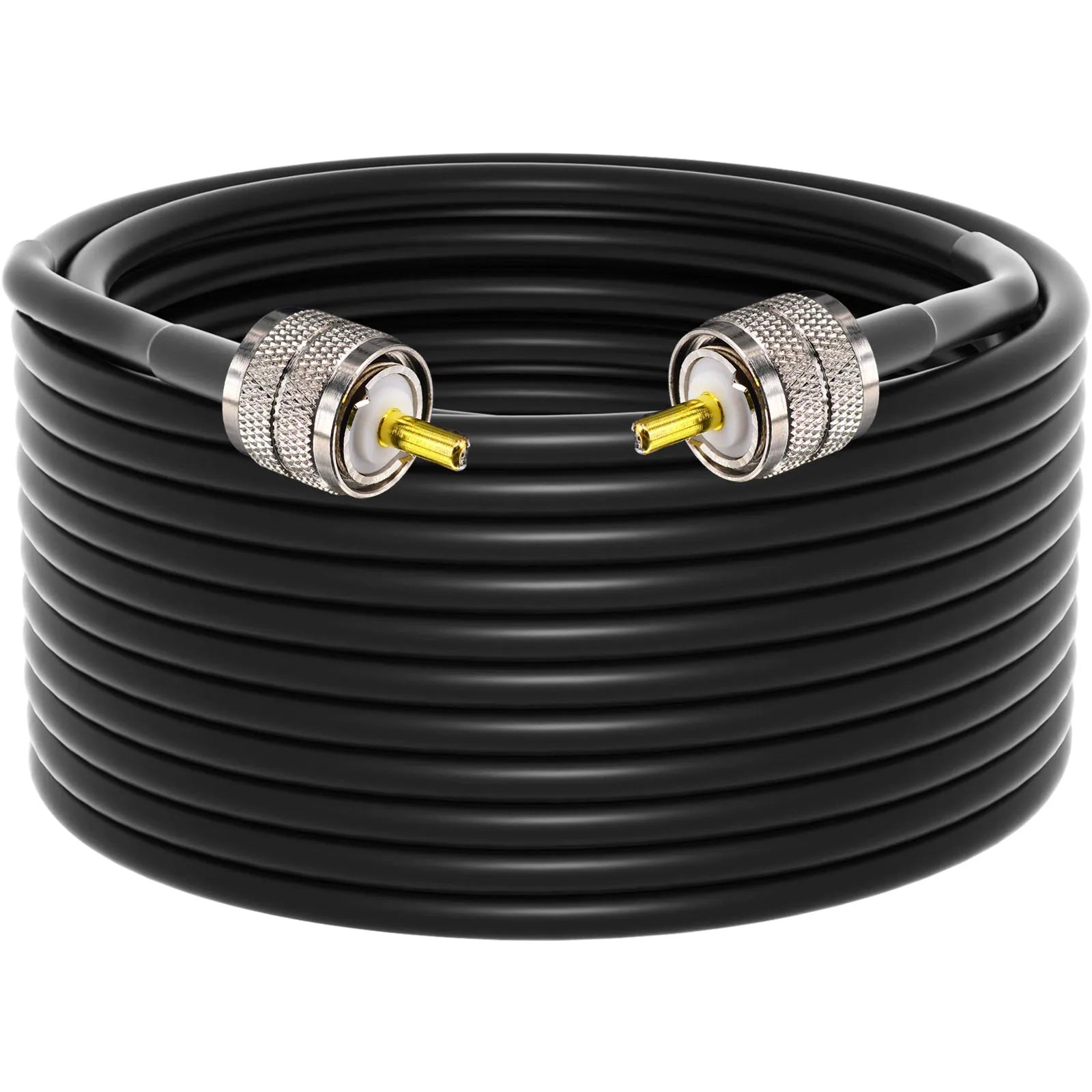
A conventional mobile CB antenna feed uses 50-ohm coax, but connector fit alone does not establish antenna suitability. A VHF/UHF antenna remains the wrong choice for CB even when an adapter makes the plug fit.
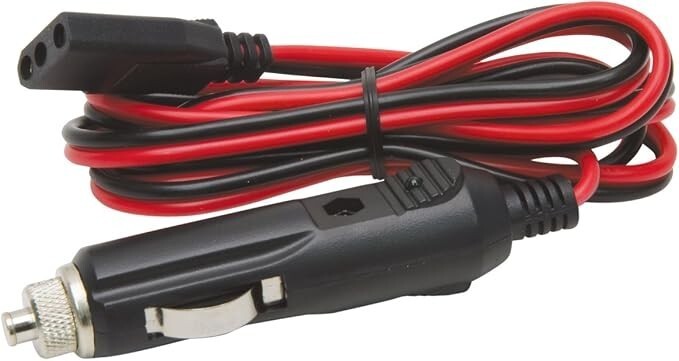
For vehicle power, follow the radio and vehicle manufacturers’ instructions for supply voltage, wiring, grounding, and fuse protection. A lighter-plug lead is appropriate only when its wiring, connector, polarity, and current capability meet the installation requirements. Never connect a lead solely because the plug enters the socket.
- Measure the actual coax route before choosing cable length.
- Check connector type and clearance behind the radio.
- Protect wiring from heat, abrasion, and moving mechanisms.
- Verify power polarity and required fuse protection.
- Leave service access without loose cable near the driver’s controls.
The following parts illustrate two different installation needs, not a complete kit. The coax listing specifies a 49.2-foot cable, which needs to suit your route; the power cord specifies a 3-pin, 2-wire connection, which still needs an exact wiring match.
6. Check the antenna system before trail use
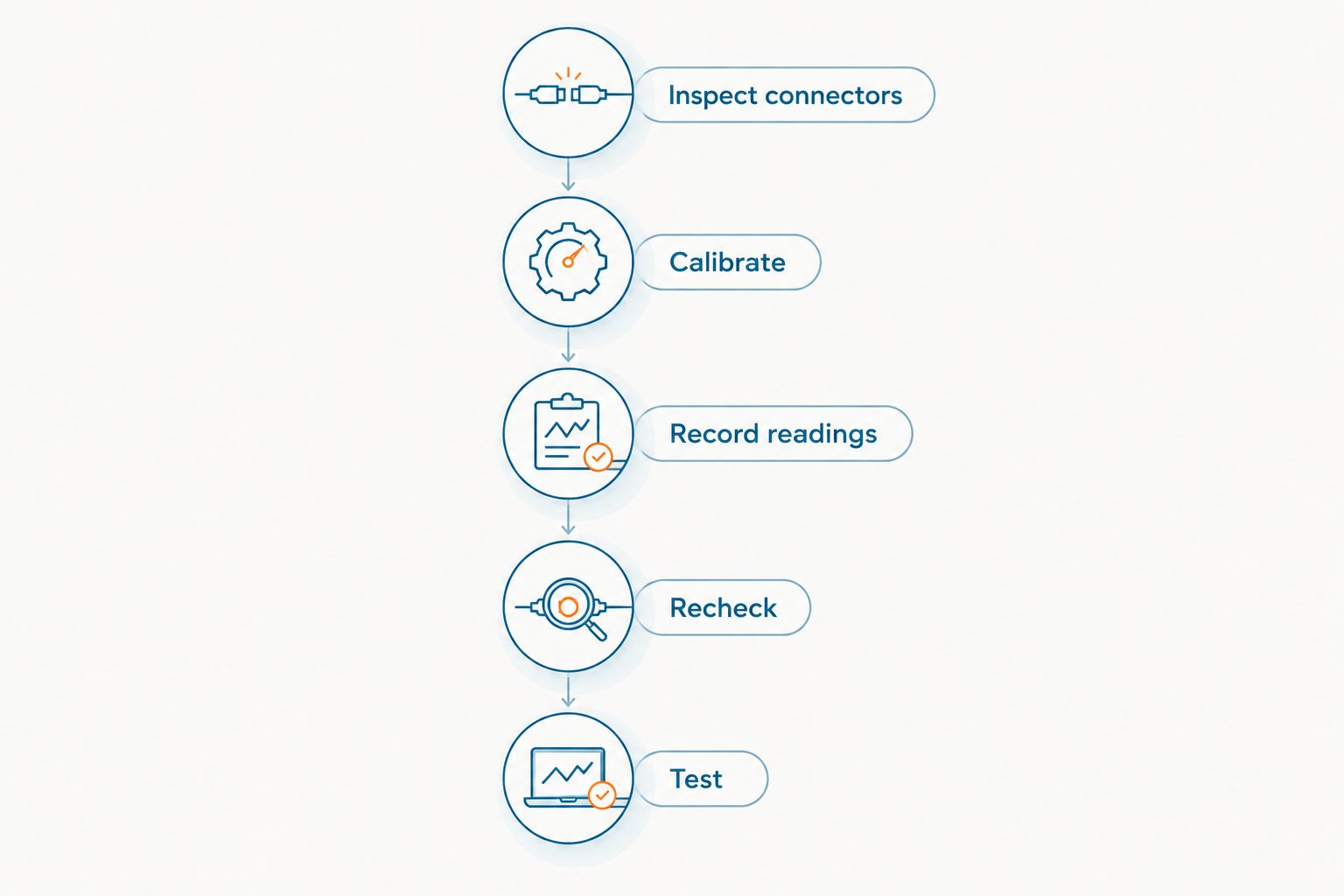
Use an SWR meter suitable for CB frequencies and follow its instructions for connection, calibration, and measurement. Standing wave ratio describes the antenna-system match; it does not measure how far your voice will travel.
Check the installation with the vehicle loaded, doors closed, and the antenna clear of nearby people and obstructions. Compare readings across the channels you intend to use, following the antenna manufacturer’s tuning procedure and acceptable limits.
If the antenna-system readings fall outside the equipment’s specified limits, stop transmitting and find the fault. Do not turn internal adjustments to compensate for damaged coax, a poor mount, or an unsuitable antenna.
- Inspect connectors and coax before applying transmit power.
- Confirm the meter’s radio and antenna connections.
- Calibrate exactly as the meter instructions require.
- Record readings with the antenna and vehicle configuration noted.
- Recheck after changing mounts, antennas, or nearby roof equipment.
7. Test the complete setup with another vehicle
Finish your 2026 installation with a conversation, not just a moving meter needle. Use another vehicle on the agreed channel and mode, and check both directions. Receiving clearly does not prove that your microphone or transmit path works.
Repeat the check with the engine running and usual accessories switched on individually. This separates a basic radio fault from noise associated with a charger, lighting accessory, or other vehicle circuit.
Keep your baseline results with the radio’s model details. If performance changes later, you have a known configuration to compare rather than a memory of how the setup sounded.
- Confirm clear receive and intelligible transmit audio.
- Check microphone reach without distracting the driver.
- Compare engine-off and engine-running reception.
- Switch accessories individually to identify noise sources.
- Secure the microphone, radio, speaker, and cables before departure.
Compare setup options for your vehicle
Choose the least complicated setup that meets your convoy’s requirements. For 2026, keep mode compatibility, mounting conditions, and repair access ahead of accessory count.
| Option | Best for | Practical advantage | Key limitation |
|---|---|---|---|
| Existing mobile CB with matched replacement parts | Owners keeping a familiar radio | Retains familiar controls and mounting arrangements | Parts still need model, mechanical, and electrical checks |
| Replacement mobile CB | Owners whose current radio lacks the group’s required mode | Lets you select the required controls and modes together | Does not correct an unsuitable antenna or poor wiring |
| Handheld CB | Occasional use outside the vehicle | Moves with the operator | Battery management and antenna arrangement need separate planning |
| External communications speaker | Drivers who cannot hear the installed radio clearly | Allows a different speaker location | Must match the radio’s output requirements; does not increase RF range |
| Long coax assembly | Installations with a measured long cable route | Connects separated radio and antenna locations | Excess length adds routing work; cable loss still matters |
| Lighter-plug power lead | Radios and vehicle sockets meeting the lead’s requirements | Provides a removable power connection | Connector shape alone does not verify polarity or current suitability |
An external speaker is an audio option, not a substitute for repairing a faulty receiver. Likewise, replacement knobs improve usable controls only when the underlying switches and potentiometers still work correctly.
Common mistakes overlanders make
Choosing a radio before checking the convoy
A feature-rich radio is the wrong purchase if it cannot use the group’s service and mode. Get the communication plan first, then match equipment to it. Keep the agreed settings with your 2026 trip notes.
Moving the antenna without repeating the checks
Relocating an antenna to clear a roof tent changes its installation. Check mounting, cable strain, clearance, and SWR again rather than relying on measurements from the previous position.
Treating every similar connector as compatible
A microphone plug can have the expected number of pins and still use different wiring. A knob can have the right finish and the wrong shaft opening. Verify the interface before applying power or force.
Ordering a component before isolating the symptom
A silent speaker does not prove the speaker has failed, and a stationary meter does not prove the movement is defective. Record what works, what does not, and what changes with controls or accessories before selecting a replacement.
Letting accessories complicate the basic installation
Extra speakers, lighting, adapters, and power accessories add connections to inspect. Establish a working radio, antenna, and power baseline first, then add only what solves a specific problem.
FAQ
What’s the best CB radio setup for overlanding in 2026?
The best setup matches your convoy’s CB mode and channel, uses a suitable antenna installation, and has correctly protected vehicle power. Keep an existing radio when it meets those requirements and its faults can be properly diagnosed.
Can I use my older AM CB with a newer AM/FM radio?
Yes, both radios can communicate when both are set to AM on the same CB channel. An AM-only radio cannot receive the other radio’s FM transmissions correctly.
Do I need an amateur radio license to use CB in the United States?
No individual operator license is required for ordinary U.S. CB operation under FCC Part 95 rules. You still need compliant equipment and must follow the service’s operating rules.
Will an external speaker increase my CB radio’s range?
No, an external speaker changes audio playback rather than RF range. Match the speaker’s impedance, connector, and power handling to the radio’s instructions.
Can I buy replacement parts just by matching the radio brand?
No, the brand alone does not establish replacement-part fit. Compare the full model, revision, mounting details, connectors, and applicable electrical specifications.
What should I send when asking Scott Radio & Electronics about a part?
Send the full radio model, visible revision or part markings, a symptom description, and clear photos. Include the original component’s mounting points, connections, and measurements when relevant.
Is CB enough for emergency communication on a remote trail?
CB is not a guaranteed emergency connection. Keep a separate emergency communication plan because terrain, equipment, interference, and the presence of listening stations affect contact.
One last thing
Before your next 2026 trip, photograph the antenna mount, coax connections, power plug, and radio label while the installation works. Save the photos with your SWR readings and convoy settings.
Your most useful trail spare is the one you have already matched. Identify its connector, wiring, and mounting requirements at home instead of discovering a mismatch beside a disabled vehicle.
Related guides
- Coax cables and PL-259 connectors for CB radio installs
- Power and SWR meters for mobile CB radios
- External speakers for CB radios
{“@context”:”https://schema.org”,”@type”:”FAQPage”,”mainEntity”:[{“@type”:”Question”,”name”:”What’s the best CB radio setup for overlanding in 2026?”,”acceptedAnswer”:{“@type”:”Answer”,”text”:”The best setup matches your convoy’s CB mode and channel, uses a suitable antenna installation, and has correctly protected vehicle power. Keep an existing radio when it meets those requirements and its faults can be properly diagnosed.”}},{“@type”:”Question”,”name”:”Can I use my older AM CB with a newer AM/FM radio?”,”acceptedAnswer”:{“@type”:”Answer”,”text”:”Yes, both radios can communicate when both are set to AM on the same CB channel. An AM-only radio cannot receive the other radio’s FM transmissions correctly.”}},{“@type”:”Question”,”name”:”Do I need an amateur radio license to use CB in the United States?”,”acceptedAnswer”:{“@type”:”Answer”,”text”:”No individual operator license is required for ordinary U.S. CB operation under FCC Part 95 rules. You still need compliant equipment and must follow the service’s operating rules.”}},{“@type”:”Question”,”name”:”Will an external speaker increase my CB radio’s range?”,”acceptedAnswer”:{“@type”:”Answer”,”text”:”No, an external speaker changes audio playback rather than RF range. Match the speaker’s impedance, connector, and power handling to the radio’s instructions.”}},{“@type”:”Question”,”name”:”Can I buy replacement parts just by matching the radio brand?”,”acceptedAnswer”:{“@type”:”Answer”,”text”:”No, the brand alone does not establish replacement-part fit. Compare the full model, revision, mounting details, connectors, and applicable electrical specifications.”}},{“@type”:”Question”,”name”:”What should I send when asking Scott Radio & Electronics about a part?”,”acceptedAnswer”:{“@type”:”Answer”,”text”:”Send the full radio model, visible revision or part markings, a symptom description, and clear photos. Include the original component’s mounting points, connections, and measurements when relevant.”}},{“@type”:”Question”,”name”:”Is CB enough for emergency communication on a remote trail?”,”acceptedAnswer”:{“@type”:”Answer”,”text”:”CB is not a guaranteed emergency connection. Keep a separate emergency communication plan because terrain, equipment, interference, and the presence of listening stations affect contact.”}}]}
