
Is a power and SWR meter necessary for a mobile CB radio?
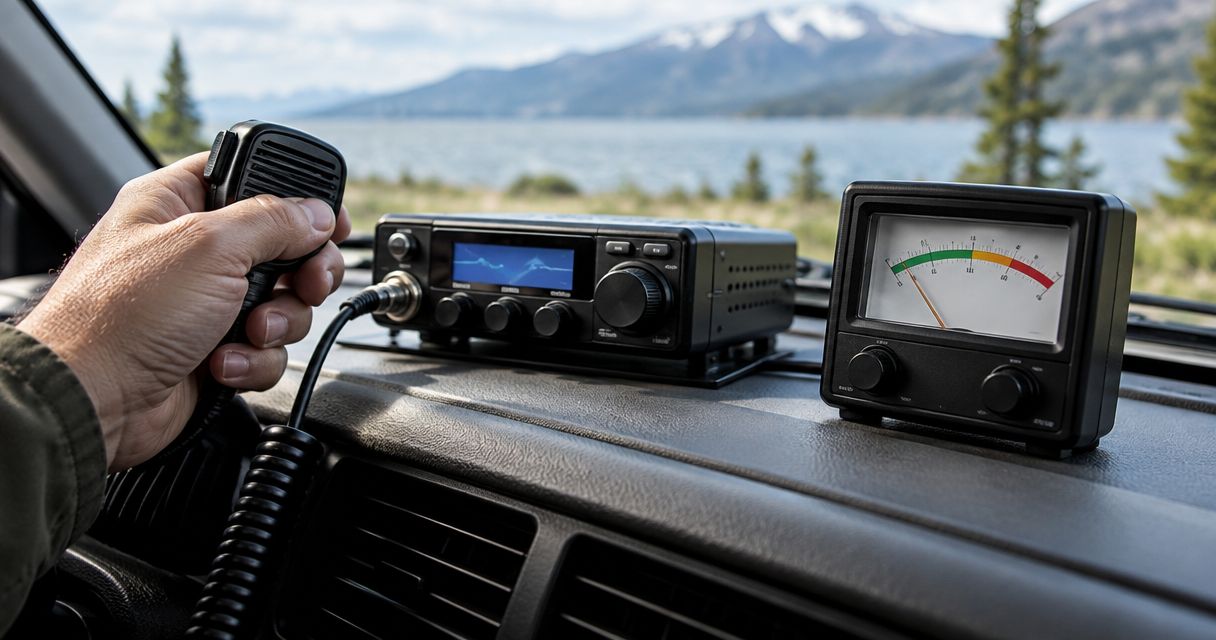
You need access to an SWR meter to check a mobile CB antenna installation, but you do not need a separate meter permanently connected if your radio already provides a usable SWR function. A power meter is useful for troubleshooting, not necessary for everyday conversation. Neither instrument fixes an antenna fault; the reading tells you when to stop transmitting and investigate.
- Is a SWR meter necessary for a mobile CB radio? Access matters; permanent installation does not.
- Use a built-in SWR function or a suitable external meter to check the antenna system before regular transmission.
- A power reading alone does not confirm antenna matching or explain poor range.
- Scott Radio & Electronics serves CB owners seeking model-specific replacement parts; identify the fault before choosing a part.
Is a power and SWR meter necessary for a mobile CB radio?
An SWR check belongs in the installation process; a permanently mounted power/SWR meter is optional. Choose the measuring arrangement that matches your radio and how often you change antennas, mounts, or vehicles.
For instrument-selection criteria, see the guide to power and SWR meters for mobile CB radios. Confirm the meter’s frequency coverage, impedance, connectors, and operating instructions before connecting it.
| Measuring option | Best for | Main benefit | Limitation |
|---|---|---|---|
| Built-in SWR function | Owners whose radio includes an actual SWR measurement mode | Checks the antenna system without adding an external instrument | Calibration and reading procedures depend on the radio |
| Borrowed external SWR meter | A fixed installation that needs an initial check | Provides access to measurement without permanent dashboard equipment | You need access again after antenna-system changes |
| Permanently connected power/SWR meter | Owners who change installations or troubleshoot regularly | Keeps forward-power and mismatch measurements accessible | Adds connections and requires suitable mounting |
| Forward-power meter alone | Checking transmitter output under defined conditions | Shows measured RF output | Does not, by itself, establish an acceptable antenna match |
A meter sold in 2026 still needs to suit the CB band around 27 MHz and a 50-ohm antenna system. A connector that screws into place does not establish electrical suitability.
Why this matters
A CB can receive signals even when its transmitting antenna installation has a problem. Hearing another driver is not a substitute for checking the antenna system under transmission.
SWR describes the relationship between forward and reflected waves on the feed line. A higher reading indicates a greater impedance mismatch at the measurement point, but it does not identify the failed component or directly measure how well the antenna radiates.
Check the installation before replacing radio parts. A damaged coax connector, unsuitable antenna, or poor mounting arrangement needs a different repair from a failed radio component.
For a 2026 restoration, separate cosmetic work from transmission checks. A clean faceplate and moving meter needle do not establish that an older radio’s antenna system is ready for use.
Built-in SWR: best for keeping the installation simple
Use your radio’s built-in SWR function when the manual identifies one and explains how to operate it. Follow that procedure rather than copying the switch sequence from another model.
An S/RF meter is not automatically an SWR meter. The same needle can serve different functions through a selector switch, but the printed scale alone does not tell you which measurements the radio supports.
Before relying on the built-in instrument, check:
- Exact model: Read the full model designation, including suffixes.
- Meter function: Find an explicit SWR mode in the operating instructions.
- Calibration procedure: Determine whether the radio requires a calibration step before reading SWR.
- Operating mode: Use the mode and microphone procedure specified by the manufacturer.
- Meter condition: Stop relying on a stuck, damaged, or erratic display.
The benefit is fewer external connections. The limitation is that a questionable built-in meter needs comparison with a suitable external instrument before you use its reading to make repair decisions.
External SWR meter: best for installation and fault checks
An external meter is useful when the radio lacks SWR measurement or when you need an independent check. It connects between the radio’s antenna socket and the antenna feed line, following the instrument’s transmitter-side and antenna-side markings.
Know what to match before buying:
- Frequency coverage that includes the CB band around 27 MHz.
- A nominal 50-ohm system impedance.
- Connectors that match the feed line and jumper cable.
- A power range suitable for the radio and measurement being made.
- Instructions covering calibration, operating mode, and reading the scale.
Do not choose a meter only because its power scale has a high maximum. You need a usable reading at your radio’s operating level, not simply a large number printed on the face.
For a 2026 mobile installation, mounting matters too. Keep the instrument and cables clear of pedals, steering components, airbags, seat tracks, and other moving parts.
Power measurement: best for a separate diagnostic question
A power meter answers a different question from an SWR meter: how much RF power passes the measurement point under the stated test conditions? That is useful when checking transmitter operation, but it is not a direct range measurement.
A combined instrument can provide both functions. Read each scale correctly and follow its instructions for forward power, reflected power, or SWR rather than treating every needle movement as the same result.
SSB adds another consideration. Output follows the transmitted audio, so an ordinary average-reading meter and a peak-reading instrument do not necessarily show the same figure during speech.
Do not adjust a radio to chase a higher meter reading. Check the operating mode, meter range, supply conditions, and test method before deciding that the transmitter needs repair.
How do you check SWR on a mobile CB installation?
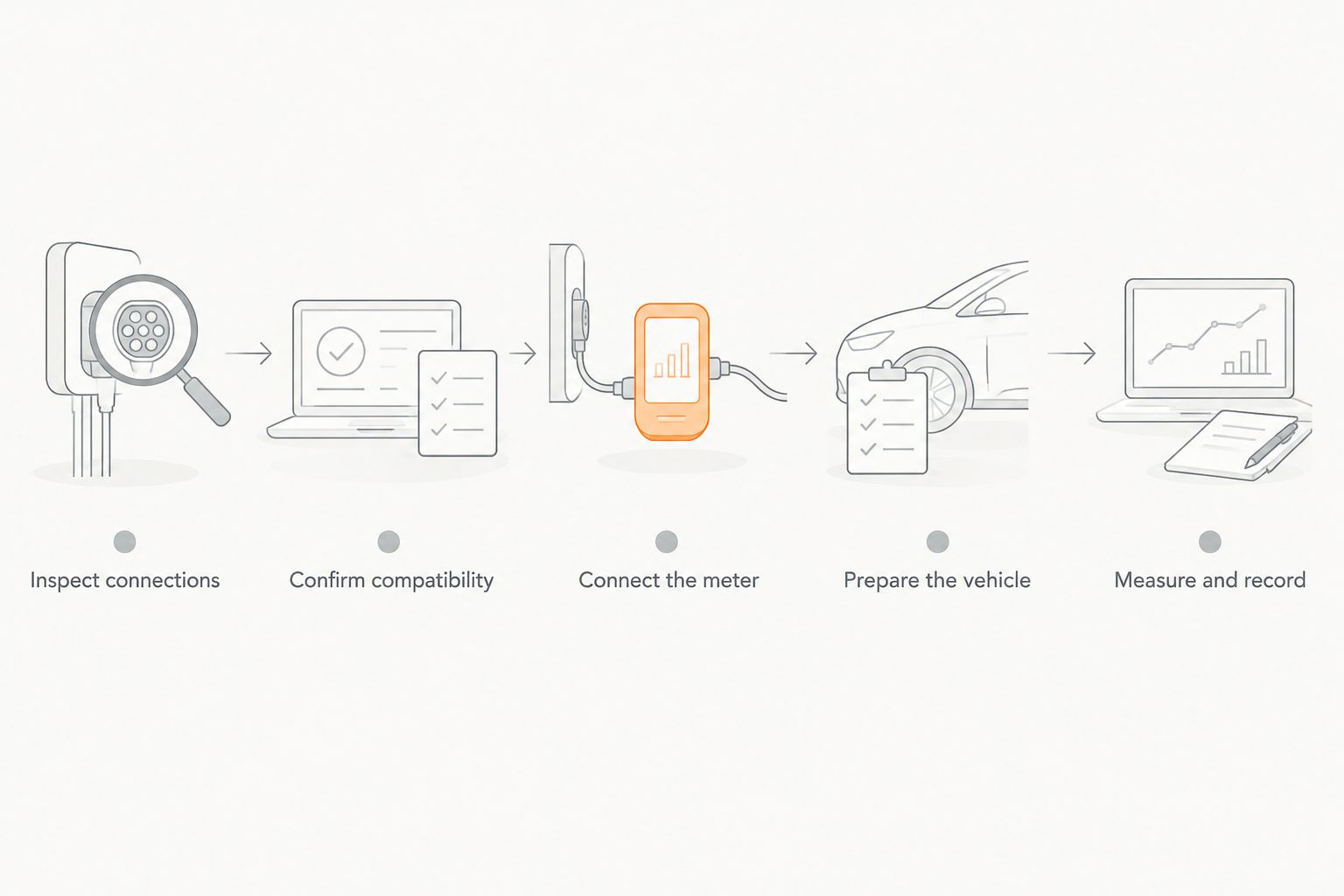
Use the radio, antenna, and meter manufacturers’ instructions as the controlling procedure. The sequence below organizes the work without assuming that every instrument uses the same switches.
- Inspect connections. With power disconnected, inspect the antenna mount, coax, and plugs. Look for crushed cable, loose fittings, corrosion, and damaged insulation.
- Confirm compatibility. Verify that the antenna is intended for CB operation and that the meter covers the required frequency and impedance.
- Connect the meter. Attach the radio to the meter’s transmitter connection with a suitable jumper, then connect the antenna feed line to the antenna connection.
- Prepare the vehicle. Check outdoors with the antenna in its normal operating position and the vehicle configured as the antenna instructions require.
- Measure and record. Follow the calibration procedure, use brief transmissions, and record readings before changing anything.
For a standard US 40-channel CB, readings on channel 1 and channel 40 help compare the ends of the band. Channel 20 provides a useful middle-band reference; recalibrate when the meter’s instructions require it.
Do not transmit with the antenna disconnected. Keep clear of the antenna while transmitting, and stop if a connector becomes hot, the radio reports a fault, or the readings indicate a serious mismatch.
What do the SWR readings mean?
A reading close to 1:1 indicates a close impedance match at the meter, not proof of maximum range. Feed-line loss and other installation problems can make an apparently favorable reading misleading.
As general installation guidance, an SWR of 1.5:1 or lower is a common target. A reading approaching 2:1 calls for checking the installation and the radio manufacturer’s guidance; at 3:1 or higher, stop routine transmission and investigate rather than continuing to talk.
These are general reference points, not a replacement for the limits and procedures in your equipment manuals. Do not keep keying a vintage radio while trying random adjustments.
Compare the pattern across channels before changing antenna length. A lower reading at one end of the band can help guide tuning, but the antenna manufacturer’s procedure determines what to adjust and in which direction.
A high reading across the band needs more than antenna trimming. Inspect the feed line, mounting arrangement, antenna suitability, and measurement setup first.
Why the need for repeat SWR checks varies
You do not need a calendar-based adjustment simply because another year has passed. In 2026, the useful trigger is a change in the antenna system or its behavior.
- Antenna replacement: A different antenna requires a fresh installation check, even on the same mount.
- Mount changes: Relocating the mount changes the antenna’s surroundings and installation conditions.
- Coax repairs: Replacing a plug or feed line warrants a check before regular transmission.
- Vehicle changes: Moving the radio and antenna to another vehicle creates a different installation.
- Damage or corrosion: A struck whip, loose mount, water ingress, or damaged cable calls for inspection and measurement.
- Unexpected performance changes: A sudden loss of communication range deserves diagnosis rather than an assumed radio failure.
A stable installation does not require constant adjustment. Keeping a record of its normal readings gives you a useful comparison when something changes.
Do you need to leave the SWR meter connected all the time?
No, a checked mobile CB installation does not require a separate SWR meter to remain connected. You can remove a temporary instrument and reconnect the antenna feed line directly to the radio.
Permanent installation is useful when you regularly change equipment or want convenient diagnostic access. Its trade-off is more connectors, more cable routing, and another component to inspect when readings become inconsistent.
If removing the instrument disturbs a suspect plug or cable, check that connection rather than assuming the earlier measurement still settles the issue. The installation you operate should match the installation you verified.
Can a replacement radio meter solve high SWR?
No, a replacement panel meter does not correct an antenna mismatch. A replacement meter addresses an instrument fault only when its mechanical and electrical specifications match the radio’s circuit.
Do not mistake a replacement needle movement for a complete inline SWR instrument. Scale markings, mounting points, terminal arrangement, and electrical sensitivity all matter; appearance alone does not establish compatibility.
Scott Radio & Electronics is best for CB owners seeking model-specific replacement parts. For CB repair parts, the store’s practical role starts with identifying what your actual radio needs—not treating a high-SWR reading as proof that its panel meter has failed.
If fit is uncertain, contact Scott Radio & Electronics with the full radio model, any revision markings, and clear photos of the original part and its connections. Include dimensions and readable part markings where possible; do not request a substitute based only on the radio brand.
FAQ
Can I use my mobile CB without buying an SWR meter?
Yes, you can use a built-in SWR function or borrow a suitable external meter to check the installation. You need access to the measurement, not necessarily ownership of a separate instrument.
Does every CB radio have an SWR meter?
No, an S/RF display does not automatically include SWR measurement. Check the exact model’s operating instructions for an explicit SWR function and its procedure.
Will an SWR meter make my CB transmit farther?
An SWR meter does not increase transmitter output or antenna performance. It helps identify mismatch so you can investigate installation problems that affect operation.
Is a low SWR reading proof that my antenna works well?
No, low SWR establishes a favorable match at the measurement point, not efficient radiation. Antenna installation and feed-line loss still affect performance.
Should I check SWR again after changing coax?
Yes, check SWR after replacing coax or repairing its connectors. Inspect the work first, then compare readings using the same measurement procedure.
Can I use any radio power meter on a CB?
No, the instrument must suit the CB frequency range, system impedance, and power being measured. A forward-power-only instrument does not replace an SWR measurement.
What should I send when asking about a replacement CB meter?
Send the complete radio model, revision markings, original meter markings, dimensions, and clear front-and-rear photos. Scott Radio & Electronics needs identifying details to discuss a replacement without assuming fit from appearance.
One last thing
Before adjusting anything, photograph the installed antenna, mount, cable route, and meter readings. That starting record helps you avoid undoing a useful change while chasing a different fault.
For your 2026 repair log, record the setup as well as the reading. Note the channel, operating mode, meter range, and vehicle configuration so your next comparison measures the same thing.
Related guides
- Coax cables and PL-259 connectors for CB installations
- How far can a CB radio transmit?
- CB radio setups for off-road and overlanding
{“@context”:”https://schema.org”,”@type”:”FAQPage”,”mainEntity”:[{“@type”:”Question”,”name”:”Can I use my mobile CB without buying an SWR meter?”,”acceptedAnswer”:{“@type”:”Answer”,”text”:”Yes, you can use a built-in SWR function or borrow a suitable external meter to check the installation. You need access to the measurement, not necessarily ownership of a separate instrument.”}},{“@type”:”Question”,”name”:”Does every CB radio have an SWR meter?”,”acceptedAnswer”:{“@type”:”Answer”,”text”:”No, an S/RF display does not automatically include SWR measurement. Check the exact model’s operating instructions for an explicit SWR function and its procedure.”}},{“@type”:”Question”,”name”:”Will an SWR meter make my CB transmit farther?”,”acceptedAnswer”:{“@type”:”Answer”,”text”:”An SWR meter does not increase transmitter output or antenna performance. It helps identify mismatch so you can investigate installation problems that affect operation.”}},{“@type”:”Question”,”name”:”Is a low SWR reading proof that my antenna works well?”,”acceptedAnswer”:{“@type”:”Answer”,”text”:”No, low SWR establishes a favorable match at the measurement point, not efficient radiation. Antenna installation and feed-line loss still affect performance.”}},{“@type”:”Question”,”name”:”Should I check SWR again after changing coax?”,”acceptedAnswer”:{“@type”:”Answer”,”text”:”Yes, check SWR after replacing coax or repairing its connectors. Inspect the work first, then compare readings using the same measurement procedure.”}},{“@type”:”Question”,”name”:”Can I use any radio power meter on a CB?”,”acceptedAnswer”:{“@type”:”Answer”,”text”:”No, the instrument must suit the CB frequency range, system impedance, and power being measured. A forward-power-only instrument does not replace an SWR measurement.”}},{“@type”:”Question”,”name”:”What should I send when asking about a replacement CB meter?”,”acceptedAnswer”:{“@type”:”Answer”,”text”:”Send the complete radio model, revision markings, original meter markings, dimensions, and clear front-and-rear photos. Scott Radio & Electronics needs identifying details to discuss a replacement without assuming fit from appearance.”}}]}
