
CB Radio Accessories for Truckers That Earn Their Keep
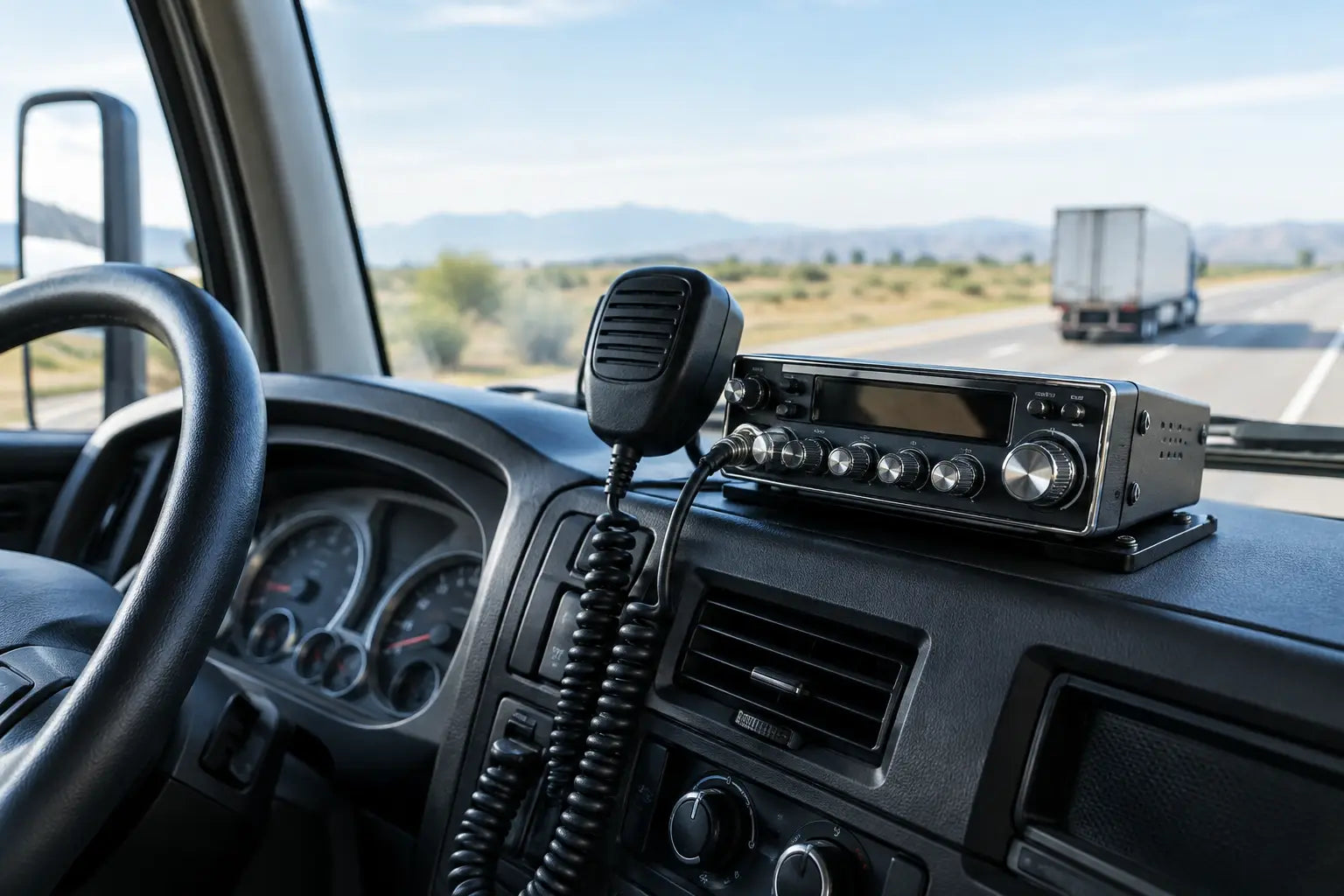
A CB that receives fine in the driveway can turn into a noisy, weak-talking headache once you are rolling through rain, traffic, power lines, and 700 miles of interstate. The right CB radio accessories for truckers are not chrome-plated clutter for the dash. They are the parts that make a radio usable when you need a road report, a heads-up about a shutdown, or a clear answer from another driver.
Buy the radio you like. Then give it the antenna system, microphone, speaker, and power setup it deserves. A good CB does not have to be fancy, but it does have to be installed correctly. QUALITY MATTERS, especially when your equipment lives in a vibrating cab all day.
Start With the Antenna System
If there is one accessory that deserves more attention than every other item in the cart, it is the antenna. Drivers often blame the radio when their transmit range is disappointing, but the antenna, mount, coax, grounding, and tuning are usually where the real story lives.
A properly matched antenna converts the radio’s output into a useful signal. A poor mount, damaged coax, corroded connector, or badly tuned whip can waste that signal before it ever leaves the truck. Worse, high SWR can stress the final output stage in the radio. That is an expensive way to learn that a loose mount was not “close enough.”
For a typical tractor, fiberglass antennas remain popular because they are durable, easy to replace, and available in lengths and styles that work with common mirror mounts. A longer antenna generally has an easier time performing well, but clearance matters. Low tree limbs, parking garages, loading docks, and trailer swing all get a vote.
Dual antennas can look right on a big rig, and a correctly installed, correctly phased pair can work well. But two antennas do not automatically mean twice the performance. If the coax harness is wrong, the mounting locations are poor, or the two antennas do not match, a single quality antenna can outperform the whole arrangement. Keep it practical: choose the setup you can mount solidly, inspect easily, and tune correctly.
Do Not Guess at SWR
An SWR meter belongs in any serious CB setup, whether it is a compact external meter or a radio with a trustworthy built-in function. It tells you how well the antenna system is matched to the radio. Check SWR after installation, after a hard hit from a branch or car wash, and anytime performance changes.
For most operators, an SWR reading near 1.5:1 or lower across the channels they use is a good target. A reading above 2:1 deserves attention before extended transmitting. The meter does not fix the problem, but it stops you from troubleshooting blind. Pair it with a short quality jumper coax, and use the correct connectors. A bargain jumper with a flaky PL-259 is not a bargain on the side of the road.
CB Radio Accessories for Truckers Who Need Clear Audio
The second place to spend money is audio. You can have a clean signal leaving the truck, but it does little good if you cannot hear replies over engine noise, tires, HVAC fans, and a rattling cab.
An external speaker is one of the most useful upgrades for drivers who run an older CB or a radio with a small internal speaker. Look for a speaker built for communications audio, not one designed to make music sound warm and dramatic. You want intelligible voices. A speaker with enough volume and a clear upper-midrange response can make weak traffic reports understandable without turning the cab into a tin can.
Placement matters as much as the speaker itself. Mount it where sound reaches your ears, not behind a seat or down near the pedals. Keep the cord away from moving controls, and do not mount anything where it can become a hazard in a sudden stop. A compact amplified speaker may help in a particularly noisy truck, but it can also magnify alternator whine and other interference if the system has a noise problem. Fix the noise source first when possible.
A replacement microphone can also bring an aging CB back to life. A stretched cord, intermittent push-to-talk switch, broken strain relief, or weak mic element can make a good radio sound terrible. The catch is compatibility. Microphones may use four-pin, five-pin, six-pin, or other connector arrangements, and identical-looking plugs are not proof that the wiring matches. Pinout, channel controls, and power-mic requirements all matter.
If you own a President, Uniden, Galaxy, Cobra, Ranger, or a legacy radio that has been riding with you since cassette decks were still normal, verify the exact model before ordering. Scott Radio & Electronics lives in this territory: model-specific gear, replacement parts, and the oddball items that broad electronics sellers usually cannot identify.
Power, Mounting, and Noise Control Are Not Afterthoughts
A clean 12-volt supply is boring right up until it is not. Power cords, fuse holders, inline fuses, ring terminals, and connectors take constant vibration and heat. Inspect them. A loose power connection can cause resets, weak transmit audio, or intermittent operation that looks like a radio failure.
Wire the radio according to the manufacturer’s guidance and protect the circuit with the correct fuse. Avoid treating a crowded accessory outlet as a permanent power solution for a higher-draw mobile radio. Direct battery connections can reduce electrical noise in some installations, but routing and fusing must be done carefully. If you are not comfortable working around the truck’s electrical system, have a qualified installer handle it. The goal is communication, not a mystery fuse problem at 2 a.m.
Noise filters have their place, but they are not magic. Alternator whine, ignition noise, LED light interference, cheap USB chargers, and poor grounding can all get into a CB. Before adding a filter, disconnect accessories one at a time and identify the offender. Sometimes the fix is rerouting power leads, replacing a noisy charger, grounding a mount correctly, or repairing a damaged coax shield.
Secure mounting is equally important. A radio mount should hold the unit through rough pavement without blocking controls, airflow, or your view. Use a proper bracket and hardware that fits the radio, and avoid drilling into an area that may contain wiring, air lines, or safety equipment. A radio bouncing on a dash is not “road tested.” It is one pothole away from a broken bracket or cracked faceplate.
Useful Upgrades, Depending on How You Run
Not every trucker needs every accessory. That is good news for your wallet. Buy for the problem you actually have.
Drivers who run long overnight stretches may appreciate a dimmable display, a noise-canceling microphone, and a speaker placed close to the driver. Owner-operators who move between tractors may prefer quick-disconnect power leads and a mount that makes the radio easier to transfer. Drivers operating in areas with frequent low-clearance obstacles may choose a shorter antenna or a spring mount, accepting some compromise in performance for fewer broken whips.
A weather-capable CB can be useful, but do not assume it replaces every dedicated weather alert device. Likewise, a power microphone may increase audio level on some radios, but cranking gain too high can create distorted, splattery transmit audio. Loud is not the same as clear. Set mic gain with restraint and ask for an honest radio check when conditions allow.
For older equipment, keep a few small spares in the truck: an antenna stud or connector, a short coax jumper, fuses, a microphone hanger, and the proper mounting screws. These are cheap insurance. The one part that fails is usually the one you cannot find at a truck stop after business hours.
Build the System Before Buying the Shiny Stuff
A dependable CB setup follows a sensible order. Start with the antenna, mount, coax, and SWR meter. Add the external speaker and microphone once the radio is transmitting and receiving properly. Then address mounting, power, and noise issues. Only after those fundamentals are handled should you worry about cosmetic extras or high-output gadgets.
That approach saves money and protects the radio you already own. It also makes troubleshooting far simpler because you know which part of the system changed. The road is hard enough on equipment. Give your CB a solid antenna system, clean power, and clear audio, and it will be ready to earn its space in the cab when the next driver calls out what is waiting up ahead.