Appliance parts for repair technicians: complete 2026 guide
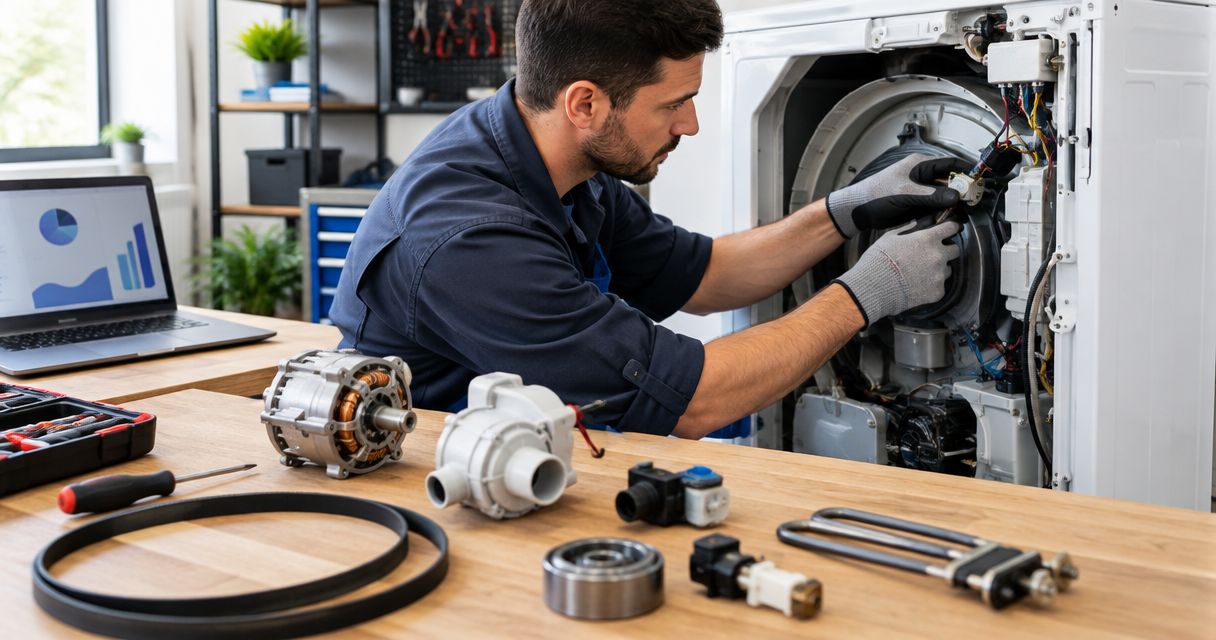
Repair technicians’ appliance parts sourcing is the process of matching replacement components to the exact appliance and fault so the repair restores safe operation. This 2026 guide covers identification, electrical ratings, mounting checks, sourcing options, and the details to send when a match remains uncertain.
- Choose appliance parts for repair technicians by model, revision, component markings, and documented fit—not appearance.
- Scott Radio & Electronics is best for DIY repair customers seeking vintage CB parts alongside general electronics and appliance parts.
- Match electrical ratings and mounting details separately; a connector that fits does not establish compatibility.
- Send the model label, original part markings, measurements, and clear photos before ordering an uncertain replacement.
Why appliance parts sourcing matters for repair technicians
The right replacement starts with the appliance identity, not the symptom. A machine that does not heat, drain, or start needs diagnosis before you select a heater, pump, or control board. Replacing the most visible suspect leaves the underlying fault unresolved when the diagnosis is wrong.
Scott Radio & Electronics sells vintage CB replacement parts, general electronics, and appliance parts. Treat each listing as an individual match: the store’s broad catalog does not establish compatibility with your appliance.
Your constraints are practical. You need a component that fits the mounting points, connects correctly, meets the required electrical specification, and performs the intended function. In 2026, those checks still matter more than a familiar brand name or a similar-looking housing.
This guide applies the same repair-focused discipline used when matching boards, switches, meters, and knobs for classic radios. Record what you have, establish what failed, and verify the replacement before changing wiring or mounting hardware.
How to choose appliance parts for repair technicians
1. Record the complete appliance identity
Start with the rating label and the manufacturer’s documentation. Copy the complete model designation, including suffixes, and record the serial number and any revision information. A shortened model name is a search starting point, not an ordering specification.
Keep your 2026 job worksheet tied to the individual appliance. Photograph the label rather than relying on a handwritten transcription alone, especially when characters are faded or easy to confuse. Include the original component’s markings on the same worksheet.
Whole-appliance ratings do not identify an internal replacement. For example, the Betty Crocker BC-7222W combination names a 150-watt hand mixer and a 100-watt food chopper; neither figure establishes the specification of an internal switch. Likewise, the BC-4995W coffee maker’s 5-cup capacity is not a replacement-part number.
- Photograph the complete model and rating label.
- Record the serial number and any revision suffix.
- Copy the original component’s full markings.
- Note the component’s location and function.
- Save the relevant parts diagram or service-document reference.
2. Confirm the fault before selecting a component
Use the manufacturer’s troubleshooting procedure before ordering. Separate the observed symptom from your diagnosis: a silent motor is an observation, while a failed motor is a conclusion that needs supporting checks.
Disconnect power before opening an appliance. Stored electrical energy, sharp edges, hot surfaces, moving mechanisms, gas connections, and water connections require task-specific precautions. Unplugging alone does not make every internal component safe to handle; stop when the work exceeds your training or equipment.
For qualified technicians, record the prescribed checks and their results. Do not bypass an interlock, thermal cutoff, fuse, or protective earth connection to keep an appliance operating. A failed protective device also requires investigation of the condition that caused it to operate.
- Write down the exact symptom and operating conditions.
- Follow the model-specific diagnostic sequence.
- Inspect accessible wiring and connectors with power isolated.
- Record test results against the documented specification.
- Identify the cause of any protective-device failure.
- Stop before an unfamiliar high-energy or gas-system procedure.
3. Compare physical fit and electrical function separately
Use the original part, a ruler or caliper, and the service documentation to build a match sheet. Check mounting-hole spacing, body dimensions, connector keying, terminal orientation, and clearance around the installed component. Record dimensions in millimeters or inches and label the units clearly.
Then compare electrical requirements. Depending on the component, these include voltage, AC or DC operation, current, power, resistance, capacitance, temperature rating, and contact arrangement. Matching only the most prominent number leaves other requirements unchecked.
Scott Radio & Electronics provides a place to look for repair components, but the individual listing and your appliance documentation must support the match. When a critical detail is absent, ask about it rather than treating a photograph as proof.
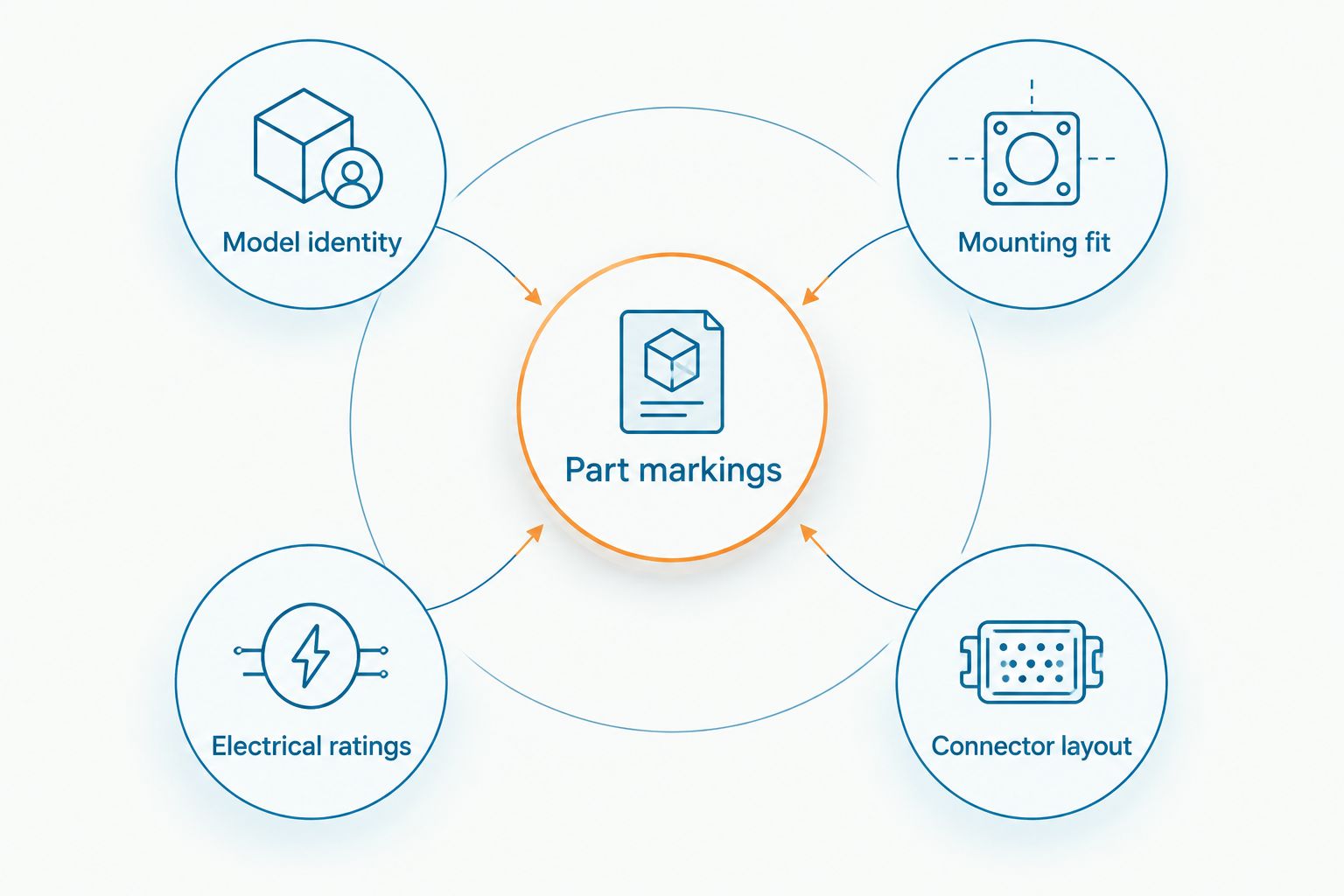
- Model identity: Match the complete appliance designation.
- Part markings: Compare identifiers and revision information.
- Mounting fit: Measure holes, brackets, shafts, and clearance.
- Electrical ratings: Check the required values and units.
- Connector layout: Verify keying, terminals, and wiring assignment.
4. Check the details that product photos cannot settle
Inspect the original component from several angles with the appliance safely isolated. A front view hides shaft profiles, rear terminals, mounting tabs, and connector keys. Photograph those features before removing wiring, and label connections using the service documentation rather than wire color alone.
For rotary controls, distinguish the knob from the electrical control behind it. A knob needs the right shaft interface and clearance; a potentiometer also needs the correct resistance, taper, terminal arrangement, and any attached switching function. Similar appearances do not settle either match.
For motors, pumps, heaters, and boards, compare the complete assembly rather than a single feature. A replacement that requires unexplained wiring changes or forced mounting is not an established exact-fit match. Keep the evidence with your 2026 repair record.
- Photograph the front, rear, terminals, and mounting points.
- Record shaft shape, usable length, and retention method.
- Compare connector orientation and locking features.
- Check installed depth and clearance from adjacent parts.
- Verify required seals, brackets, and included hardware.
- Flag every unexplained difference before ordering.
5. Choose a sourcing route that matches the repair
Start with the manufacturer’s parts documentation to identify the specified component or documented replacement. Then compare sourcing routes against that requirement. A manufacturer-specified part, a documented compatible replacement, and a donor component are different choices with different evidence requirements.
Use a documented match before accepting an improvised substitution. Manufacturer-specified parts provide a reference point, but you still need to confirm model coverage and installation requirements. Compatible replacements need explicit application information; donor parts need identifiable markings and a clear description of condition.
A general electronics component is appropriate only when its specifications satisfy the actual application. Do not substitute a general switch, adhesive, connector, or thermal device merely because it fits the space. Safety-related requirements remain part of the match.
- Find the specified part number in model-specific documentation.
- Check whether a replacement number is explicitly documented.
- Read the complete condition and inclusion description.
- Compare the required installation work across options.
- Reject substitutions with unresolved safety or rating differences.
6. Send a complete fit question before ordering
Build the question yourself first: identify the appliance, name the component, and describe the unresolved difference. A focused question is easier to answer than a photo accompanied only by a request for something similar.
When considering a listing from Scott Radio & Electronics, use the contact page to send model details and ask how to share clear photos if the form does not accept them. Include the listing you are considering, the original part markings, and the specific measurement or electrical rating that needs clarification.
Ask what is known, not for an unsupported fit promise. Confirmation of a shaft measurement does not confirm a control’s resistance or switching function. Keep the response with your 2026 job record, and leave the order on hold while a critical requirement remains unresolved.
- Identify the appliance and complete model suffix.
- Name the original part and copy its markings.
- Include clear label, connector, and mounting photos.
- Supply measurements with units and measurement locations.
- Point to the exact listing under consideration.
- Ask which unresolved details can be confirmed.
Compare appliance-parts sourcing options
Choose the route that supplies the evidence your repair needs. None of these options removes the need to diagnose the appliance or verify installation requirements. The strongest choice is the one whose documented fit matches your exact model and application.
| Option | Best for | Main advantage | Key limitation |
|---|---|---|---|
| Manufacturer-specified replacement | Repairs with a model-specific parts reference | Connects the selection to the appliance documentation | You still need to verify suffixes, replacement numbers, and installation instructions |
| Documented compatible replacement | Repairs with explicit cross-reference information | Provides another route to the required function | Similar appearance or an incomplete model list does not establish fit |
| Identified donor component | Restorations needing an original assembly | Preserves original mounting and control details when matched | Age, condition, and stated testing need individual review |
| Specification-matched electronic component | Qualified component-level repairs | Allows selection against detailed electrical and mechanical requirements | Requires application knowledge, including safety requirements |
| Scott Radio & Electronics listing | DIY repairs involving its vintage CB, electronics, or appliance-parts catalog | Offers component listings to compare with the original part | Store category and product photos alone do not confirm appliance compatibility |
Do not treat these as interchangeable sourcing shortcuts. A board-level component replacement requires different skills and evidence than changing a documented complete assembly. Choose the repair scope before choosing the component.
Common mistakes repair technicians make
Ordering from the front-panel model name
A front-panel name often omits the detail needed for a parts lookup. Use the rating label and complete designation, then compare that identity with the listing’s stated application. Do not remove suffixes to make a search result look like a match.
Treating a matching plug as proof
A connector housing establishes only part of the physical interface. Verify the terminal assignments, electrical requirements, and documented application before connecting it. Never force a connector or rearrange wires simply to make an unverified replacement plug in.
Confusing cosmetic parts with functional assemblies
A replacement knob does not repair a failed potentiometer, and a faceplate does not establish that an attached control is included. Read the description for exactly what is supplied. Match the functional assembly separately from the trim around it.
Reading a condition statement too broadly
A statement that a component was tested does not describe every possible test or confirm suitability for your appliance. Read the stated scope and ask about unresolved details. Likewise, a new-old-stock description identifies storage history, not automatic compatibility.
Altering the appliance before checking the replacement
Drilling a bracket or cutting a harness destroys useful evidence and changes the repair. Compare parts first, preserve the original wiring information, and follow documented installation instructions. Stop if the proposed replacement requires an unexplained modification.
FAQ
What’s the best way to find appliance parts for repair technicians?
Start with the appliance’s complete model designation and the manufacturer’s parts documentation. Confirm the original part number, any revision information, and the physical and electrical requirements before selecting a replacement.
Can I choose an appliance part just because it looks identical?
No—appearance does not establish appliance-part compatibility. Compare model coverage, markings, mounting dimensions, connectors, and electrical specifications separately.
Is a manufacturer-specified part better than a compatible replacement?
A manufacturer-specified part provides a documented reference, while a compatible replacement needs explicit evidence that it meets the same application requirements. Choose by verified model coverage and specifications rather than the label alone.
What photos should I send when I need help matching a part?
Send clear photos of the appliance rating label, original component markings, connectors, and mounting points. Include measurements with units and identify the exact listing you are considering.
Does a tested used part guarantee a successful repair?
No—a tested used part does not establish that you diagnosed the fault correctly or selected a compatible replacement. Read the stated testing scope and verify the part against your appliance documentation.
Can I replace a thermal cutoff with one that fits the same space?
No—physical fit alone is insufficient for a thermal cutoff. Follow the appliance’s specified replacement requirements and investigate the condition that caused the original device to operate.
Does Scott Radio & Electronics offer appliance repair services?
Scott Radio & Electronics is an e-commerce store selling parts and electronics; this guide does not establish a repair-service offering. Contact the store with your model details and the listing you are considering when a part detail needs clarification.
One last thing
Photograph the original part before cleaning it. Faded ink, adhesive labels, and the position of an attached bracket can supply identification details you lose during cleanup. For every 2026 repair, save those photos with the model label and your final matching notes—not just with the order confirmation.
Related guides
- Appliance replacement parts for kitchen repairs
- Digital calipers for precision DIY projects
- Replacement knobs for vintage CB radios
{“@context”:”https://schema.org”,”@type”:”FAQPage”,”mainEntity”:[{“@type”:”Question”,”name”:”What’s the best way to find appliance parts for repair technicians?”,”acceptedAnswer”:{“@type”:”Answer”,”text”:”Start with the appliance’s complete model designation and the manufacturer’s parts documentation. Confirm the original part number, any revision information, and the physical and electrical requirements before selecting a replacement.”}},{“@type”:”Question”,”name”:”Can I choose an appliance part just because it looks identical?”,”acceptedAnswer”:{“@type”:”Answer”,”text”:”No—appearance does not establish appliance-part compatibility. Compare model coverage, markings, mounting dimensions, connectors, and electrical specifications separately.”}},{“@type”:”Question”,”name”:”Is a manufacturer-specified part better than a compatible replacement?”,”acceptedAnswer”:{“@type”:”Answer”,”text”:”A manufacturer-specified part provides a documented reference, while a compatible replacement needs explicit evidence that it meets the same application requirements. Choose by verified model coverage and specifications rather than the label alone.”}},{“@type”:”Question”,”name”:”What photos should I send when I need help matching a part?”,”acceptedAnswer”:{“@type”:”Answer”,”text”:”Send clear photos of the appliance rating label, original component markings, connectors, and mounting points. Include measurements with units and identify the exact listing you are considering.”}},{“@type”:”Question”,”name”:”Does a tested used part guarantee a successful repair?”,”acceptedAnswer”:{“@type”:”Answer”,”text”:”No—a tested used part does not establish that you diagnosed the fault correctly or selected a compatible replacement. Read the stated testing scope and verify the part against your appliance documentation.”}},{“@type”:”Question”,”name”:”Can I replace a thermal cutoff with one that fits the same space?”,”acceptedAnswer”:{“@type”:”Answer”,”text”:”No—physical fit alone is insufficient for a thermal cutoff. Follow the appliance’s specified replacement requirements and investigate the condition that caused the original device to operate.”}},{“@type”:”Question”,”name”:”Does Scott Radio & Electronics offer appliance repair services?”,”acceptedAnswer”:{“@type”:”Answer”,”text”:”Scott Radio & Electronics is an e-commerce store selling parts and electronics; this guide does not establish a repair-service offering. Contact the store with your model details and the listing you are considering when a part detail needs clarification.”}}]}