
Amateur Radio Band Guide for Real-World Contacts
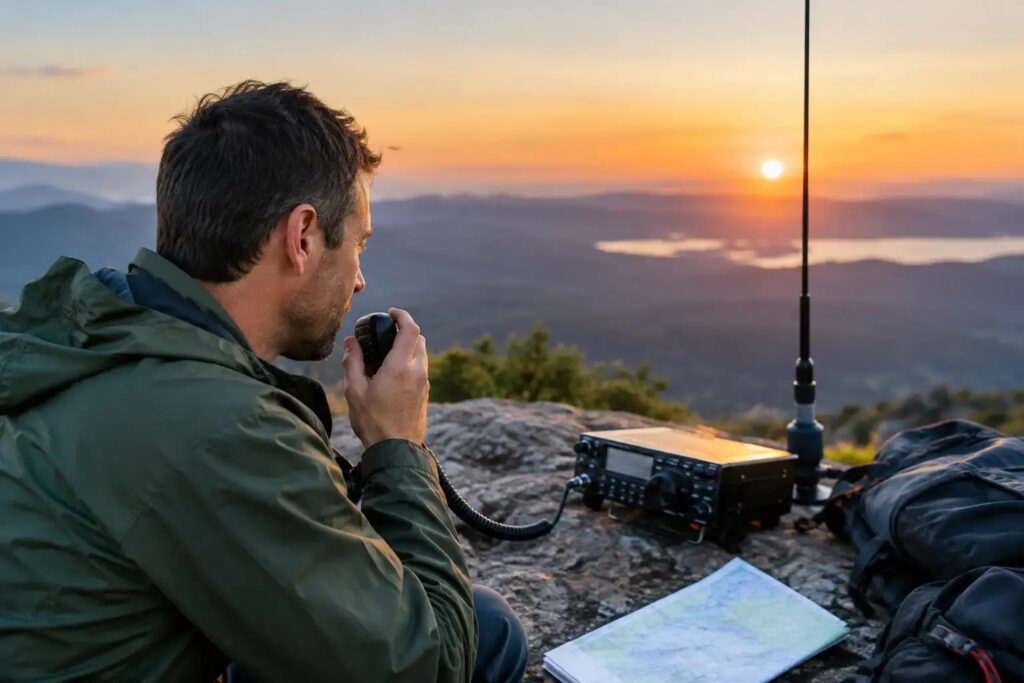
The band you choose decides whether your call reaches the next county, the next state, or another continent. This amateur radio band guide is built for the operator who wants fewer mystery signals and more real contacts – whether you are running a vintage HF rig, a modern mobile, or a simple handheld from the truck, trail, or workbench.
A band is not just a frequency range. It is a combination of propagation, antenna size, noise level, operating mode, license privileges, and time of day. Get those pieces lined up and even modest equipment can surprise you. Ignore them and a high-dollar radio can sound like a very expensive paperweight.
Amateur Radio Band Guide: Start With Your Goal
Before spinning the VFO, decide what kind of contact you want. Local repeater conversation, regional emergency communication, casual ragchewing, contest operation, digital traffic, and long-distance DX all favor different bands.
For nearby communication, VHF and UHF are usually the practical choice. For contacts beyond line of sight, HF is where propagation does the heavy lifting. The trade-off is that HF changes constantly. A band that is wide open at lunch may be dead by supper, while another suddenly carries stations hundreds or thousands of miles away.
Your license class matters, too. Technician, General, and Amateur Extra operators have different privileges on portions of the amateur bands. Never assume a frequency is available to you because you heard someone else using it. Confirm current FCC Part 97 rules and the current US amateur band plan before transmitting. Band edges and operating practices are not the place for guesswork.
HF Bands: Where Distance Gets Interesting
HF covers 3 to 30 MHz, and it is where radio operators learn that the atmosphere has a personality. Solar activity, season, time, antenna efficiency, and local electrical noise all play a part.
160 and 80 Meters: Big Antennas, Big Nighttime Signals
The 160-meter band is the neighborhood for operators with room, patience, and a tolerance for serious antenna projects. It is mainly a nighttime band and can support impressive long-distance contacts, but noise and antenna size are major challenges. A physically short antenna can work, but it often needs loading, a good radial system, and realistic expectations.
Eighty meters is more approachable and remains a favorite for evening nets, regional communication, and relaxed conversations. It can cover a few hundred miles very well after dark, especially when a higher band has gone quiet. Expect atmospheric noise in summer and crowded conditions during popular operating hours.
60, 40, and 30 Meters: Useful When Conditions Shift
Sixty meters is a channelized band with specific operating rules. It can provide excellent regional coverage, but its rules and limited channels reward operators who check the current regulations before keying up.
Forty meters is one of the workhorse bands in amateur radio. During daylight, it often supports regional contacts. After sunset, it can go much farther. That makes it useful for nets, emergency communication, and general operating when 20 meters is fading out. The downside is crowding. A good receiver, a properly adjusted antenna, and patience matter here.
Thirty meters is narrower and generally quieter in style. It is popular for CW and digital modes, not the place for phone operation. If you enjoy careful weak-signal work and want less of the pileup circus, it earns its place on the dial.
20, 17, and 15 Meters: The DX Sweet Spot
Twenty meters is the dependable long-distance band for many operators. It can produce national and worldwide contacts through much of the day, and it often stays useful well into the evening. If you are putting up one practical HF antenna and want results, 20 meters deserves serious attention.
Seventeen meters offers a similar feel with less crowding, though it has less spectrum and can be quieter when propagation is poor. It is a favorite among operators who want DX without fighting wall-to-wall signals.
Fifteen meters can be tremendous when solar conditions are healthy. It supports strong worldwide openings with less antenna size than lower HF bands. When it is open, it can make an operator sound far more impressive than he really is. When it is closed, no amount of calling will convince it otherwise.
12 and 10 Meters: Small Antennas, Big Surprises
Twelve meters is a useful in-between band with less activity than 10 or 15 meters. It can deliver excellent DX during active solar periods, but it is not always open.
Ten meters is where many operators get hooked on HF. A compact antenna can perform very well, mobile installations are manageable, and worldwide propagation can be downright wild during solar highs. Ten also supports local and regional communication through ground wave, repeaters in some areas, and occasional sporadic-E openings. Sporadic-E can turn a quiet afternoon into an unexpected multi-state contact session, especially in spring and summer.
VHF and UHF: Practical Bands for Everyday Radio
The 6-meter band sits between HF and VHF and behaves like both. It is often called the magic band because it may seem dead until an opening appears. Then stations hundreds or even thousands of miles away show up quickly. Six meters rewards monitoring, calling periodically, and keeping an antenna ready rather than assuming silence means nothing is happening.
Two meters is the backbone of local amateur activity across much of the United States. It is excellent for handhelds, mobile radios, base stations, repeaters, public-service events, and local nets. Simplex range is mostly line-of-sight, although terrain, antenna height, and power can change the outcome dramatically. A 50-watt mobile with a properly mounted antenna can outperform a handheld with a rubber duck by a country mile.
The 70-centimeter band, commonly called 440 MHz, is another strong choice for local communication and repeaters. UHF antennas are compact, and the band works well in dense urban areas where 2 meters may be busy. However, UHF signals are less forgiving of hills, buildings, and weak antenna installations. Height is might.
The 1.25-meter and 23-centimeter bands have active pockets in some areas, but local activity varies widely. Check what your regional clubs and repeater groups actually use before buying equipment solely for those bands.
Match the Antenna to the Band, Not the Wish List
A radio can only work with the signal it can send and receive. That sounds obvious, but plenty of operators spend heavily on a transceiver while leaving the antenna as an afterthought. QUALITY MATTERS, especially outside the radio cabinet.
For HF, a resonant dipole, inverted V, vertical, end-fed wire, or multiband antenna can all be the right answer. It depends on your available space, height, budget, desired bands, and tolerance for tuning. A dipole is simple and effective but may need room. A vertical can offer low-angle DX performance but needs a solid ground or radial system. An end-fed wire is convenient, but it is not magic and often needs a capable transformer, careful routing, and attention to common-mode RF.
For mobile VHF and UHF, use an antenna designed for the band and mount it where it has a proper ground plane when required. A trunk-lip mount, mag mount, roof mount, and fender mount each involve compromises. The best antenna location is usually the one with the clearest view of the horizon, but vehicle construction and cable routing still matter.
Check SWR before operating at full power. High SWR can point to an antenna, coax, connector, or installation problem. Do not treat the tuner as a repair tool for a bad feed line. A tuner may help the radio see a workable match, but it cannot make a damaged coax connector or poorly installed antenna disappear.
Choose Modes That Fit Conditions
SSB voice is flexible and familiar, especially on HF. FM is the standard choice for most local VHF and UHF repeater operation. CW and digital modes can make contacts under weak conditions where voice signals struggle.
That does not mean every operator needs to become a digital-mode specialist. It means you should keep options open. When noise is high or propagation is marginal, a modest station using an efficient mode may get through while a louder voice station gets nowhere.
Also listen before transmitting. Find established band activity, respect calling frequencies and repeater rules, and avoid transmitting over an ongoing contact. Amateur radio has room for experimenters, collectors, technicians, truckers, and first-time licensees. It works best when everybody leaves enough room for the next operator.
Keep Your Station Ready for the Band You Want
A capable station does not have to be flashy. A clean power connection, inspected coax, correct microphone wiring, properly matched antenna, and a receiver that hears well will beat a neglected setup every time. This matters even more with older equipment, where a tired switch, oxidized connector, weak meter, or mismatched microphone can create problems that look like propagation trouble.
Scott Radio & Electronics understands the appeal of keeping good radios alive. A classic rig with the correct replacement part, a tested accessory, and an antenna suited to the job is not obsolete. It is back on the air where it belongs.
The best band is the one that puts you in touch with the people you came to talk to. Keep listening, log what works from your location, and let your own station experience become the guide that no chart can replace.