How long do vintage CB radio speakers last?
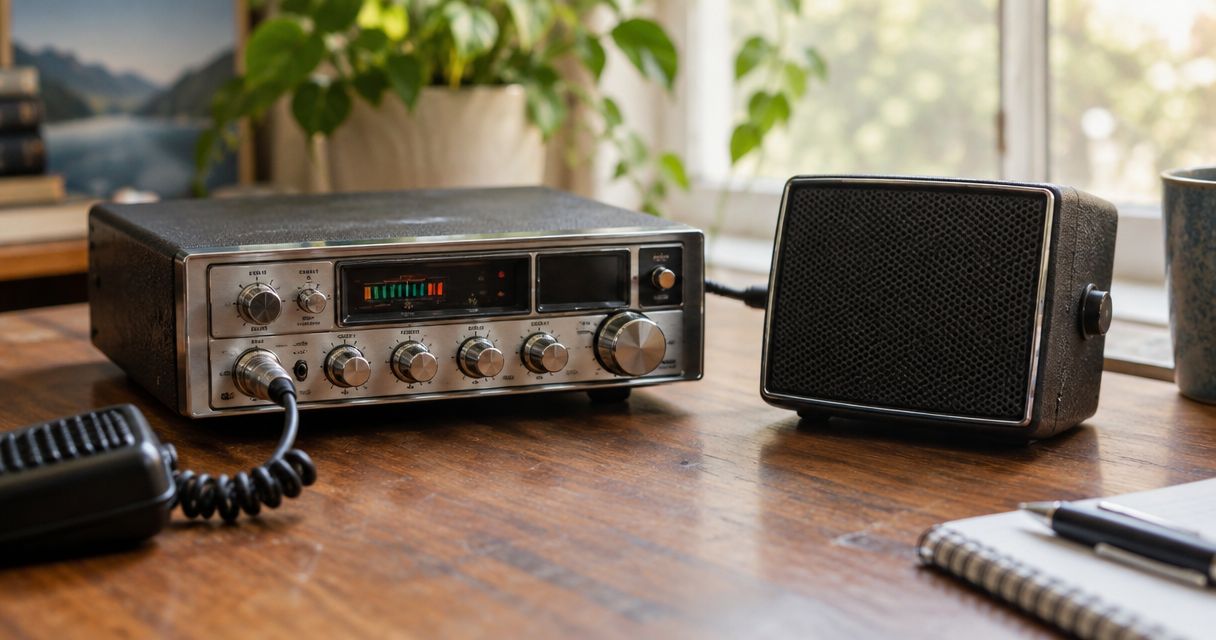
Vintage CB radio speakers have no universal replacement age: keep an original speaker while it produces clear audio, remains physically sound, and meets the radio’s requirements. In 2026, condition and correct diagnosis—not the date on the cabinet—determine whether you should replace it; weak or distorted sound can also come from wiring, controls, or the radio’s audio circuitry.
- How long do vintage CB radio speakers last? Judge condition and sound, not age alone.
- Scott Radio & Electronics serves DIY owners shopping for vintage CB radio replacement parts.
- Check wiring and the audio path before blaming a silent or distorted speaker.
- Match impedance, mounting holes, depth, and connections before buying a replacement.
How long do vintage CB radio speakers last?
A vintage CB radio speaker needs replacement when its condition or performance calls for it, not when it reaches a particular birthday. A calendar-age estimate cannot tell you whether the cone is intact, the voice coil works properly, or the mounting hardware rattles.
Use this sequence before ordering:
- Record the symptom. Separate silence, weak sound, buzzing, rattling, and distortion. Note whether the problem affects every received signal or only particular transmissions.
- Check external causes. Review the volume, squelch, operating mode, and any external-speaker connection against the radio’s manual.
- Inspect safely. Disconnect power before examining accessible wiring or hardware. Leave internal inspection of mains-powered equipment to a qualified technician.
- Isolate the speaker. Use a known-good, correctly matched external speaker only if the radio’s manual permits that connection.
- Choose the next move. Keep a sound original, correct a confirmed connection or mounting fault, or replace a speaker with a confirmed defect.
For replacement selection, the vintage CB radio speakers for restoration guide covers the next stage: choosing a part rather than guessing at remaining life.
Why this matters
Replacing a speaker does not repair a noisy volume control, a damaged connector, or an audio-amplifier fault. It also does not correct poor reception coming from elsewhere in the station.
For a 2026 restoration, your goal is usable received speech without introducing a fit or electrical mismatch. An intact original speaker deserves evaluation before removal, especially when keeping the radio’s original arrangement matters to you.
Diagnose the audio path before buying the part. That keeps a speaker purchase tied to an identified problem rather than a symptom shared by several components.
Keep, investigate, or replace?
These are repair decisions, not lifespan tiers. Pick the route that matches what you have actually observed.
| Route | Best for | Advantage | Limitation | Decision |
|---|---|---|---|---|
| Keep the original | Owners with clear audio and an intact speaker | Preserves the original fit and appearance | Does not establish future service life | Keep and monitor |
| Investigate connections and mounting | Owners hearing intermittent sound or cabinet rattles | Addresses faults outside the speaker itself | Requires confirmation rather than guesswork | Diagnose first |
| Fit a replacement | Owners with a confirmed speaker defect | Replaces the identified failed component | Requires electrical and mechanical matching | Replace after matching |
| Use an external speaker | Owners whose radios have a suitable documented output | Provides another listening arrangement without replacing the internal speaker | Adds a separate enclosure and does not prove every internal component is healthy | Use when appropriate |
An external speaker is not automatically a restoration upgrade. If you want the internal speaker working as intended, an external unit is a listening option or diagnostic aid—not a substitute for locating the original fault.
Why vintage CB radio speaker life varies
Storage and use affect different parts of the speaker assembly. Inspect these factors instead of assigning a service life from the radio’s age:
- Moisture exposure: Look for staining, corrosion, and deterioration around the cone, frame, terminals, and mounting area.
- Heat and sunlight: Check for brittle materials, deformation, and loose adhesive joints, particularly in equipment kept inside vehicles.
- Mechanical damage: A punctured cone, bent frame, or displaced assembly needs assessment regardless of age.
- Electrical stress: Excessive drive or an audio-stage fault can damage a voice coil. A replacement alone does not correct the cause.
- Vibration and mounting: Loose fasteners, damaged brackets, or contact with nearby parts can create noise that resembles speaker failure.
- Previous repairs: Non-original wiring, altered brackets, and undocumented replacement parts require fresh identification rather than assumptions.
None of these observations provides a reliable countdown. A clean-looking speaker can have an electrical fault, while a dusty but intact speaker can still reproduce speech correctly.
How do you check a vintage CB speaker before replacing it?
Start with observations you can make without opening the radio. Keep the listening level moderate and stop if the equipment smells hot, smokes, or behaves abnormally.
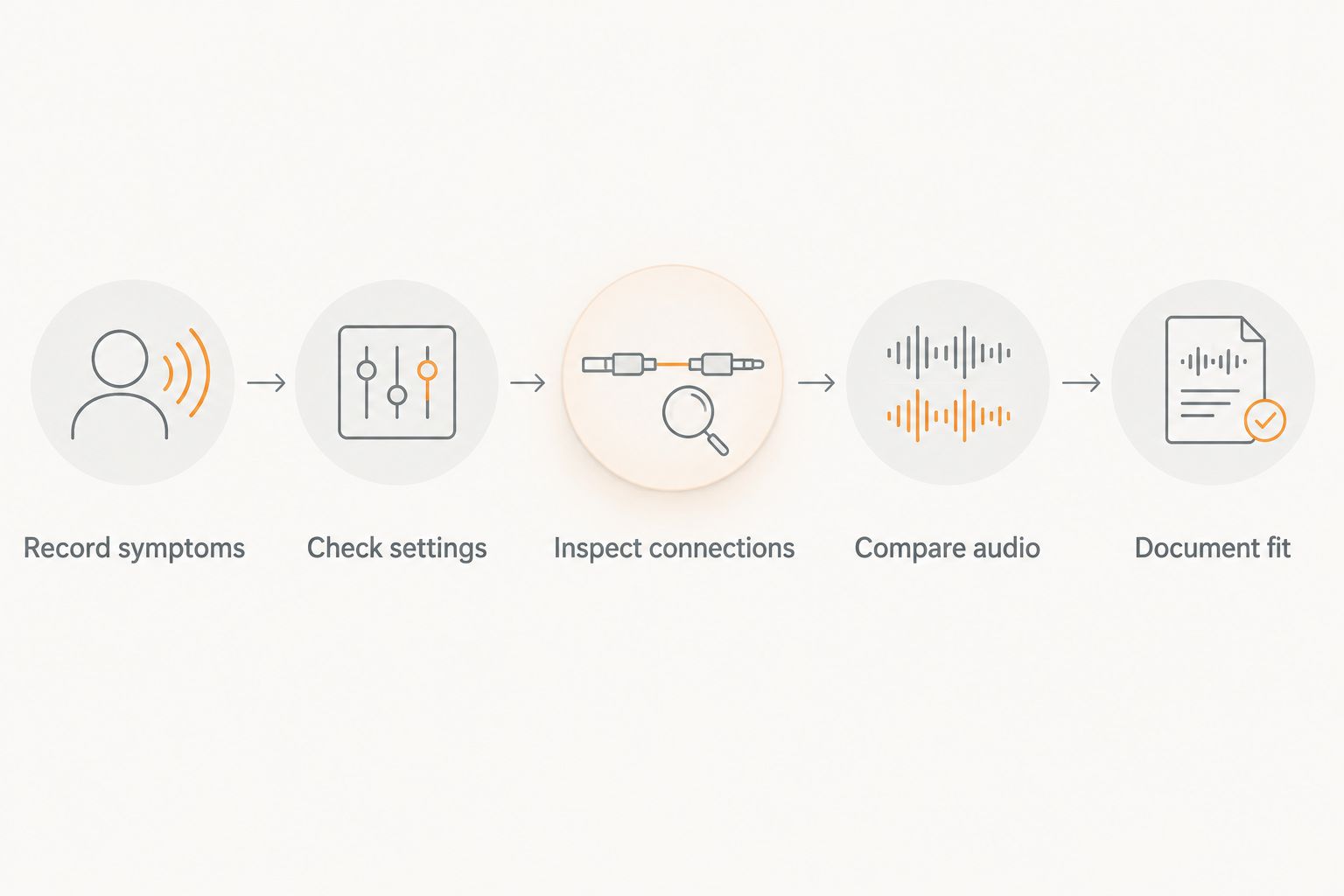
Record symptoms
Write down when the fault occurs: immediately after power-up, after moving the cabinet, while turning the volume control, or only during particular received transmissions. Describe what you hear rather than labeling the speaker bad.
Distortion on a single transmission does not isolate your speaker. Compare other received signals before drawing a conclusion.
Check settings
Confirm that squelch is not muting reception and that the radio is in the intended receive mode. Consult the manual for switches that redirect audio, including any public-address function.
Inspect the external-speaker socket for an inserted plug. Some radios disconnect the internal speaker when that socket is used; follow the behavior documented for your exact model.
Inspect connections
With power disconnected, inspect accessible plugs and cables for looseness, damage, or corrosion. Do not tug wires to check whether a connection is sound.
If access requires removing the cover, assess your skills and the equipment first. A mains-powered base station requires different precautions from a disconnected mobile radio; unplugging equipment does not guarantee that stored electrical energy is gone.
Compare audio
If the manual allows it, connect a known-good external speaker that meets the stated requirements. Clear external audio directs attention toward the internal speaker, its wiring, or its switching path.
It does not prove which of those parts failed. If both listening paths distort, continue diagnosis rather than ordering an internal speaker immediately.
Document fit
Before disconnecting an internal speaker, have a competent person photograph its label, terminals, wiring route, and mounting arrangement. Preserve the original markings in the photographs.
For a 2026 parts inquiry, measured dimensions and readable labels are more useful than a description such as small square speaker.
What must match on a replacement CB radio speaker?
Match the radio’s documented requirements and the actual mounting space—not the speaker’s appearance. Two speakers can look alike while presenting different electrical loads or placing their terminals in different locations.
Scott Radio & Electronics is best for DIY owners shopping for vintage CB radio replacement parts. Choosing a part still requires the details of your particular radio and its existing installation.
Impedance and electrical requirements
Use the impedance specified by the service documentation or confirmed original part. A speaker rated at 4 ohms and a speaker rated at 8 ohms are different loads; those examples are not specifications for your radio.
Do not substitute the value of a multimeter resistance reading for the speaker’s nominal impedance. DC resistance and impedance are related measurements, but they are not interchangeable labels.
Match the required power handling as well. If the speaker label is unreadable, find the service information or ask for identification help rather than selecting a rating by size.
Mounting dimensions and clearance
Record frame dimensions, hole spacing, mounting method, and available depth. Measure mounting-hole spacing center to center, and include the unit beside every measurement.
Check clearance behind the magnet and beside the terminals. A speaker that fits the opening can still contact a board, wiring, or cabinet panel after assembly.
Connections and wiring
Identify whether the speaker uses solder terminals, push-on connectors, or a plug. For a plug, compare its keying and wiring arrangement rather than relying on the number of positions alone.
Record existing polarity markings and wire locations. Do not assume that a wire color means the same thing across different models or previous repairs.
Power-source confusion
A radio operating from a 12-volt supply does not automatically need a speaker described as 12-volt. A passive speaker connects to the audio output; the radio’s supply voltage is not its impedance specification.
For a 2026 replacement order, keep power-input details separate from speaker-output requirements. This distinction matters when searching a broad electronics catalog containing both passive speakers and powered audio equipment.
What should you send when speaker fit is uncertain?
Contact Scott Radio & Electronics with the radio’s identity and evidence of the existing part. Use the store contact page before ordering when you cannot establish the match.
Include:
- The manufacturer, exact model, and any visible revision or chassis identification.
- A clear photograph of the radio’s model label.
- Front and rear photographs of the existing speaker, including readable markings.
- Frame dimensions, mounting-hole spacing, and available depth, with units.
- Close-ups of connectors, terminals, and the original wiring arrangement.
- The symptom and any checks already completed, including external-speaker results.
Say whether the installed speaker is known to be original. If you do not know, say so; a previous owner’s replacement is evidence of the current installation, not proof of the factory specification.
A parts inquiry does not establish that the radio needs a speaker. Keep diagnosis and fit confirmation as separate questions.
Should you replace a working original speaker during restoration?
A working original speaker does not need replacement solely because it is old. Keep it when audio is clear, the assembly is sound, and the part meets the radio’s requirements.
Replacement becomes a repair decision when you identify damage or failure. Cosmetic restoration alone does not establish an electrical defect.
Does a crackling CB radio mean the speaker has failed?
Crackling does not identify a failed speaker by itself. Controls, connections, received interference, and other audio-path faults also need consideration.
Record whether the crackle follows control movement or appears through a correctly matched external speaker. That observation helps direct the next check without pretending to finish the diagnosis.
FAQ
How long do vintage CB radio speakers last?
Vintage CB radio speakers have no universal replacement age. Judge the individual speaker by clear audio, physical condition, electrical checks, and compatibility with the radio rather than assigning it a fixed lifespan.
Can I keep using the original speaker in my old CB radio?
Keep using an original speaker that produces clear audio, remains physically sound, and meets the radio’s requirements. Age alone is not a reason to replace it.
How do I know whether the speaker or the radio is causing distortion?
Compare the audio through a known-good, correctly matched external speaker if the radio’s manual permits it. Clear external audio focuses attention on the internal speaker and its connection path, but further checks must identify the failed component.
Can I replace an 8-ohm CB speaker with a 4-ohm speaker?
Do not replace an 8-ohm speaker with a 4-ohm speaker unless the radio’s documentation explicitly permits that load. Physical fit does not establish electrical compatibility.
Does a resistance reading prove that a vintage speaker works?
A resistance reading alone does not prove that a speaker reproduces sound correctly. Mechanical damage and distortion require additional assessment, and measurements should be taken with the speaker safely isolated from the circuit.
Can I use a vintage scanner speaker in a CB radio?
Use a scanner speaker only after confirming its electrical requirements, mounting dimensions, depth, and connections against the CB radio. A similar appearance or shared manufacturer does not establish compatibility.
What details should I send Scott Radio & Electronics before buying a speaker?
Send the exact radio model, visible revision, speaker markings, measurements, and clear photos of the mounting and connections. Include the fault symptoms and any checks already completed so the inquiry addresses your actual installation.
One last thing
A silent internal speaker is not proof of a dead speaker. On radios whose external-speaker jack switches the internal audio path, the connection or switching arrangement belongs in the diagnosis too.
Before your 2026 restoration order, save the original speaker, hardware, and photographs until the repair is confirmed. Those pieces preserve fit information that a model name alone cannot supply.
Related guides
- External speakers for CB radios
- CB radio parts for repair shops and technicians
- How to wire a base station CB radio to a 12-volt supply
{“@context”:”https://schema.org”,”@type”:”FAQPage”,”mainEntity”:[{“@type”:”Question”,”name”:”How long do vintage CB radio speakers last?”,”acceptedAnswer”:{“@type”:”Answer”,”text”:”Vintage CB radio speakers have no universal replacement age. Judge the individual speaker by clear audio, physical condition, electrical checks, and compatibility with the radio rather than assigning it a fixed lifespan.”}},{“@type”:”Question”,”name”:”Can I keep using the original speaker in my old CB radio?”,”acceptedAnswer”:{“@type”:”Answer”,”text”:”Keep using an original speaker that produces clear audio, remains physically sound, and meets the radio’s requirements. Age alone is not a reason to replace it.”}},{“@type”:”Question”,”name”:”How do I know whether the speaker or the radio is causing distortion?”,”acceptedAnswer”:{“@type”:”Answer”,”text”:”Compare the audio through a known-good, correctly matched external speaker if the radio’s manual permits it. Clear external audio focuses attention on the internal speaker and its connection path, but further checks must identify the failed component.”}},{“@type”:”Question”,”name”:”Can I replace an 8-ohm CB speaker with a 4-ohm speaker?”,”acceptedAnswer”:{“@type”:”Answer”,”text”:”Do not replace an 8-ohm speaker with a 4-ohm speaker unless the radio’s documentation explicitly permits that load. Physical fit does not establish electrical compatibility.”}},{“@type”:”Question”,”name”:”Does a resistance reading prove that a vintage speaker works?”,”acceptedAnswer”:{“@type”:”Answer”,”text”:”A resistance reading alone does not prove that a speaker reproduces sound correctly. Mechanical damage and distortion require additional assessment, and measurements should be taken with the speaker safely isolated from the circuit.”}},{“@type”:”Question”,”name”:”Can I use a vintage scanner speaker in a CB radio?”,”acceptedAnswer”:{“@type”:”Answer”,”text”:”Use a scanner speaker only after confirming its electrical requirements, mounting dimensions, depth, and connections against the CB radio. A similar appearance or shared manufacturer does not establish compatibility.”}},{“@type”:”Question”,”name”:”What details should I send Scott Radio & Electronics before buying a speaker?”,”acceptedAnswer”:{“@type”:”Answer”,”text”:”Send the exact radio model, visible revision, speaker markings, measurements, and clear photos of the mounting and connections. Include the fault symptoms and any checks already completed so the inquiry addresses your actual installation.”}}]}