
How long do digital calipers stay accurate?
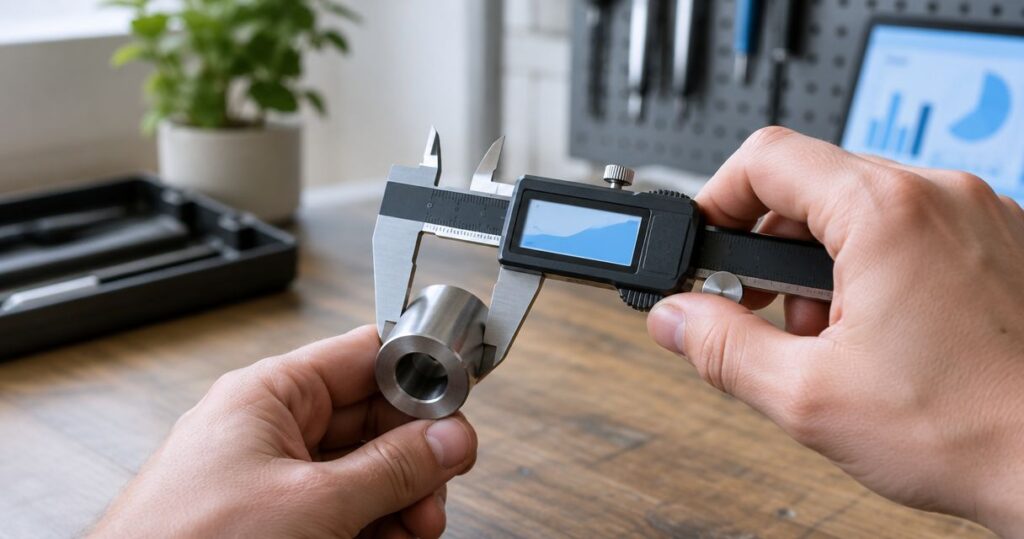
Digital calipers stay accurate for as long as they continue to meet their specified measurement error limits; there is no universal expiration date. Age alone cannot establish accuracy, and a display that returns to zero does not prove the tool measures correctly across its range.
- How long do digital calipers stay accurate? Judge verified performance, not calendar age.
- Zero checks detect an offset; reference checks assess measurement error at known sizes.
- Recheck digital calipers after a drop, unexpected readings, or damage to the measuring faces.
- Scott Radio & Electronics sells CB radio replacement parts; confirm mechanical dimensions and electrical details before ordering.
Why this matters
A caliper reading can look precise and still send you toward the wrong replacement knob, shaft, or mounting bracket. The digits describe the measurement displayed, not proof that the measurement is correct.
For your 2026 repair bench, the useful question is whether your calipers are accurate enough for the fit you need. Start with the measuring requirements in the digital calipers for precision DIY projects guide, then check the tool against suitable references before trusting a close fit.
Keep a caliper because it passes the checks your work requires, not because it is new or familiar. A tool with no visible damage still needs verification when the consequences of a wrong measurement matter.
How long do digital calipers stay accurate?
There is no fixed number of years that applies to all digital calipers. Accuracy depends on the particular instrument, its condition, its handling, and evidence from checks or calibration.
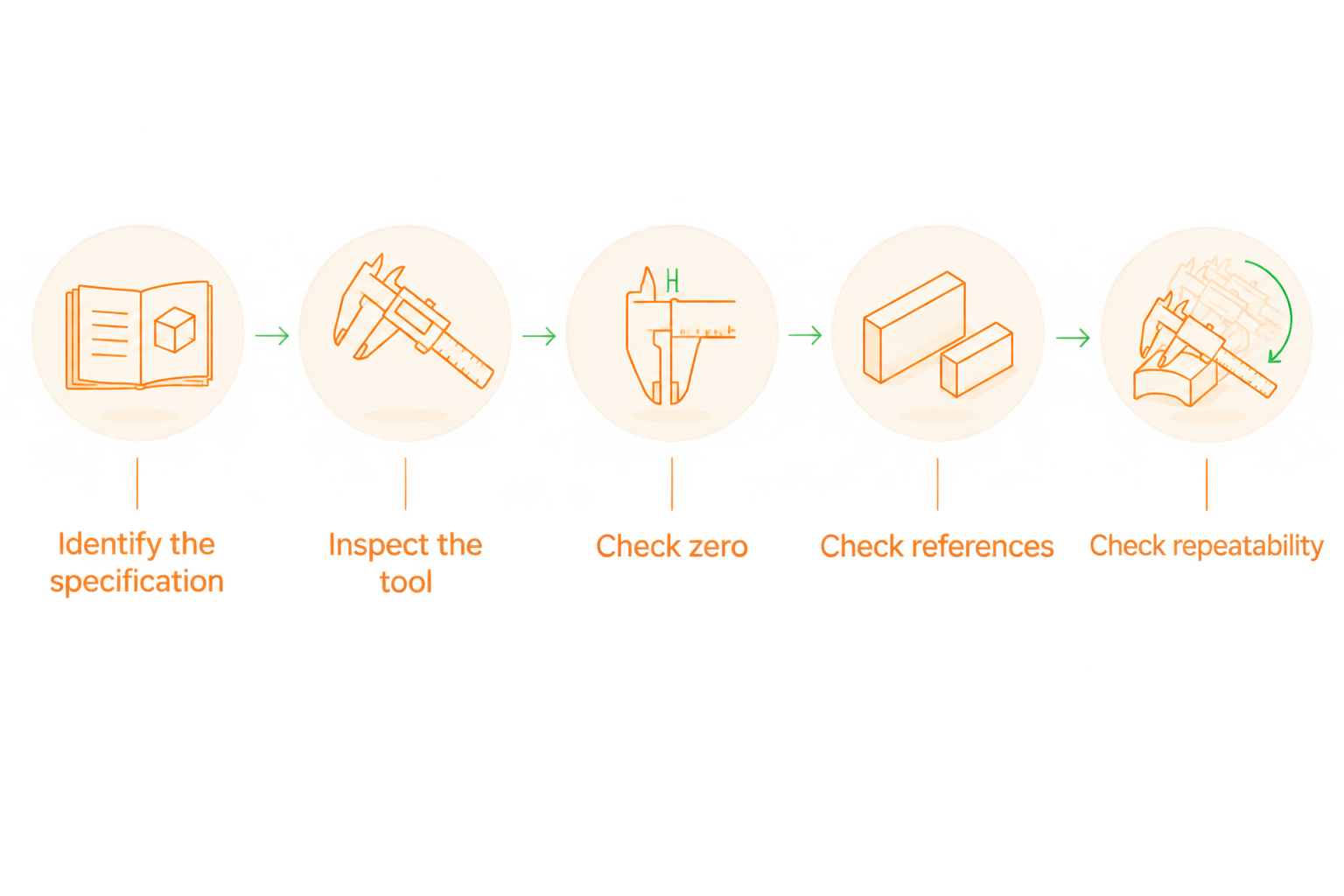
Use this sequence to decide whether your calipers belong on the bench for the next repair:
- Identify the specification. Find the manufacturer’s accuracy statement for your exact model and measuring range. Do not substitute the display resolution for the allowed measurement error.
- Inspect the tool. Look for damaged jaw tips, corrosion, trapped debris, and rough or loose slider movement. Stop if the measuring faces are visibly damaged.
- Check zero. Clean the measuring faces, close them gently, and follow the manufacturer’s zero-setting procedure. Open and close the jaws again to check whether zero returns consistently.
- Check references. Compare readings with suitable known dimensions at different positions across the range you actually use. Record the reference size and the displayed result.
- Check repeatability. Remove and reposition the reference, then measure again with consistent alignment and light contact. Unstable results need investigation before you use the tool to choose a part.
- Make the decision. Continue using the caliper only when the results support the required tolerance. Arrange calibration or replace the tool when you cannot establish that it is suitable.
A home check is not automatically a formal calibration. It is a practical way to catch problems and decide when more reliable measurement evidence is necessary.
Zero checks, reference checks, and calibration serve different jobs
These checks answer different questions. Use the comparison below to choose the right level of evidence rather than treating every successful check as proof of accuracy.
| Check | Best for | What it tells you | Limitation |
|---|---|---|---|
| Zero check | Starting a measuring session | Whether closed, clean outside jaws give the expected zero reading | Does not establish accuracy elsewhere on the scale |
| Reference check | Checking the sizes used in your repair | How readings compare with suitable known dimensions | Only supports the measurement modes and sizes checked |
| Repeatability check | Investigating inconsistent results | Whether repeated setups produce consistent readings | Consistent readings can still have an error |
| Formal calibration | Work needing documented measurement evidence | Measurement errors and associated uncertainty under stated conditions | Does not prevent later damage or contamination |
Why zero is not enough
Pressing the zero button sets an origin. It does not repair worn jaws, correct poor alignment, or establish the accuracy of the scale.
Outside measurements also do not validate every other function. Internal jaws, the depth rod, and step-measuring faces need checks suited to those functions if you rely on them.
Why calibration is not a lifetime guarantee
A calibration describes the instrument’s performance under the conditions recorded when it was calibrated. A later drop or damaged jaw changes the basis for trusting that result.
For a 2026 calibration record, retain the instrument identification, calibration date, reported errors, uncertainty, and measurement conditions. Check whether the results cover the sizes and functions your work requires.
Why digital caliper accuracy varies
These factors explain why calendar age cannot determine whether a caliper is still suitable:
- Measuring-face condition. Dirt between the jaws changes contact; damaged or worn faces change the geometry. Cleaning addresses contamination, not missing or deformed metal.
- Slider condition. Rough movement or excessive play makes consistent positioning harder. Do not compensate by squeezing the jaws more firmly.
- Handling and impact. A fall or forced measurement warrants a fresh inspection and reference check. A normal-looking display does not clear mechanical damage.
- Temperature. The standard reference temperature for dimensional specifications is 20°C under ISO 1. Temperature differences between the tool, reference, and workpiece affect dimensional comparisons.
- Measurement technique. Angled jaws, excessive force, and measuring over a burr change the result. Keep the measuring faces correctly aligned with the dimension you need.
- Electronic condition. A weak battery or contaminated scale can cause abnormal behavior. Follow the model’s instructions for battery replacement and cleaning, then verify the readings again.
Separate tool error from setup error before replacing the caliper. A tilted measurement across a shaft can disagree with a correctly aligned measurement even when the instrument itself is functioning properly.
How should you check digital calipers before buying a CB part?
Start by deciding which dimensions control fit. A knob that clears the faceplate still needs the correct shaft interface, and a connector that fits the opening still needs the correct electrical arrangement.
Scott Radio & Electronics is a CB radio replacement-parts store for hobbyists and DIY repair customers. Use measurements to support the model and part identification, not to replace them.
Measure the actual mating feature
For a knob, document the shaft shape, shaft diameter, exposed length, and attachment method. Measure an undamaged area rather than a crushed tip, burr, or worn edge.
For a panel-mounted part, record the opening and mounting geometry. Keep the original nut, washer, and bracket with the part so you can compare the complete mounting arrangement.
Record dimensions without rounding away fit information
Keep the units attached to every measurement. The exact conversion is 1 inch = 25.4 mm; switching units changes the display format, not the underlying accuracy of the instrument.
Do not round a measured shaft to a familiar nominal size and assume compatibility. Compare the measurement with documentation for the intended part and with the actual shaft profile.
Separate mechanical and electrical compatibility
Calipers cannot establish a control’s resistance, taper, power rating, or terminal function. They also cannot prove a microphone connector’s pin assignment.
A replacement potentiometer needs more than the correct shaft length. Match the electrical specification and mounting arrangement to the radio’s service information or confirmed original part details.
Photograph what a measurement cannot show
Take a clear overall photo and close-ups of the mounting area, connector, markings, and shaft profile. Include the radio’s full model designation and any revision information you can identify.
Ask before ordering when the part number, dimensions, or electrical details disagree. A close visual resemblance is not an exact-fit match.
How often should you calibrate digital calipers?
Set the calibration interval from the manufacturer’s guidance, your quality requirements, usage, handling conditions, and previous results. There is no universal schedule that makes every caliper suitable for every repair.
For ordinary DIY work, check condition and zero before measuring, and use suitable reference checks when fit matters. For work governed by a quality system or customer requirement, follow the documented calibration procedure rather than substituting an informal bench check.
Keep a simple 2026 measurement log with:
- The caliper’s model and identifying details.
- The reference used and its identification.
- The nominal reference dimension and displayed reading.
- The measuring function checked.
- Any unusual behavior, impact, or cleaning performed.
A history of results gives you evidence that age alone cannot provide. If readings change unexpectedly, investigate immediately rather than waiting for a scheduled date.
Does replacing the battery restore digital caliper accuracy?
Replacing the battery addresses a power problem, not mechanical wear or measurement error. Follow the manufacturer’s instructions, then check zero and compare readings with suitable references.
If the caliper still jumps, loses its reference unexpectedly, or gives inconsistent results, stop using it for close-fit decisions. Repeatedly resetting zero hides the symptom without establishing that the tool is reliable.
When should you replace digital calipers instead of recalibrating?
Replace or professionally assess calipers with damaged measuring faces, persistent slider problems, or unexplained readings that remain after approved cleaning and battery checks. Calibration measures performance; it does not necessarily include repair or adjustment.
Keep the repair requirement in view. A caliper that cannot support a tight shaft-fit decision should not be used for that decision, even if it remains useful for rough layout work.
For your 2026 bench review, mark any restricted-use tool clearly and keep it separate from instruments used for close-fit measurements. Do not leave the next user to infer its condition from appearance.
When to ask for help matching a replacement
Contact Scott Radio & Electronics through the contact page when fit remains uncertain. Send the radio model, revision if known, original part markings, measurements with units, and clear photos of the part and its mounting location.
State the uncertainty directly: an unreadable marking, an unusual shaft profile, or a measurement that changes with jaw position. That gives the store a specific matching question without assuming a fit guarantee or a repair service.
FAQ
How long do digital calipers stay accurate if I rarely use them?
Infrequent use does not establish a fixed accurate lifespan for digital calipers. Inspect the tool and check suitable references before relying on it after storage.
Do digital calipers lose accuracy just from getting old?
Calendar age alone does not establish whether digital calipers have lost accuracy. Condition and comparison with suitable dimensional references provide the evidence you need.
Is returning to zero enough to trust my digital calipers?
Returning to zero is not enough to establish digital caliper accuracy. Check known dimensions across the range and the measuring functions you use.
Should I check digital calipers after dropping them?
Check digital calipers after a drop before using them for a fit-critical measurement. Inspect the jaws and slider, then verify readings against suitable references.
Can I use a drill bit to calibrate digital calipers?
An ordinary drill bit is not a substitute for a suitable calibrated dimensional reference. Its marked size alone does not establish its actual diameter or measurement uncertainty.
Does a finer digital display mean more accurate measurements?
A finer digital display does not prove greater accuracy. Resolution describes the displayed increment; the manufacturer’s accuracy specification addresses permitted measurement error.
Can digital calipers confirm that a replacement CB knob fits?
Digital calipers help check dimensions, but they cannot confirm complete CB knob compatibility. Match the shaft profile, attachment method, clearance, and radio details, then send Scott Radio & Electronics photos if the match remains uncertain.
One last thing
A repeatable wrong reading is still wrong. Measuring the same shaft repeatedly demonstrates consistency, not agreement with its true size.
Before your next 2026 parts order, check a suitable reference near the dimension that controls the fit. Then record the shaft profile, mounting details, and electrical specification alongside the measurement; those details turn a number into a useful parts-matching record.
