
Which Radio Antenna Accessories Improve Reception?
Last Updated: November 24, 2026
Quick Summary
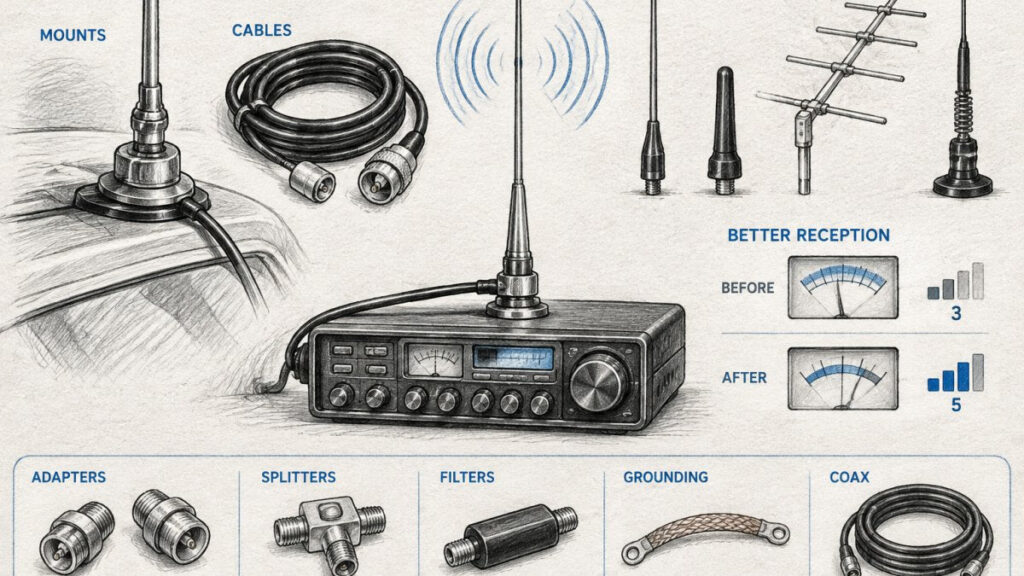
The best radio antenna accessories depend on your problem, so start by checking connections, coax and placement before buying. Once the basics are sound, a signal meter helps you measure weak reception, and a matched antenna, cable or amplifier improves it.
- Confirm the antenna is fully seated and the connector is tight before buying anything.
- A damaged coax or loose PL-259 connector can look exactly like a weak antenna.
- Amplifiers boost noise too and can overload the tuner in strong-signal areas.
- Match the jack and impedance: 50-ohm for CB and scanners, 75-ohm for home stereos.
Table of Contents
- Diagnosing Weak Reception Before You Buy Anything
- Choosing an FM Antenna for Home Stereo
- Car Antenna for FM Reception: Mounts, Cable and Placement
- Single-Wire FM Antenna Reception and When It Works
- Telescopic Radio Antenna Options for Portable Sets
- Connectors, Cable Length and Compatibility Checks
- Choosing Your First Antenna Accessory From Our Catalog
- Frequently Asked Questions
Diagnosing Weak Reception Before You Buy Anything
Weak reception is usually a problem with the antenna setup, not the radio itself, and the right radio antenna accessories can often fix it. Before spending money on parts, check the basics: whether the antenna is connected, whether the coax is intact, and whether the radio is tuned to a station that is actually strong in your area. A loose connector is one of the most common causes of weak reception.
A common approach is to test in a fixed order. Start with the simplest variable and change one thing at a time. Move the antenna a few feet, note whether static drops, then swap the cable if you have one. Recording what you changed makes it much easier to tell what helped.
Here is a practical checklist to run through first:
- Confirm the antenna is fully seated and the connector is tight.
- Inspect the coax for cracks, kinks, or corrosion at the ends.
- Move the antenna away from metal objects, walls, and other electronics.
- Compare reception at different times of day, since signal conditions shift.
A signal meter can give you objective numbers instead of guesses, and it is one of the most useful radio antenna accessories for checking your setup. The Modulation Signal Meter For 2980dx 2985dx 2995dx And Connex Saturn Cx 33ssb (product) is built for measuring signal strength on those radio models, so you can confirm whether a change actually improved things.
Watch out: a damaged coax or a loose PL-259 connector can look exactly like a weak antenna. Rule out the connection before you replace the antenna.
Choosing an FM Antenna for Home Stereo
FM broadcast sits in the 88 to 108 MHz band, which means the antenna’s physical size and orientation matter more than most buyers expect. A half-wave dipole cut for the middle of that band is roughly 4.5 to 5 feet from tip to tip, and that is why a folded dipole or a simple T-shaped wire often outperforms a short stub in weak-signal areas. The antenna does not need to be fancy; it needs to be the right length and pointed the right way.
Start with the signal you actually have. In strong-signal areas close to the transmitter, a basic wire dipole is usually enough. As distance and obstructions increase, a larger outdoor antenna, a directional Yagi aimed at the transmitter, or an amplified antenna becomes worthwhile. The trade-off is real: an amplifier boosts both the signal and the noise, and in a strong-signal area it can overload the tuner and make reception worse.
Match the antenna to the stereo’s jack and impedance. Most home stereos use a 75-ohm F-type jack or a push-on 300-ohm twin-lead connection. A 75-ohm coaxial antenna feeds the F jack directly; a 300-ohm twin-lead antenna needs a 300-to-75-ohm balun to match. Using the wrong one introduces loss and pickup of interference. Check the back of the receiver before buying.
Placement beats hardware upgrades. Higher is generally better, and a clear line toward the transmitter usually helps more than a small step up in antenna quality. Keep the antenna away from metal siding, foil-backed insulation, and electronics that radiate noise, such as routers and switching power supplies. For a directional antenna, aim it at the transmitter; for a dipole, orient the elements broadside to the signal rather than end-on.
**
Broadband options. The 25mhz 1300mhz Ultra Wideband Discone Antenna (product) is a broadband option that covers many frequencies. It suits listeners who want one antenna for several services rather than a dedicated FM model, though a dedicated FM dipole or Yagi will usually outperform it on the FM band alone.
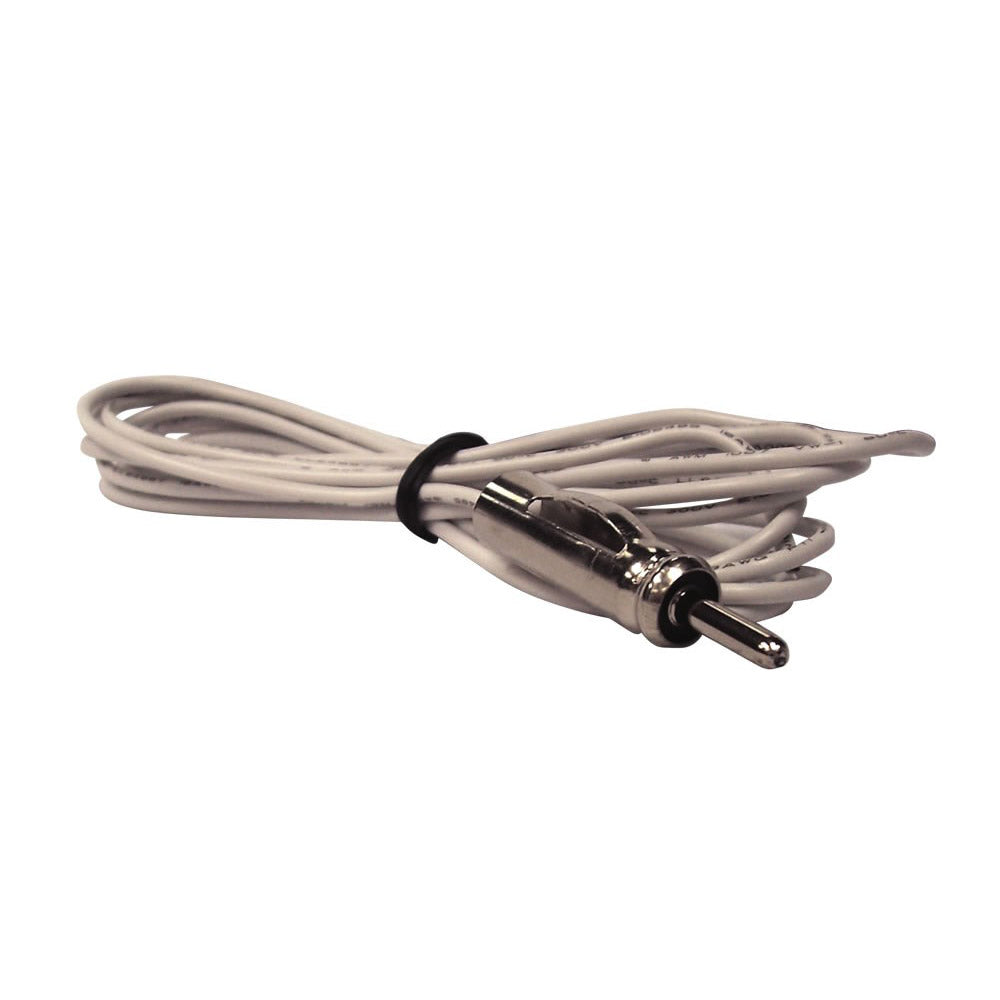
Test before you commit. The JENSEN AM/FM Dipole Soft Wire Antenna (product) is a universal wire antenna with a 6-foot cable that plugs into most stereos. It is a low-cost way to test whether a wire antenna is enough for your location before buying anything larger. If reception improves noticeably with the wire in a higher position, you have learned something useful about your site. If it does not, move on to a directional or amplified option.
Watch out: an amplified antenna in a strong-signal area can overload some tuners. Try a passive antenna first where the signal is already reasonably strong.
Car Antenna for FM Reception: Mounts, Cable and Placement
A car antenna has to handle vibration, weather, and a mount that fits the vehicle. The CB Radio Vehicle Mounted Mobile Antenna With Bnc Connector (product) is a vehicle-mounted option with a BNC connector, which makes it easier to match the cable you already have.
Mounting position affects performance. Center the antenna on a flat, metal surface where possible, such as the roof or trunk lid, and keep the cable run short and clear of moving parts. Long, loose cable runs lose signal and pick up interference.
For a fixed installation, the CB Radio BNC Male Antenna Magnetic Base with 5 Meters RG58 Coaxial Extension Cable (product) lets you mount the antenna on a magnetic base and run the coax inside the vehicle, which avoids drilling.
Single-Wire FM Antenna Reception and When It Works
A single-wire antenna is the simplest option and often the cheapest. It works best when the signal is already reasonably strong. In weak-signal areas, a single wire tends to pick up more noise than a properly sized antenna, so expectations should stay realistic.
The JENSEN AM/FM Dipole Soft Wire Antenna (product) is a universal wire antenna with a 6-foot cable that plugs into most stereos. It is a low-cost way to test whether a wire antenna is enough for your location before buying anything larger.
If reception improves noticeably with the wire in a higher position, you have learned something useful about your site. If it does not, move on to a directional or amplified option.
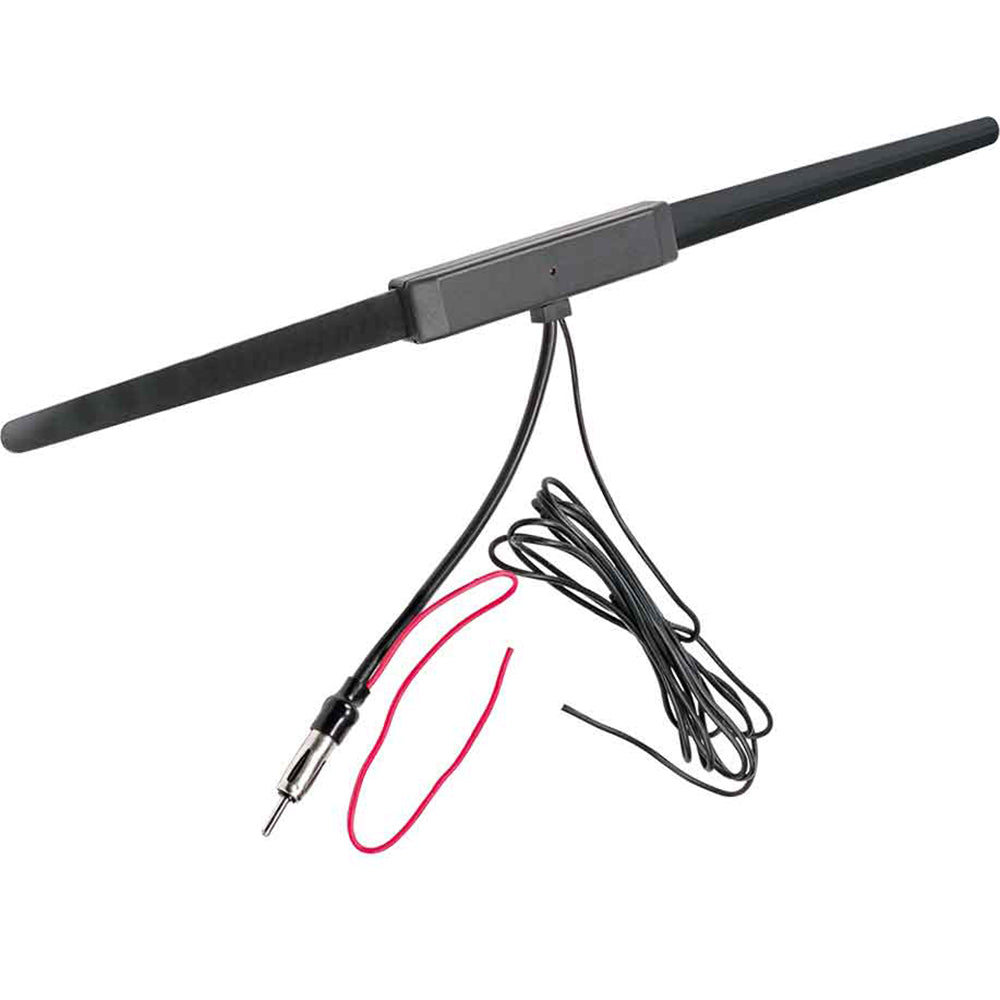
The JENSEN AM/FM Amplified Antenna (product) is sold as an individual unit with a 7-foot cable and an LED power light, and it requires 12 Vdc.
Telescopic Radio Antenna Options for Portable Sets
Portable radios usually depend on a telescoping rod antenna. Extending the rod fully and angling it vertically is the first step, since orientation often matters more than length. Rotating the radio itself can also change reception noticeably.
When a rod antenna is not enough, an external antenna connected by cable gives more options. Accessories in this category are sold separately, so confirm the connector type on your radio before ordering.
Connectors, Cable Length and Compatibility Checks
Connectors and cable are where most reception problems start, and they are also where most buyers get stuck when choosing radio antenna accessories. Before ordering any accessory, identify three things on your radio: the antenna jack type, the cable impedance the radio expects, and the frequency band you care about. Getting those three right prevents the most common return-and-reorder cycle.
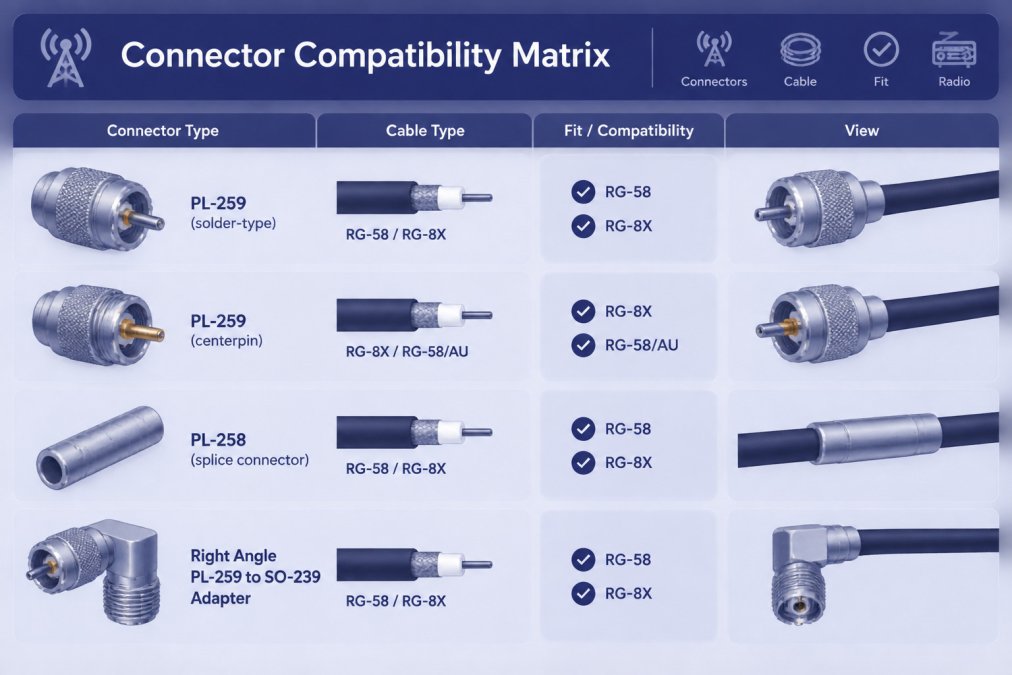
Match the jack first. The most common radio antenna connections are the SO-239 female socket (which accepts a PL-259 male plug), the BNC bayonet connector, the SMA and reverse-polarity SMA used on many handhelds and scanners, and the push-on F-style or 3.5 mm jack found on some home stereos and portable radios.
Then match impedance. Most CB, scanner, and amateur radio gear is built around 50-ohm coax, while many home and car FM stereos use 75-ohm coax. A 50-ohm antenna on a 75-ohm receiver will usually still receive, but the mismatch introduces loss and can raise the noise floor.
Account for loss per foot. Coax loses signal with every foot, and the loss rises with frequency. RG-58 is convenient and flexible but loses more per foot than RG-8X or RG-8, especially at VHF and UHF frequencies. For short runs inside a vehicle or on a desk, RG-58 is fine.
Build the adapter chain deliberately. Every adapter adds a small insertion loss and one more connection that can loosen. The Shakespeare PL-259-CP-G Solderless PL-259 Connector (product) is made for RG-8X or RG-58/AU coax and needs no soldering. For a solder-type connection, the Shakespeare PL-259-58-G Gold Solder-Type Connector (product) suits RG-58 cable. Both are gold-plated brass.
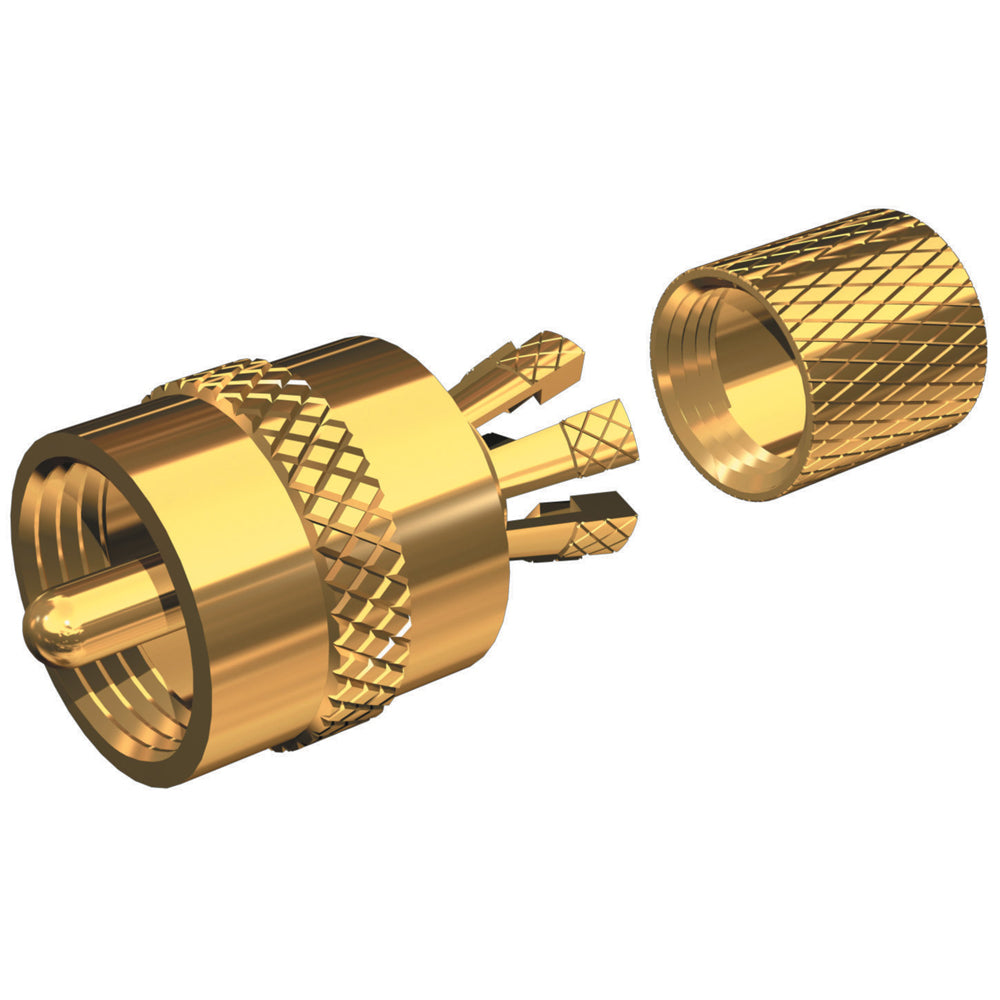
Check the cable marking, not the connector color. Cable type is printed along the jacket. If the marking is worn off, measure the outer diameter and compare it to the connector’s specified cable range. A PL-259 sized for RG-58 will not crimp correctly onto RG-8X, and a loose crimp behaves like a broken antenna.
Length and reach. A 20-foot extension, such as the Shakespeare 4078-20-ER 20′ Extension Cable Kit (product), is useful when you need reach but should not be longer than necessary. For a ready-made interconnect, the PL-259 To Bare Connection Interconnect Cable (product) provides the right ends for a specific radio, which removes guesswork about compatibility.
Watch out: mixing cable types or connector sizes can cause a poor fit that looks like an antenna failure. Measure or check the cable marking before ordering, and never force a connector onto a jack it does not match.
Before ordering, check these three points on your radio, since most reception problems start at the connector, cable and frequency band.
| Check | What to match | Watch out for |
|---|---|---|
| Antenna jack | SO-239, BNC, SMA or F-style | A PL-259 will not seat on a BNC jack |
| Impedance | 50-ohm for CB and scanners, 75-ohm for stereos | Mismatch adds loss and noise |
| Cable type | RG-58, RG-8X or RG-8 for 50-ohm gear | Wrong cable size gives a poor crimp |
| Loss per foot | RG-58 loses more than RG-8X or RG-8 | Long runs lose signal |
| Run length | Shortest run that reaches the antenna | Extra length eats signal |
Choosing Your First Antenna Accessory From Our Catalog
Start with the diagnosis, not the product, before you shop for radio antenna accessories. If the connection and cable are sound, a signal meter tells you where the real limit is. If the signal is weak, an amplified or larger antenna is the next step. If the signal is strong but noisy, placement and shielding usually help more than a new antenna.
The Quad Magnet Antenna Mount for CB Antennas (product) includes four 5-inch heavy duty magnets, a 3/8 thread antenna mount, and 18 feet of RG58 coax with a PL-259 connector.
For a smaller budget, begin with one accessory and test before adding more. Changing one part at a time shows which upgrade actually improved your reception.
Skip the expensive options until the simple checks are done.
Frequently Asked Questions
How can I improve the reception of my radio antenna?
Start by checking the basics: confirm the antenna is fully extended or mounted in an unobstructed spot, make sure every connector is tight and the coax is not kinked or damaged, and test the radio in a few locations to see whether the signal changes. If reception is still weak, an external antenna with a longer or lower-loss cable often helps more than any setting change. Scott Radio & Electronics carries CB Radio BNC Male Antenna Magnetic Base with 5 Meters RG58 Coaxial Extension Cable for $23.99.
What is the best type of antenna for FM radio reception?
For most home and car setups, an external FM antenna mounted higher and away from metal and electronics outperforms a short built-in whip. The JENSEN AM/FM Amplified Antenna is priced at $19.99, with an LED power light and a 7-foot cable, and it requires 12 Vdc. For a low-cost upgrade, the JENSEN AM/FM Dipole Soft Wire Antenna at $6.99 plugs into a factory or aftermarket stereo and is a practical test before committing to a larger antenna.
What is the best car antenna for FM reception?
The right car antenna depends on your vehicle and mounting options. The Quad Magnet Antenna Mount for CB Antennas at $109.99 includes four 5-inch heavy duty magnets, a 3/8 thread mount and 18 feet of RG58 coax with a PL-259 connector.
What is the best radio antenna for a home stereo?
For a home stereo, an indoor or window-mounted FM antenna that sits in an unobstructed location is usually the most useful starting point. The JENSEN AM/FM Amplified Antenna is sold for $19.99. If your stereo has a standard connection, the JENSEN AM/FM Dipole Soft Wire Antenna at $6.99 is a low-cost option to test first, and you can move up to an amplified model if reception stays weak.
