Vintage Transceiver Buying Guide for Smart Buyers
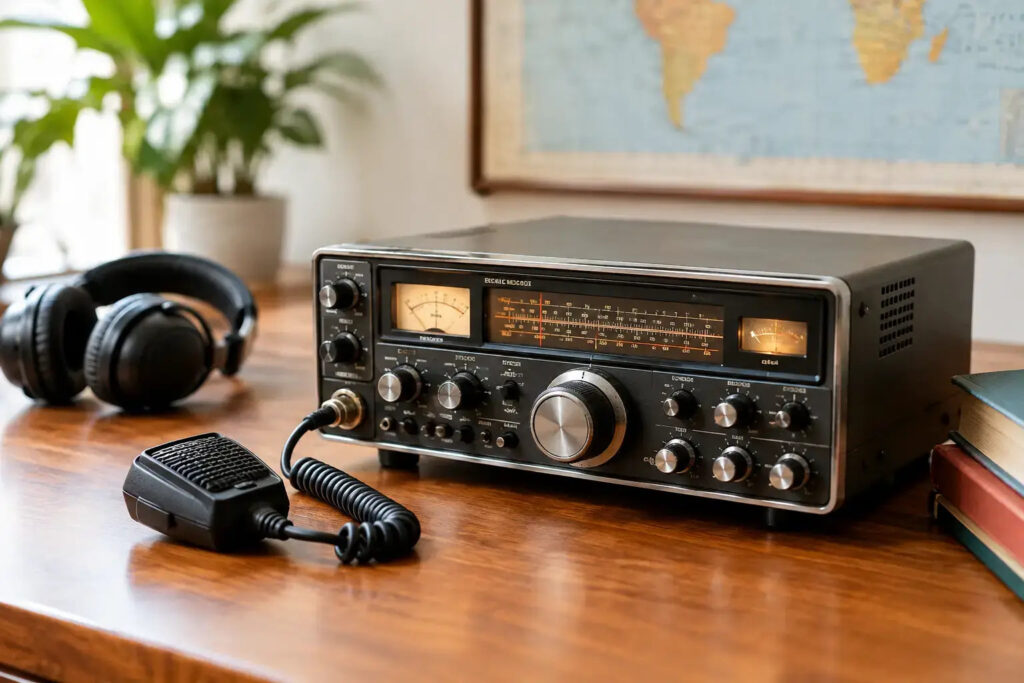
A great old radio has a feel that new gear cannot fake: the weighted channel selector, the warm dial lamp, the click of a real toggle switch. But a vintage transceiver buying guide needs to start with one hard truth: old does not automatically mean valuable, rare does not automatically mean desirable, and “powers on” does not mean ready to talk.
Whether you are hunting a Browning CB, a classic Robyn, an early Icom or Yaesu ham rig, or a tough old mobile radio for a restoration project, buy the radio you can realistically support. The right find is not always the cleanest-looking one. It is the one with an honest condition report, a sensible price, and parts you can still locate when the first weak solder joint or tired electrolytic capacitor raises its hand.
Start With the Job, Not the Badge
Before chasing model names, decide what you want the transceiver to do. Is this a shelf-piece collector radio, a daily-use CB, a base station project, a mobile ham rig, or a radio you intend to restore with your own test equipment? Those are different purchases.
A pristine collector-grade radio may be worth paying extra for even if you never key the mic. A working radio for regular use needs a different standard: stable transmit and receive, correct frequency coverage, available microphones and power cords, and a path to repair. A bargain project radio can make sense if you already know how to troubleshoot it. If you need it on the air next weekend, a “for repair” listing is not a bargain. It is a parts bill wearing a low price tag.
Brand reputation matters, but model-specific reality matters more. Some radios were built like small tanks but use proprietary switches, channel selectors, display modules, or microphone wiring that can turn one missing piece into a long search. Others are easy to keep alive because their common failure points are well understood and replacement parts remain available.
Check the Exact Model and Version
Vintage radio listings are full of near-matches. A radio may look identical to another version while using different boards, connectors, wiring, or controls. Do not buy based on a front-panel photo alone.
Ask for the full model number from the radio’s label, not just what the seller calls it. A suffix, revision letter, chassis variation, or country-specific version can matter. For CB equipment, confirm whether it is a 23-channel or 40-channel model and whether it has factory channels or questionable modifications. For amateur equipment, verify band coverage, mode capability, and whether the radio matches the frequency plan you intend to use.
Also inspect the back panel. Connector types tell a story fast. Look for the correct power connection, antenna jack, external speaker socket, accessory ports, and any missing covers or hacked-in wiring. A neat installation of a period-correct connector is one thing. A mystery toggle drilled through the case is another.
Original Is Nice, Complete Is Better
Collectors like original knobs, faceplates, microphones, brackets, and paperwork. So do practical owners, because those parts are often harder to find than the radio itself. Still, do not reject every radio with a replacement microphone or power lead. A good-quality, correctly wired replacement can be a better operating choice than a cracked original accessory.
The key is disclosure. A seller should clearly identify what is original, what has been replaced, and what is missing. “Untested” should be treated as untested, not as a secret promise that the radio works.
Read Condition Like a Technician
Photos can hide plenty. Ask for clear images of the front, rear, serial label, underside, power connector, microphone connector, and interior if the seller is comfortable opening it. You are looking for both cosmetic wear and clues about electrical history.
Light scratches, faded lettering, and a little dust are normal on a decades-old radio. Corrosion around battery compartments, green residue on connectors, burned circuit-board areas, loose controls, broken meter needles, and evidence of water exposure deserve more caution. A radio stored in a dry home for 40 years is very different from one pulled from a damp barn or an old truck cab.
Pay attention to modifications. Some are useful and professionally done. Others are the famous “my buddy tuned it” special. Extra channels, high-power modifications, cut limiter circuits, random internal wires, or undocumented board work can create legal, performance, and repair headaches. If you do not understand the modification, price the radio as though you may need to undo it.
What “Working” Should Mean
A credible working claim has details behind it. At minimum, the seller should be able to say whether the radio receives signals, transmits into a proper dummy load or antenna system, changes channels or bands correctly, and produces audio through the internal speaker. For a more serious purchase, ask whether meters, lights, clarifier controls, squelch, RF gain, mode switches, and external speaker functions have been checked.
A radio can receive well and still have weak or distorted transmit audio. It can transmit power and still drift off frequency after warming up. It can look museum-clean and have dried capacitors inside. Vintage electronics are not judged by a single light turning on.
Budget for the Radio Around the Radio
The purchase price is only the opening number. Plan for accessories, inspection, bench work, shipping, and sometimes a proper antenna system. A transceiver without the right microphone, mounting hardware, power lead, or connector adapter may be less usable than a slightly more expensive complete unit.
For mobile installations, check voltage requirements and current draw before assuming your existing wiring will work. For base use, make sure the power supply is rated for the radio and in good condition. An old radio deserves clean, stable power. Feeding it through undersized wiring or a bargain-bin supply is a good way to create a problem that looks like a radio failure.
If you are buying a ham transceiver, factor in the equipment needed to verify it safely: a suitable antenna, SWR or antenna analyzer, wattmeter, dummy load, and possibly an external speaker or headset. CB operators should be just as serious about antenna tuning. A fine vintage CB connected to a badly matched antenna is not preserving history. It is stressing old output transistors.
Parts Availability Is the Real Value Test
The smartest question in vintage radio buying is simple: if this radio needs one small part, can I get it?
Common service items such as capacitors, lamps, knobs, microphones, switches, meters, power cords, and speaker leads can decide whether a radio becomes a keeper or a display-only headache. Model-specific parts are especially important. A generic microphone may physically plug in but have the wrong pinout. A replacement knob may fit the shaft but look wrong. A meter from a similar radio may not have the same scale, mounting, or electrical characteristics.
This is where a specialist inventory matters. Scott Radio & Electronics serves owners of older CB and two-way equipment because keeping a discontinued radio alive often comes down to finding the exact-fit component, not a close-enough substitute. QUALITY MATTERS when you are trying to preserve a radio that has already outlasted several generations of bargain electronics.
Before buying, make a short list of the pieces that would stop your project cold: microphone, power cord, channel selector, meter, faceplate, mounting bracket, or a known board component. Then determine whether those pieces are obtainable. Do this before the auction ends, not after the box arrives.
Know the Rules Before You Key Up
Vintage does not mean exempt. CB radios must comply with applicable FCC rules, and modifications that push a radio outside its intended certification or legal operation can create problems. Amateur transceivers require the appropriate license and must be used within your authorized privileges and the radio’s proper operating limits.
That does not mean every older radio is suspect. It means you should know what you are buying and avoid treating illegal modifications as a selling point. A clean, aligned, correctly operating radio is more satisfying than a noisy butcher job with a flashy claim attached to it.
Make the Final Call With Your Eyes Open
A vintage transceiver is worth buying when its condition, completeness, supportability, and price line up with your intended use. The cleanest collector piece may be the right answer for one buyer. The radio with honest cosmetic wear, a fresh service record, and every needed accessory may be the better answer for another.
Ask the extra question. Study the connector. Confirm the model number. Leave room in the budget for the part nobody mentions in the listing. Then, when that old receiver comes alive and a distant signal rolls through the speaker, you will have more than a cool radio on the bench. You will have a piece of radio history that is ready to earn its keep again.