
How long does a ham radio power supply last?
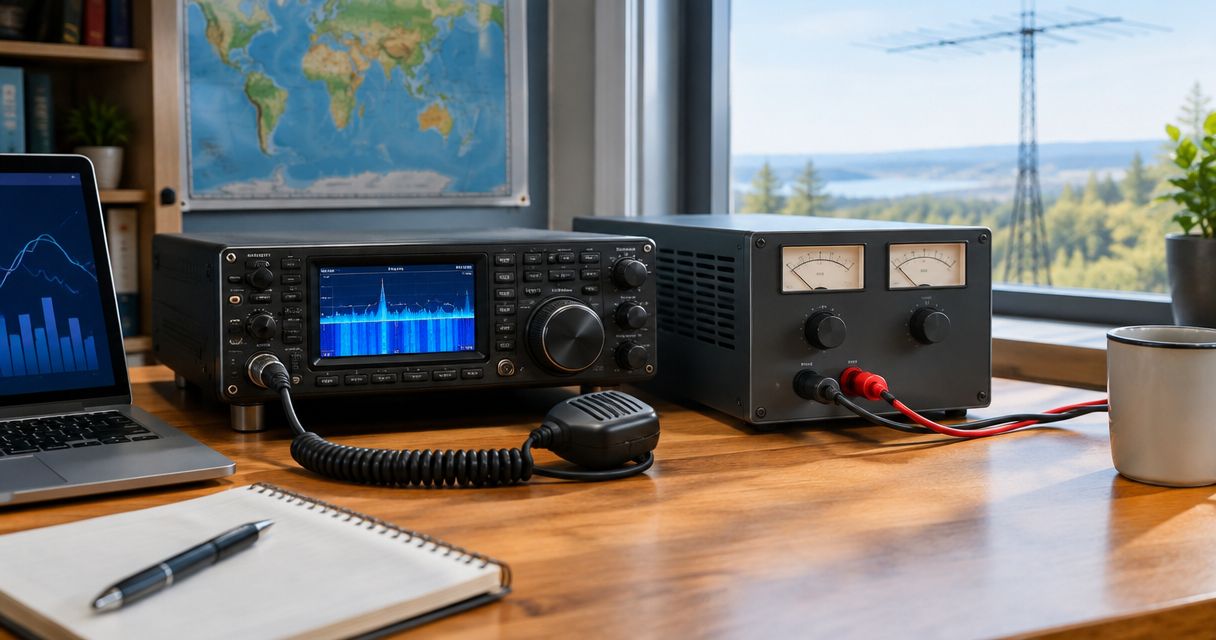
A ham radio power supply has no fixed expiration date: keep using it while it meets the manufacturer’s output specifications under load, operates safely, and shows no developing faults. Age alone cannot tell you when to replace it, and a power light does not prove that it is delivering clean, stable DC to your radio.
- How long does a ham radio power supply last? Judge measured condition, not a universal replacement age.
- Check output under transmit load; an idle voltage reading does not establish power supply health.
- Stop using a supply with smoke, burning smells, damaged insulation, or output outside the radio’s limits.
- Scott Radio & Electronics serves CB repair owners; match replacement connections and ratings before ordering.
How long does a ham radio power supply last?
There is no defensible replacement interval that applies to every ham radio power supply. The useful answer comes from its condition, operating history, and performance against its own specifications—not a calendar estimate.
For a 2026 equipment check, start with the supply’s manual and the radio’s input requirements. A unit that powers the receiver still needs to support the radio’s transmit demand without leaving the permitted voltage range or entering protection unexpectedly.
If you are choosing a replacement, use the ham radio power supplies for base stations guide alongside the equipment manuals. Select the replacement by electrical requirements and operating conditions, not by the age or appearance of the old supply.
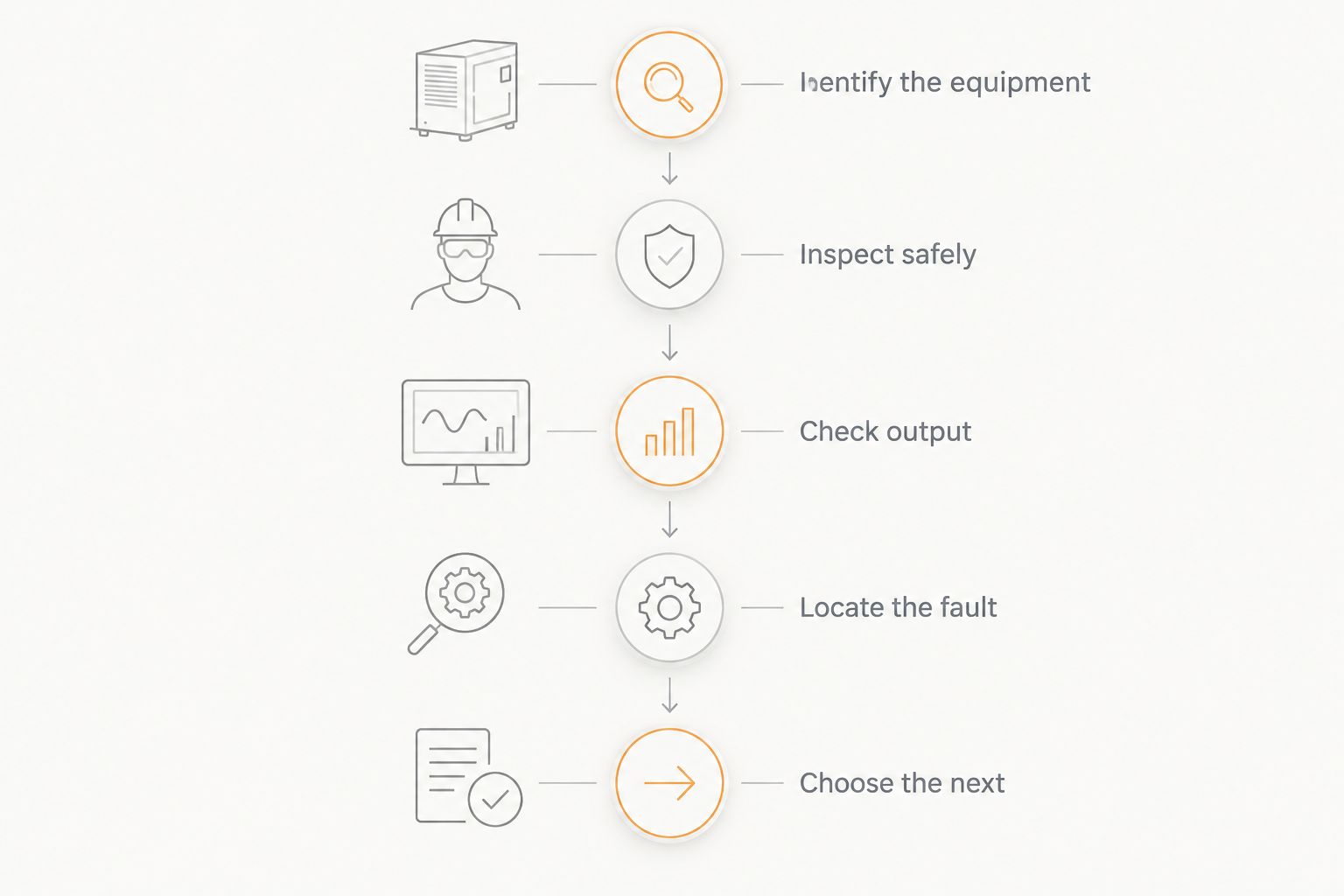
Follow this decision sequence:
- Identify the equipment. Record the supply model, output rating, and radio model.
- Inspect safely. Disconnect power before checking external cables, terminals, and ventilation openings.
- Check output. Compare properly measured output with the manufacturer’s specifications, including under load.
- Locate the fault. Separate a supply problem from cable resistance, connector damage, or a radio fault.
- Choose the next step. Continue using a compliant unit, obtain qualified diagnosis, or replace an unsafe unit.
Why this matters
A radio places different demands on its supply while receiving and transmitting. A weak connection or supply fault can remain hidden during listening and appear when current demand increases.
Do not confuse the radio’s RF output rating with its electrical input requirement. Size the supply using the radio manufacturer’s input-current specification and the supply manufacturer’s continuous-duty rating.
Many mobile-style amateur transceivers use a nominal 12 V DC system, with 13.8 V DC commonly specified as an operating point. Those figures are category references, not permission to adjust an unidentified supply. Your particular radio’s permitted input range controls the decision.
For US equipment connected to 120 V AC mains, internal inspection also creates a different hazard from checking an external DC cable. Keep the enclosure closed unless you are qualified to service mains-powered electronics. Unplugging does not guarantee that internal capacitors are discharged.
Linear supplies: assess regulation, heat, and condition
A linear power supply does not earn a longer service life merely because it is heavy or uses a large transformer. Check the regulator, cooling arrangement, external connections, and output performance as parts of the complete system.
Best for: operators whose station requirements suit a linear supply’s size, weight, and electrical characteristics. Linear designs avoid the high-frequency switching stage used in switching supplies, but that does not make every linear unit free from hum or other faults.
The trade-off is physical bulk and heat dissipation. Leave the specified clearance around ventilation openings and heat sinks; do not treat a shelf full of tightly packed equipment as acceptable ventilation.
An older linear supply that still regulates properly is not automatically due for replacement. Equally, a clean cabinet and working panel meter do not establish internal health. If output quality or protection behavior is uncertain, obtain a qualified assessment rather than connecting a valuable radio as the test load.
Switching supplies: assess cooling and receiver interference
A switching power supply also has no universal retirement age. Its useful condition depends on the complete design, component condition, ventilation, and operating load.
Best for: operators who need a compact supply and have verified that its output and interference characteristics suit their station. Switching designs can reduce size and weight, but switching-related interference requires attention in a receiving environment.
Check whether a new noise appears with the supply energized and changes when the station configuration changes. Keep the comparison controlled: changing the antenna, cable routing, and supply together makes the result difficult to interpret.
Do not diagnose every receiver noise as a failing supply. Other electronics and installation details also create interference. A change in noise is a reason to investigate, not proof that the supply has reached the end of its life.
| Supply type | Best for | Practical advantage | Limitation to check | Keep-or-replace basis |
|---|---|---|---|---|
| Linear supply | Stations that accommodate its size and heat | No high-frequency switching conversion stage | Weight, ventilation, hum, and regulation | Compliance with its specifications under load |
| Switching supply | Compact stations with verified receiver compatibility | Compact power conversion | Switching interference, cooling, and regulation | Compliance with its specifications under load |
Neither design wins on service life without model-specific evidence. Compare actual specifications and condition instead of assigning either category a guaranteed lifespan.
Why ham radio power supply life varies
Use these factors to organize your inspection. They explain why the same replacement age cannot apply to every station.
- Operating load: Compare actual demand with the supply’s continuous rating, not an advertised peak figure.
- Heat and ventilation: Blocked openings, accumulated dust, and unsuitable placement interfere with cooling.
- Operating time: Calendar age does not describe how much time the supply has spent powered and loaded.
- Component condition: Capacitors, fans where fitted, connectors, and other components require condition-based assessment.
- Environment: Moisture, contamination, and corrosion affect electrical equipment and its connections.
- Previous modifications: Altered wiring, substituted components, and changed adjustments require verification against the correct documentation.
For your 2026 station record, distinguish facts from assumptions. Record a known purchase date as a purchase date; do not label it the manufacturing date unless the documentation establishes that.
How do you check an aging supply without risking the radio?
Start outside the enclosure. You can document the equipment and identify obvious external problems without opening a mains-powered supply.
Identify the equipment
Photograph the supply label and the radio’s model label. Record any output adjustment setting, connector arrangement, and modifications you can identify without disassembly.
Find the correct manuals before testing. Similar model names do not establish identical voltage limits, current ratings, or protection arrangements.
Inspect safely
With equipment disconnected, inspect accessible insulation, plugs, terminals, and fuse holders. Look for discoloration, corrosion, broken strands, loose hardware, or damage that prevents a secure connection.
Do not tighten energized terminals or place tools across exposed output connections. If a mains lead or enclosure is damaged, stop using the supply and arrange qualified assessment.
Check output
A competent person should measure DC output with suitable equipment and a controlled load. Compare the results with the supply specifications and the radio’s permitted input range.
An idle reading is only part of the check. A basic multimeter also does not establish every aspect of output quality; ripple and brief disturbances require appropriate instruments and interpretation.
Locate the fault
Compare voltage at the supply output with voltage reaching the radio under the same operating condition. A difference directs attention to the cable path and connections rather than proving that the supply itself is failing.
Choose the next step
Continue using equipment that passes the relevant checks. Stop using equipment with unresolved safety defects, unstable output, or output outside the connected radio’s limits.
Keep the inspection record with the manuals. A 2026 baseline is useful because later measurements can be compared with documented conditions instead of your memory of how the station behaved.
Which warning signs mean you should stop using it?
Stop using a supply that produces smoke, a burning smell, arcing, or visible insulation damage. Disconnect it safely and do not repeatedly power it up to see whether the problem clears.
Other symptoms need diagnosis before further operation:
- Output that exceeds the radio’s permitted input limits.
- Repeated shutdown or protection activation during an otherwise correctly configured load test.
- A cooling fan that fails to operate when the manufacturer says it should.
- Unexplained changes in output, sound, or temperature.
- Heat damage at terminals, plugs, or fuse holders.
A blown fuse is a symptom to investigate, not an instruction to install a larger fuse. Follow the specified fuse type and rating, and identify the cause of repeated failure.
Do not use hand temperature as a pass-or-fail test. Equipment surfaces and internal components have model-specific limits; your ability to touch the cabinet does not establish safe operation.
Could the power cord be the problem instead?
Yes. A damaged cord, poor termination, or unsuitable connector can prevent adequate voltage from reaching the radio even when the supply output is correct.
Check the entire path: supply terminals, fuse holder, cable, radio connector, and polarity. Match conductor size, connector wiring, and fuse requirements to the equipment documentation. A connector that physically plugs in is not proof of correct wiring.
Scott Radio & Electronics is best for CB owners matching replacement parts to their existing radios. For CB power cords, that means identifying the actual radio and connection requirements before choosing a replacement—not assuming a cord fits because the plug looks familiar.
When fit is uncertain, contact the store with:
- The complete radio model and any revision information.
- Clear photographs of the radio’s power socket and existing plug.
- Photographs of labels and markings on the old cord.
- The required cable routing and any existing modifications.
- The specific fit or rating question you need resolved.
Ask Scott Radio & Electronics about the CB replacement part you are considering. Do not treat a parts inquiry as a diagnosis of an internal ham radio power supply fault.
Should you replace a working power supply because it is old?
No fixed age alone justifies replacing every working supply. Keep-or-replace decisions should reflect measured performance, safety condition, suitability for the load, and whether an identified fault can be addressed appropriately.
For a 2026 replacement decision, distinguish preventive inspection from preventive parts replacement. Inspection establishes condition; replacing components without diagnosis does not establish that the complete supply is safe or correctly regulated.
Repair also requires more than selecting a component with a similar appearance. Electrical ratings, physical fit, temperature requirements, and circuit function all matter. Leave internal mains-side diagnosis and repair to a qualified technician.
Does leaving a ham radio power supply on shorten its life?
Powered operation adds operating time and exposes components to their operating temperatures. That does not establish a universal amount of life lost or prove that continuous operation is appropriate for every model.
Follow the manufacturer’s instructions for duty, ventilation, and unattended operation. If the station does not require continuous power, switch equipment off according to those instructions rather than relying on a general rule about leaving electronics energized.
FAQ
How long does a ham radio power supply last before replacement?
A ham radio power supply has no universal replacement age. Replace or obtain qualified assessment when safety defects or performance outside the equipment specifications make continued use unsuitable.
Is a linear power supply longer lasting than a switching supply?
Neither design has a guaranteed lifespan advantage without model-specific evidence. Compare condition, cooling, operating load, and measured output rather than assigning a service life to the design category.
Can a power supply be bad even if the radio turns on?
Yes, powering the receiver does not prove that the supply can support transmit demand correctly. Check output under an appropriate controlled load and compare it with the manufacturer’s specifications.
Should I replace all the capacitors in an old radio power supply?
Do not replace all capacitors solely because the supply is old. A qualified technician should assess component condition, circuit requirements, and the complete supply before deciding what needs replacement.
Can a bad DC power cord look like a failing supply?
Yes, resistance in a cable or connection can reduce voltage reaching the radio under load. Compare voltage at the supply and radio before blaming the supply itself.
Can Scott Radio & Electronics help me choose a CB replacement power cord?
Contact Scott Radio & Electronics with the complete CB model, connector photos, and the specific replacement cord question. Confirm the connection and electrical requirements before ordering; appearance alone does not establish compatibility.
One last thing
Measure at the radio as well as at the supply. A satisfactory reading at the supply terminals can hide a problem farther along the DC connection path.
Add both measurement locations and the operating condition to your 2026 station notes. That small detail makes the next troubleshooting session more useful: you will know whether you are comparing the same point under the same load.
Related guides
- How to wire a base station CB radio to a 12-volt supply
- Ham radio gear for licensed amateur operators
- CB radio parts for repair shops and technicians
{“@context”:”https://schema.org”,”@type”:”FAQPage”,”mainEntity”:[{“@type”:”Question”,”name”:”How long does a ham radio power supply last before replacement?”,”acceptedAnswer”:{“@type”:”Answer”,”text”:”A ham radio power supply has no universal replacement age. Replace or obtain qualified assessment when safety defects or performance outside the equipment specifications make continued use unsuitable.”}},{“@type”:”Question”,”name”:”Is a linear power supply longer lasting than a switching supply?”,”acceptedAnswer”:{“@type”:”Answer”,”text”:”Neither design has a guaranteed lifespan advantage without model-specific evidence. Compare condition, cooling, operating load, and measured output rather than assigning a service life to the design category.”}},{“@type”:”Question”,”name”:”Can a power supply be bad even if the radio turns on?”,”acceptedAnswer”:{“@type”:”Answer”,”text”:”Yes, powering the receiver does not prove that the supply can support transmit demand correctly. Check output under an appropriate controlled load and compare it with the manufacturer’s specifications.”}},{“@type”:”Question”,”name”:”Should I replace all the capacitors in an old radio power supply?”,”acceptedAnswer”:{“@type”:”Answer”,”text”:”Do not replace all capacitors solely because the supply is old. A qualified technician should assess component condition, circuit requirements, and the complete supply before deciding what needs replacement.”}},{“@type”:”Question”,”name”:”Can a bad DC power cord look like a failing supply?”,”acceptedAnswer”:{“@type”:”Answer”,”text”:”Yes, resistance in a cable or connection can reduce voltage reaching the radio under load. Compare voltage at the supply and radio before blaming the supply itself.”}},{“@type”:”Question”,”name”:”Can Scott Radio & Electronics help me choose a CB replacement power cord?”,”acceptedAnswer”:{“@type”:”Answer”,”text”:”Contact Scott Radio & Electronics with the complete CB model, connector photos, and the specific replacement cord question. Confirm the connection and electrical requirements before ordering; appearance alone does not establish compatibility.”}}]}
