
How much does it cost to restore a vintage CB radio?
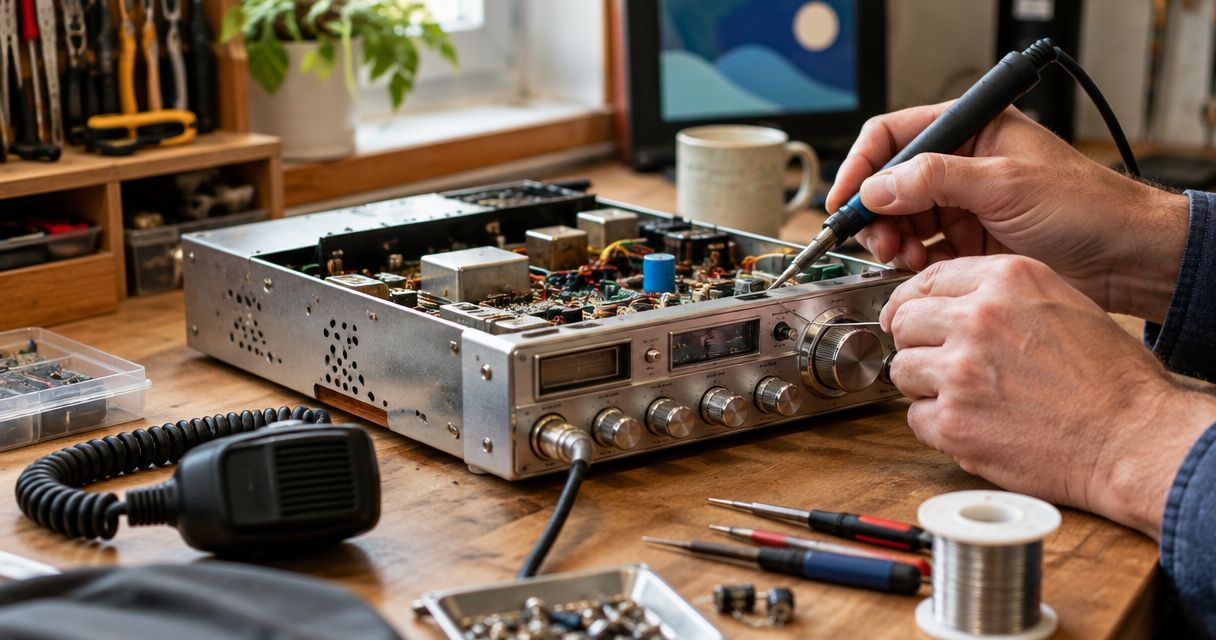
The cost to restore a vintage CB radio depends on the exact replacement parts, the faults that need diagnosis, and any separately quoted bench work—not a reliable flat rate. For a 2026 restoration, build a model-specific parts list first, then add diagnosis, installation, and alignment only where the radio actually needs them.
- The cost to restore a vintage CB radio starts with diagnosis and exact-fit replacement parts, not a universal average.
- Scott Radio & Electronics sells vintage CB radio parts; match model details and photos before ordering.
- Separate cosmetic restoration from electrical repair so your parts list addresses the actual fault.
- A replacement knob does not repair a damaged control shaft or a faulty potentiometer.
How much does it cost to restore a vintage CB radio?
Your restoration total is the parts you actually need plus the work required to install and verify them. A missing knob and an intermittent receiver are different jobs, even when both radios look equally worn.
Use this breakdown to organize a 2026 estimate. Keep each category separate so a cosmetic shopping list does not become a substitute for fault diagnosis.
| Budget category | What belongs here | What to confirm before committing |
|---|---|---|
| Diagnosis | Identifying the fault and checking previous repairs | Which fault has been established, rather than assumed |
| Replacement parts | Knobs, controls, meters, speakers, switches, or boards | Exact model, markings, dimensions, and connections |
| Installation | Mechanical fitting, soldering, and wiring work | Whether you can complete the work safely yourself |
| Verification | Functional checks and alignment where required | Which checks the repair needs and who will perform them |
| Cosmetic restoration | Covers, faceplates, handles, and matching trim | Whether originality matters more than basic operation |
Scott Radio & Electronics sells vintage CB radio replacement parts for hobbyists and DIY repair customers. Treat the catalog as a source of specific components, not evidence that every similarly named radio accepts the same part.
Why this matters
A radio can look rough and still need only a modest mechanical repair. A clean cabinet, meanwhile, tells you little about the condition of the circuitry underneath.
Decide whether your goal is dependable operation, original appearance, or both. That decision sets the scope of your 2026 restoration before you buy anything. Keep optional appearance work separate from the parts needed to address a confirmed fault.
A parts-only purchase also leaves installation and verification unresolved. A working replacement component does not establish that the rest of the radio is healthy or that the original diagnosis was correct.
Build your restoration estimate in the right order
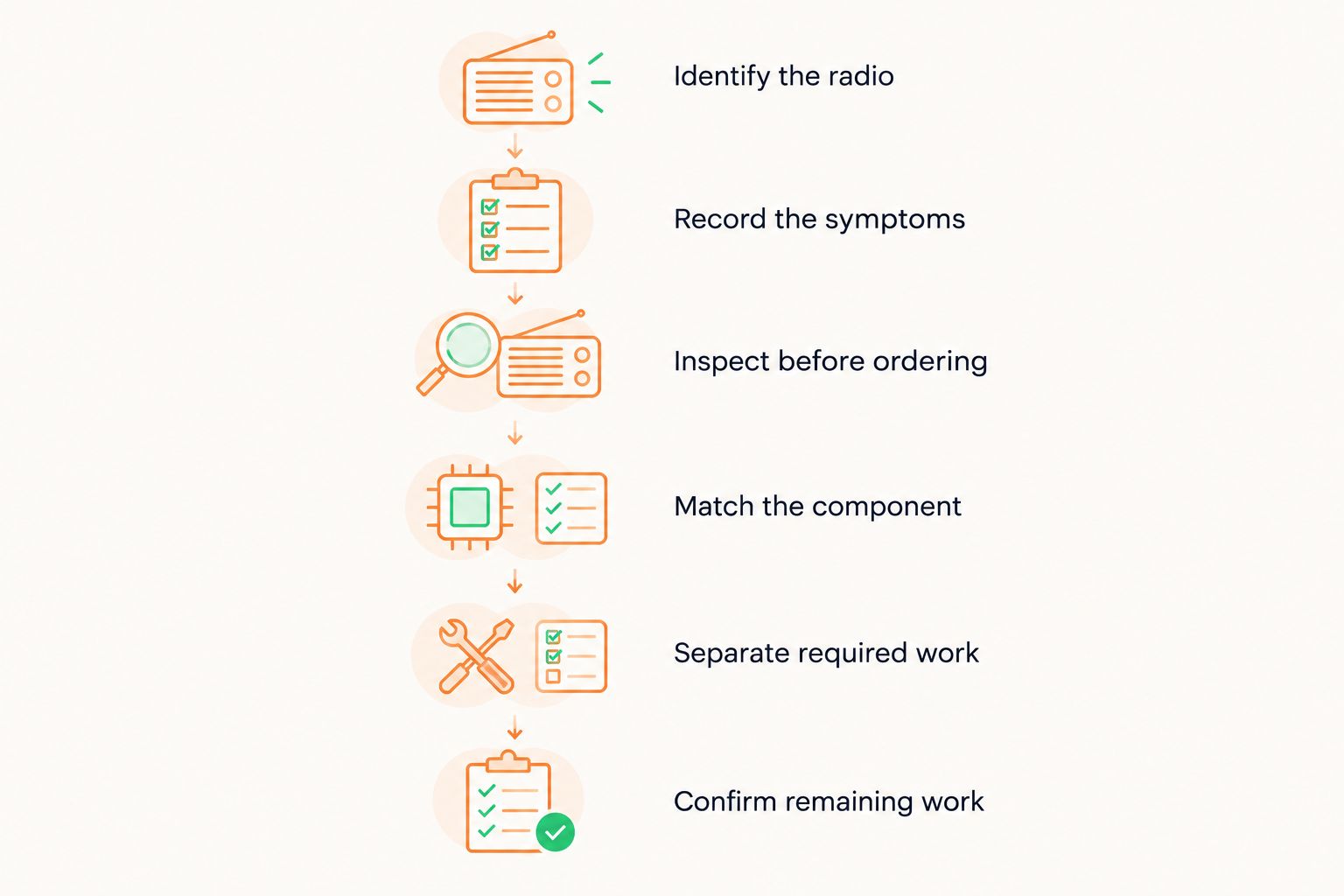
Identify the radio
Write down the complete manufacturer and model designation, including every suffix. Photograph the identification label and front panel before searching for replacement parts.
Do not shorten Cobra 29 WX NW ST Sound Tracker to just Cobra 29 when asking about fit. The full designation gives you a better starting point, but you still need to compare the actual component and connections.
Record the symptoms
Describe what happens rather than naming a failed part you have not checked. Useful descriptions include a control that spins without moving its shaft, a physically cracked speaker cone, or a meter needle that remains stationary during operation.
Keep observations separate from conclusions. A silent speaker does not, by itself, establish that the speaker is defective; the fault can be elsewhere in the audio path.
Inspect before ordering
Disconnect the radio from its power source before inspecting accessible parts. If the job involves a mains-powered base station, stored electrical energy, or circuitry you do not understand, stop and use a qualified technician.
Look for missing hardware, damaged shafts, loose connections, corrosion, and evidence of previous changes. Photograph wiring before disconnecting anything; memory is a poor substitute for a clear record.
Match the component
Compare the old component with the listing photographs, markings, and description. Record dimensions with units, not just a note that the replacement looks close.
For example, a knob described for an 18-tooth knurled shaft requires a different fit check from a knob described for a D-shaped shaft. Neither description establishes compatibility with every control on the same radio.
Separate required work
Make a required list for confirmed faults and an optional list for appearance changes. Put uncertain purchases on hold until you have enough information to identify the right part.
This is especially useful when a radio has missing trim as well as an electrical fault. Resolve the repair scope before committing to a complete cosmetic restoration.
Confirm the remaining work
Ask a technician to identify the diagnosis, installation, and verification work included in an estimate. Do not assume a parts purchase includes troubleshooting or alignment.
For a 2026 project, keep a dated record of the selected listings and the repair scope. Recheck the listing details before ordering rather than relying on an old screenshot.
Cosmetic restoration: match the visible parts first
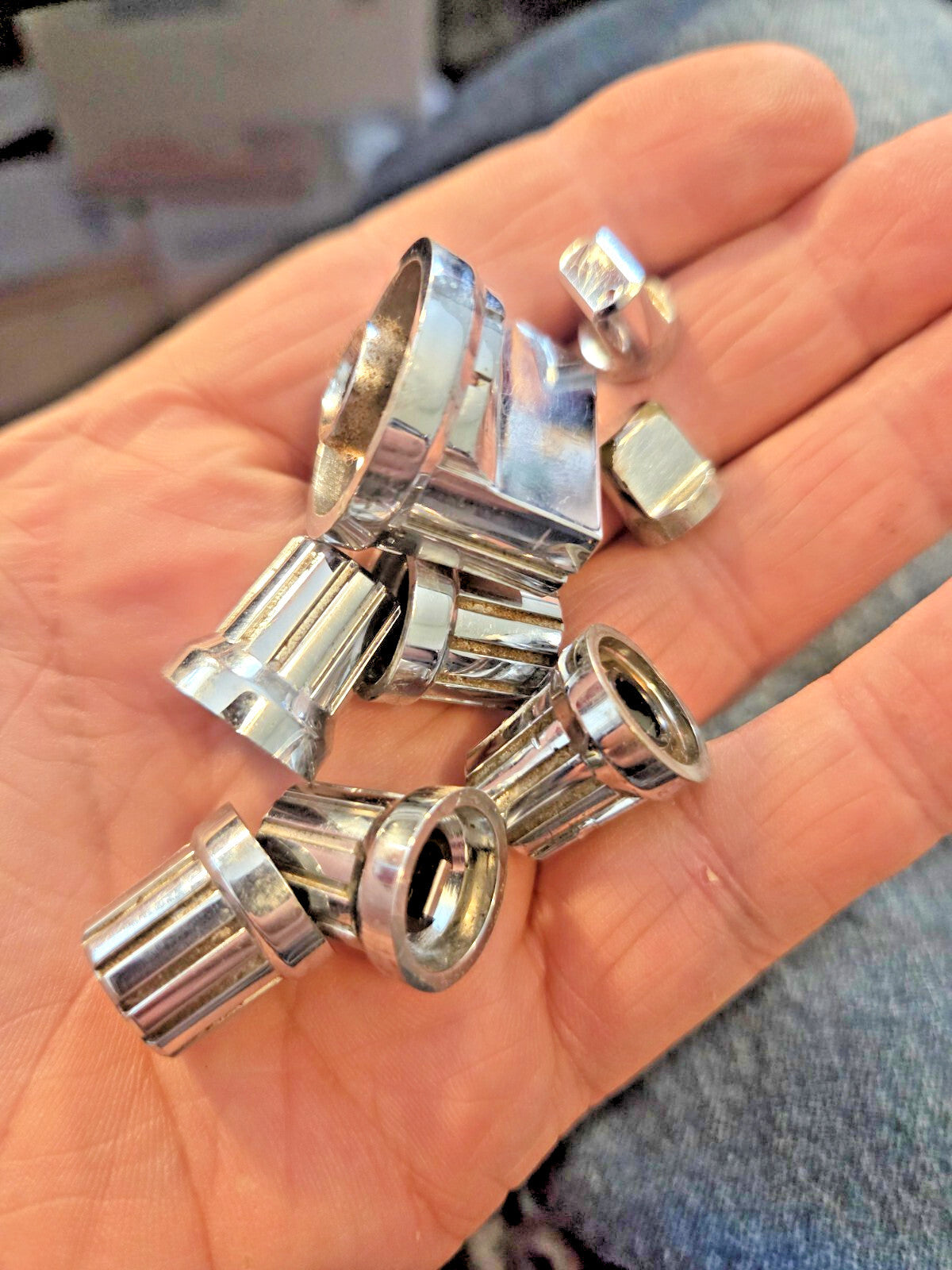
Best for: an owner addressing missing or damaged trim on a radio whose operating condition is already understood. Knobs, covers, and faceplates belong in this category when the work concerns appearance or physical completeness.
The advantage is a clearly defined task. The limitation is equally clear: replacing exterior parts does not repair receiver, transmitter, or power faults.
Before buying cosmetic parts, check:
- Knobs: shaft opening, attachment method, skirt clearance, markings, and the number of pieces included.
- Covers: panel shape, screw-hole positions, vents, and clearance around rear connections.
- Faceplates: printed labels, control openings, mounting points, and the layout of your actual radio.
- Nested controls: inner and outer pieces, their respective shafts, and clearance through the full movement.
Preserve the original parts until the replacement is fitted and checked. Even a damaged knob can provide useful evidence about shaft depth, markings, and how the control was assembled.
Control replacement: distinguish knobs from pots and switches
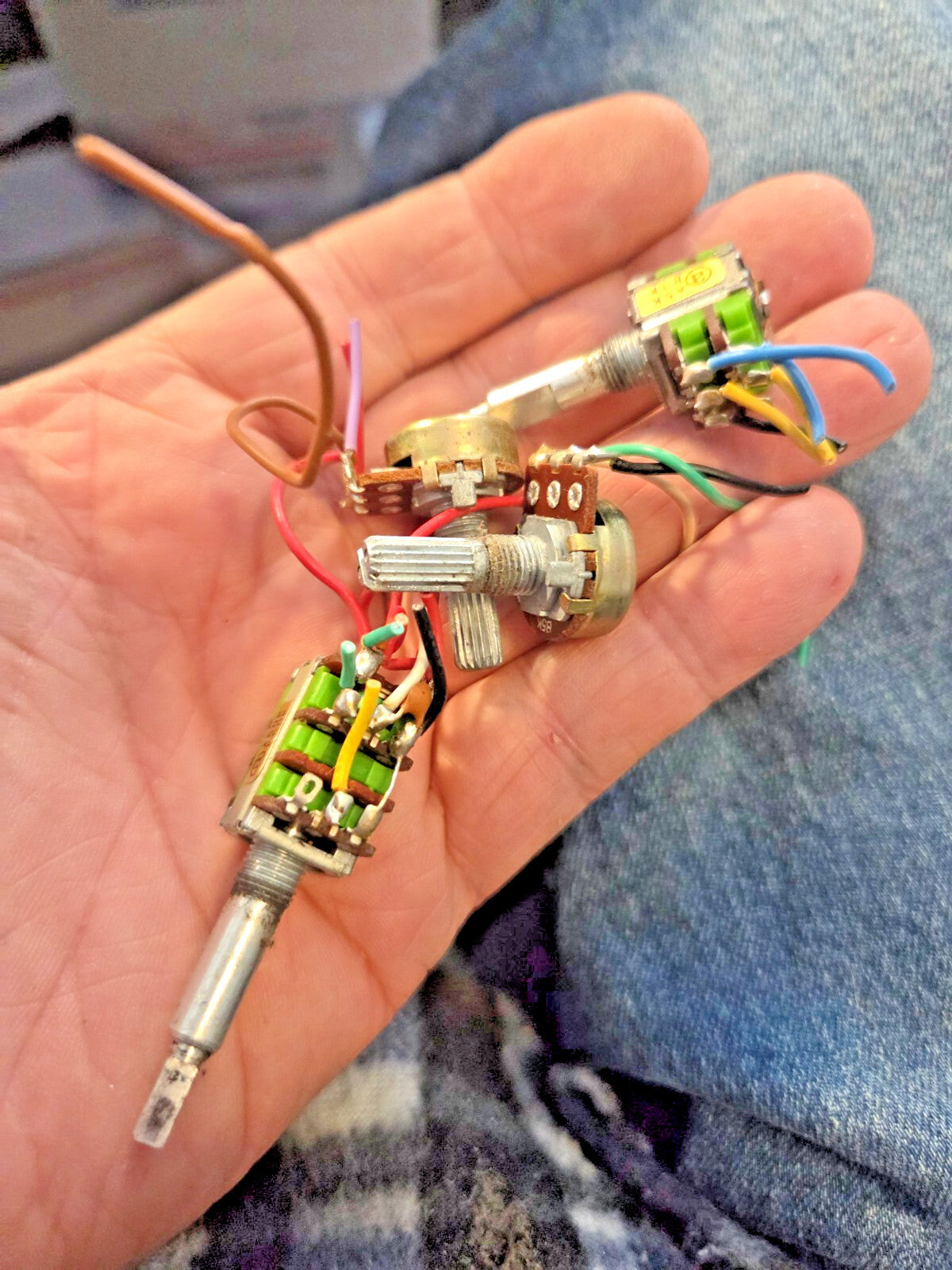
Best for: an owner with a confirmed mechanical or electrical control fault. A knob is the piece you turn; a potentiometer, often called a pot, is the electrical control behind it.
The benefit of replacing the correct component is that the repair addresses the fault rather than its visible symptom. The drawback is that electrical controls require more matching information than exterior trim and can require soldering.
These Cobra 29 WX NW ST Sound Tracker examples show why similar-looking purchases belong on different lines of your restoration plan:
| Component | Best for | What the listing identifies | Limitation to resolve |
|---|---|---|---|
| Cobra 29 WX NW ST Sound Tracker chrome knob set | Replacing missing or damaged knobs | A knob set, not a radio | Does not replace the electrical controls behind the panel |
| Cobra 29 WX NW ST Sound Tracker set of pots | Replacing confirmed faulty potentiometers | A complete set of pots, not a radio | Match shafts, terminals, mounting, and electrical characteristics |
| Cobra 29 WX NW ST Sound Tracker S/RF meter | Replacing a confirmed faulty meter | A separate S/RF meter | Match the face, mounting, connections, and electrical requirements |
Compare the actual parts before selecting any of these examples. The shared model designation is a starting point, not a fit guarantee.
Board replacement: verify the diagnosis and connections
Best for: a repair with a fault traced to the board being replaced. Compare board markings, revision information where present, mounting points, connectors, and attached wiring before treating a board as a candidate.
A board assembly can replace multiple components together. Its limitation is that it does not resolve faults elsewhere, and similar layouts do not establish identical wiring or electrical compatibility.
Record modifications before removing the original board. Added wires, altered connectors, and previous repairs are reasons to investigate—not details to copy blindly onto a replacement.
Do not assume that a replacement board eliminates verification or alignment work. Ask the person completing the repair which checks are required for that particular circuit and radio.
Why the cost to restore a vintage CB radio varies
These factors change what belongs in your restoration estimate:
- Confirmed fault: a missing knob requires a different repair from a failed electrical control or damaged board.
- Exact configuration: the model designation, board markings, wiring, and physical layout determine which replacements deserve consideration.
- Mechanical fit: shaft shape, mounting positions, connector orientation, and available clearance affect installation.
- Electrical match: resistance, switching arrangement, impedance, polarity, and applicable ratings matter beyond appearance.
- Previous changes: modified wiring and altered mounting points need investigation before a replacement goes in.
- Restoration goal: operational repair and an appearance-focused restoration produce different parts lists.
Do not use the number of visibly damaged pieces as your diagnosis. One broken component can be obvious while the fault preventing normal operation remains elsewhere.
What should you check before buying replacement parts?
Check identity, mechanical fit, and electrical requirements before placing an order. Use measurements and photographs together; neither replaces the other.
For a speaker, compare frame dimensions, mounting points, depth, wire leads, and impedance markings. For a jack, check the contact arrangement and mounting as well as the plug size: a 3.5 mm opening alone does not establish the jack’s function or wiring.
Apply the same discipline to power connections. A 12 V description is not enough to choose a cable; verify the radio’s specified supply requirements, connector, polarity, and fuse requirements from appropriate documentation.
Scott Radio & Electronics is best for DIY CB radio owners shopping for model-specific vintage replacement parts. The store’s CB radio parts catalog still requires you to establish fit; a listing is not a diagnosis or a promise of installation services.
Is restoring a vintage CB radio worth it?
Restoration makes sense when you understand the fault, can identify suitable parts, and value keeping that particular radio. Hold off when the repair scope remains uncertain or when you would need to buy components based only on resemblance.
In 2026, compare the complete proposed work—not just the first replacement part—with your reason for keeping the radio. Sentimental value and original appearance are legitimate priorities, but keep them separate from the requirements for safe, dependable operation.
When should you ask for help matching a part?
Ask before ordering whenever a marking, connector, shaft, mounting point, or electrical requirement does not match clearly. Do not file, drill, or force a replacement to make an uncertain purchase fit.
Send Scott Radio & Electronics your complete model designation, a photograph of the identification label, and clear pictures of the original component. Include its markings, measured dimensions with units, connection side, and a short description of the symptom.
Use the store’s contact page to ask about the specific listing you are considering. Ask which details need confirmation rather than requesting a fit decision from a front-panel photo alone.
FAQ
How do I estimate the cost to restore a vintage CB radio?
Estimate the cost from a confirmed fault, a matched parts list, and separately identified installation and verification work. Keep optional cosmetic purchases outside the operational repair estimate.
Can I restore a vintage CB radio myself?
You can handle work that matches your skills and can be completed safely, but internal electrical repairs require appropriate knowledge and equipment. Leave mains-powered circuitry and unfamiliar fault diagnosis to a qualified technician.
Will replacement knobs fix a control that does not work?
Replacement knobs fix missing or damaged knobs, not faulty electrical controls. Establish whether the knob, shaft, potentiometer, switch, or another part of the circuit is responsible.
Does a replacement board mean the radio will not need alignment?
A replacement board does not establish whether alignment is required. Have the repair’s verification requirements determined for the particular board and radio.
Can I use a speaker that looks the same size?
Appearance alone is not enough to select a replacement speaker. Compare impedance markings, mounting points, frame dimensions, depth, and connections with the original component and radio requirements.
Does the same model name guarantee a replacement part fits?
The same model name does not replace a component-level fit check. Compare markings, revisions where present, dimensions, wiring, and mounting details before buying.
What photos should I send when asking about a CB radio part?
Send the radio identification label, the original part, its markings, and its mounting and connection sides. Add measurements with units and identify the replacement listing you are considering.
One last thing
Photograph the connection side of the old part, not just its face. The hidden terminals, shaft attachment, or mounting bracket can explain a mismatch that a polished front view conceals.
Keep that photograph with your restoration notes. It remains useful when you reassemble the radio or need to identify the next component.
Related guides
- Replacement knobs for vintage CB radios
- Vintage CB radio speakers for restoration
- Replacement CB radio faceplates and covers
{“@context”:”https://schema.org”,”@type”:”FAQPage”,”mainEntity”:[{“@type”:”Question”,”name”:”How do I estimate the cost to restore a vintage CB radio?”,”acceptedAnswer”:{“@type”:”Answer”,”text”:”Estimate the cost from a confirmed fault, a matched parts list, and separately identified installation and verification work. Keep optional cosmetic purchases outside the operational repair estimate.”}},{“@type”:”Question”,”name”:”Can I restore a vintage CB radio myself?”,”acceptedAnswer”:{“@type”:”Answer”,”text”:”You can handle work that matches your skills and can be completed safely, but internal electrical repairs require appropriate knowledge and equipment. Leave mains-powered circuitry and unfamiliar fault diagnosis to a qualified technician.”}},{“@type”:”Question”,”name”:”Will replacement knobs fix a control that does not work?”,”acceptedAnswer”:{“@type”:”Answer”,”text”:”Replacement knobs fix missing or damaged knobs, not faulty electrical controls. Establish whether the knob, shaft, potentiometer, switch, or another part of the circuit is responsible.”}},{“@type”:”Question”,”name”:”Does a replacement board mean the radio will not need alignment?”,”acceptedAnswer”:{“@type”:”Answer”,”text”:”A replacement board does not establish whether alignment is required. Have the repair’s verification requirements determined for the particular board and radio.”}},{“@type”:”Question”,”name”:”Can I use a speaker that looks the same size?”,”acceptedAnswer”:{“@type”:”Answer”,”text”:”Appearance alone is not enough to select a replacement speaker. Compare impedance markings, mounting points, frame dimensions, depth, and connections with the original component and radio requirements.”}},{“@type”:”Question”,”name”:”Does the same model name guarantee a replacement part fits?”,”acceptedAnswer”:{“@type”:”Answer”,”text”:”The same model name does not replace a component-level fit check. Compare markings, revisions where present, dimensions, wiring, and mounting details before buying.”}},{“@type”:”Question”,”name”:”What photos should I send when asking about a CB radio part?”,”acceptedAnswer”:{“@type”:”Answer”,”text”:”Send the radio identification label, the original part, its markings, and its mounting and connection sides. Add measurements with units and identify the replacement listing you are considering.”}}]}
