
SSB CB Comparison for Serious Radio Users
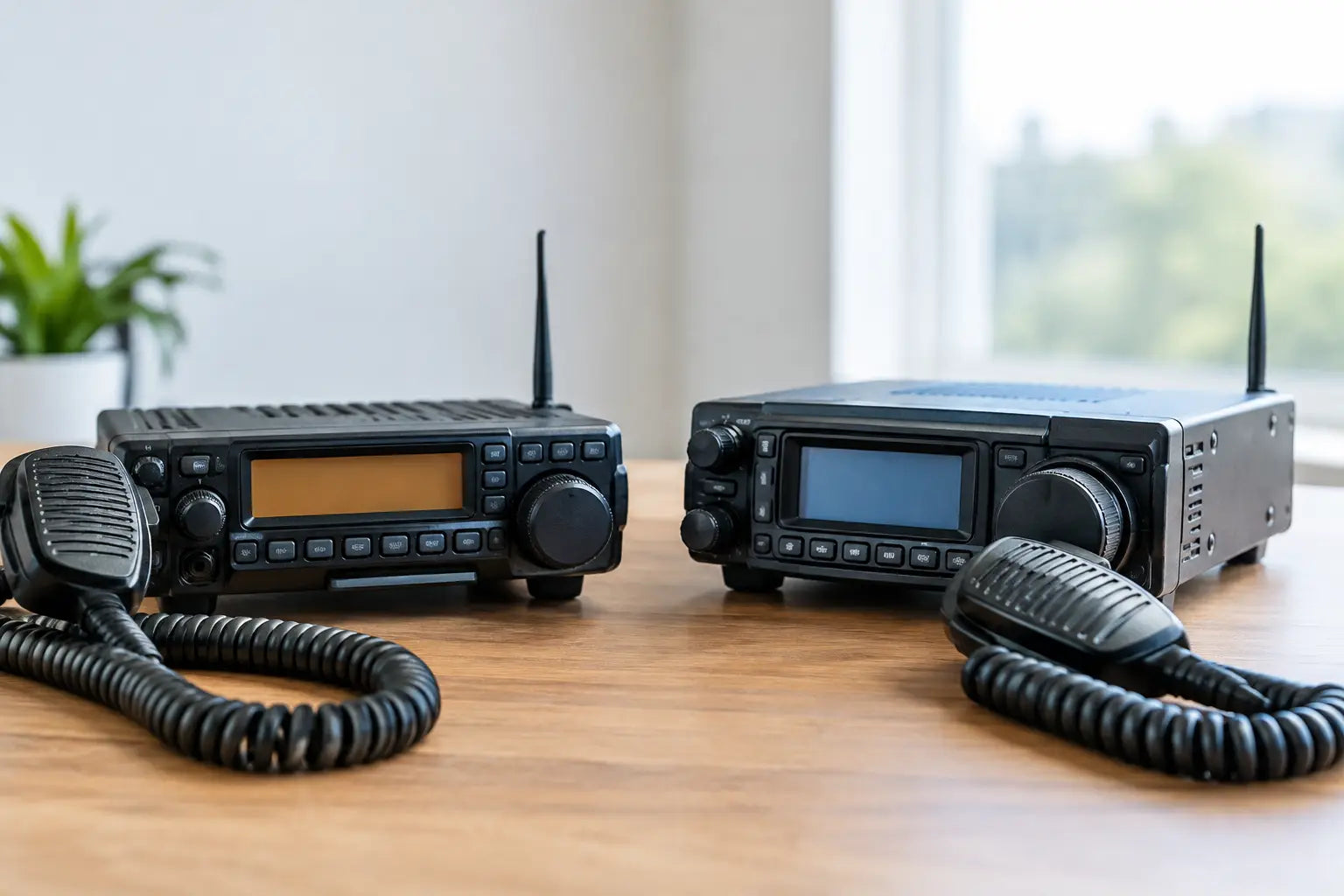
A good SSB CB comparison starts where the sales talk usually stops: with the signal coming through your speaker. When traffic is packed onto AM, an SSB operator can often carry on a clean conversation farther down the road with less channel clutter. That is not magic, and it does not make sideband the right choice for every driver. But for operators who care about range, weak-signal performance, and having a real radio conversation instead of shouting over noise, SSB earns its reputation.
The short version is simple. AM CB is easier, more common, and ideal for quick local communication. Single sideband – SSB – is more efficient, usually reaches farther under comparable conditions, and rewards a properly installed station. If you are buying a radio for highway chatter, a trail group, or occasional local use, AM may cover the job. If you want to talk skip, work distant stations, or get more out of a carefully tuned antenna system, sideband is where things get interesting.
SSB CB Comparison: AM and Sideband Basics
A standard CB radio uses AM, or amplitude modulation, on the familiar 40 CB channels. It is straightforward: select a channel, key the microphone, and talk. Nearly every CB operator understands it, which is a big reason AM remains the default for truckers, local groups, and casual users.
SSB uses the same CB band and channel plan, but transmits only one sideband of the AM signal. On CB, that means upper sideband (USB) or lower sideband (LSB). By leaving out the carrier and the unused sideband, SSB uses its power more efficiently. Under current FCC CB rules, AM is limited to 4 watts carrier power, while SSB may run up to 12 watts peak envelope power (PEP).
That power difference matters, but it is not the whole story. The narrower SSB signal also puts more of the transmitted energy where the conversation actually lives. The result can be a stronger, cleaner signal at the receiving end, especially when stations are weak or conditions are favorable.
There is a catch: SSB voices sound like a garbled cartoon if the receiver is not tuned precisely. Both stations need to be on the same sideband and close to the same frequency. That is why a sideband radio has a clarifier control. It lets you fine-tune the received voice until it sounds natural. Spend five minutes using one and it becomes second nature. Ignore it and you will wonder why everybody sounds like they are talking from the bottom of a coffee can.
Why Sideband Usually Talks Farther
Distance on CB depends on the entire station: antenna height, antenna tuning, ground plane, coax condition, surrounding terrain, noise level, and propagation. No radio badge or oversized wattage claim can fix a poorly mounted antenna with a high SWR. QUALITY MATTERS, especially between the radio and the antenna.
With that said, SSB has three practical advantages. First, its legal PEP limit gives the signal more punch than a legal AM carrier. Second, it is more spectrum-efficient. Third, sideband operators tend to run better equipment and pay closer attention to setup, which helps the whole station perform as it should.
For local ground-wave communication, the difference may be modest. Two vehicles a few miles apart on flat highway may communicate perfectly well on AM. In rough terrain, around heavy electrical noise, or at the edge of usable range, SSB can make the difference between a readable conversation and a broken-up transmission.
When ionospheric conditions support skywave propagation, often called skip, sideband really shows its value. A properly set up SSB CB can make contacts hundreds or even thousands of miles away. That is exciting, but it also means the channel can fill up fast when conditions open. Long-distance operation is not guaranteed, and it changes with solar activity, time of day, season, and plain old radio luck.
Where AM CB Still Wins
Do not write off AM just because sideband is technically more capable. AM is still the practical choice in plenty of real-world situations.
If you are running in a convoy, working around a jobsite, talking to nearby family vehicles, or monitoring highway information, AM is convenient because more people are there. Channel 19 remains a familiar place for road traffic, while off-road clubs and local groups often establish their own AM channel. You can hand someone a basic CB microphone, tell them the channel number, and get moving.
AM radios also tend to cost less and have fewer controls to learn. For a vehicle that needs simple short-range communication a few times a year, that simplicity is a feature, not a compromise. A compact AM CB with a quality antenna installation will outperform a fancy sideband radio connected to a bad antenna every day of the week.
The best choice depends on who you need to reach. An SSB radio cannot force nearby AM-only users onto sideband. Fortunately, most SSB CB radios can operate on AM too. That makes them a flexible option for an operator who wants everyday AM access but does not want to be limited when the band opens up.
What to Look for in an SSB CB Radio
In an SSB CB comparison, do not focus only on the front-panel name or a big power number. Look for features that make the radio easier to use and keep it stable on the air.
A clear, stable SSB receiver is the starting point. Frequency stability matters because drifting makes voices harder to understand. A useful clarifier, RF gain control, squelch, and a good noise blanker or automatic noise limiter can make a major difference in a vehicle full of ignition and road noise. A signal meter helps, but remember that meters vary from radio to radio. Your ears are still the final judge.
A proper external speaker is often one of the smartest upgrades for a mobile station. Many factory speakers are small and mounted where road noise can bury weak audio. A quality speaker placed closer to the operator can make a modest radio sound far more usable.
Microphone compatibility matters too, particularly with older or discontinued radios. Pin wiring is not universal. A microphone that physically plugs in may still have the wrong wiring for transmit, receive, audio, or channel controls. Before replacing a mic on a Galaxy, Cobra, Uniden, President, Ranger, Stryker, Connex, or older legacy set, verify the exact radio model and pin configuration. Guessing is a fine way to create a dead key, no audio, or no receive problem that was not there five minutes earlier.
The Antenna Is Not an Accessory
Here is the part some radio sellers would rather skip: your antenna system decides whether the radio can do its job. An SSB CB deserves a properly mounted, properly tuned antenna and sound coax. A meter reading that is comfortably low across the channels you use is the goal. Check SWR before serious transmitting, especially after changing antennas, coax, mounts, or vehicles.
Mobile setups need a solid mount with good metal-to-metal bonding where appropriate. Rust, paint, loose hardware, pinched coax, and bargain-bin connectors can turn a promising installation into an RF headache. For a base station, antenna height and location are often worth more than chasing another radio feature. Get the antenna as clear of obstructions as practical and keep the feed line in good condition.
Never use an antenna tuner, amplifier, or questionable modification as a substitute for correcting high SWR. Stay within FCC CB rules and use equipment as intended. The cleanest signal is usually the one produced by a legal radio, a well-tuned antenna, and an operator who takes the time to set things up right.
Should You Buy an SSB CB?
Buy an SSB CB if you want more than short-range local chatter. It makes sense for serious highway users, hobbyists, rural operators, collectors who enjoy classic sideband rigs, and anyone who wants to monitor AM while retaining the ability to work USB or LSB. Lower sideband is a common gathering place for CB sideband activity, with Channel 38 LSB widely used, though it is not a private channel and conditions can change the crowd quickly.
Choose a straightforward AM CB if your communication is strictly local and your group already uses AM. Put the saved money into a quality antenna, mount, coax, and installation. That is not settling for less. It is buying the equipment that fits the job.
For owners keeping an older radio alive, the choice may be repair rather than replacement. A tired microphone, cracked channel selector, weak meter lamp, noisy switch, missing knob, or worn power lead does not mean a good radio belongs on a shelf. Scott Radio & Electronics carries the kind of model-specific parts and accessories that keep classic equipment talking when generic electronics shops have long since moved on.
A sideband radio will not replace a good antenna or good operating habits. What it can do is give a well-built CB station more room to work, more range when conditions allow, and a cleaner path through the noise. That is a worthwhile upgrade for anyone who still believes radio is better when the conversation can actually be heard.
