
CB Versus Ham Radio: Which Radio Fits You?
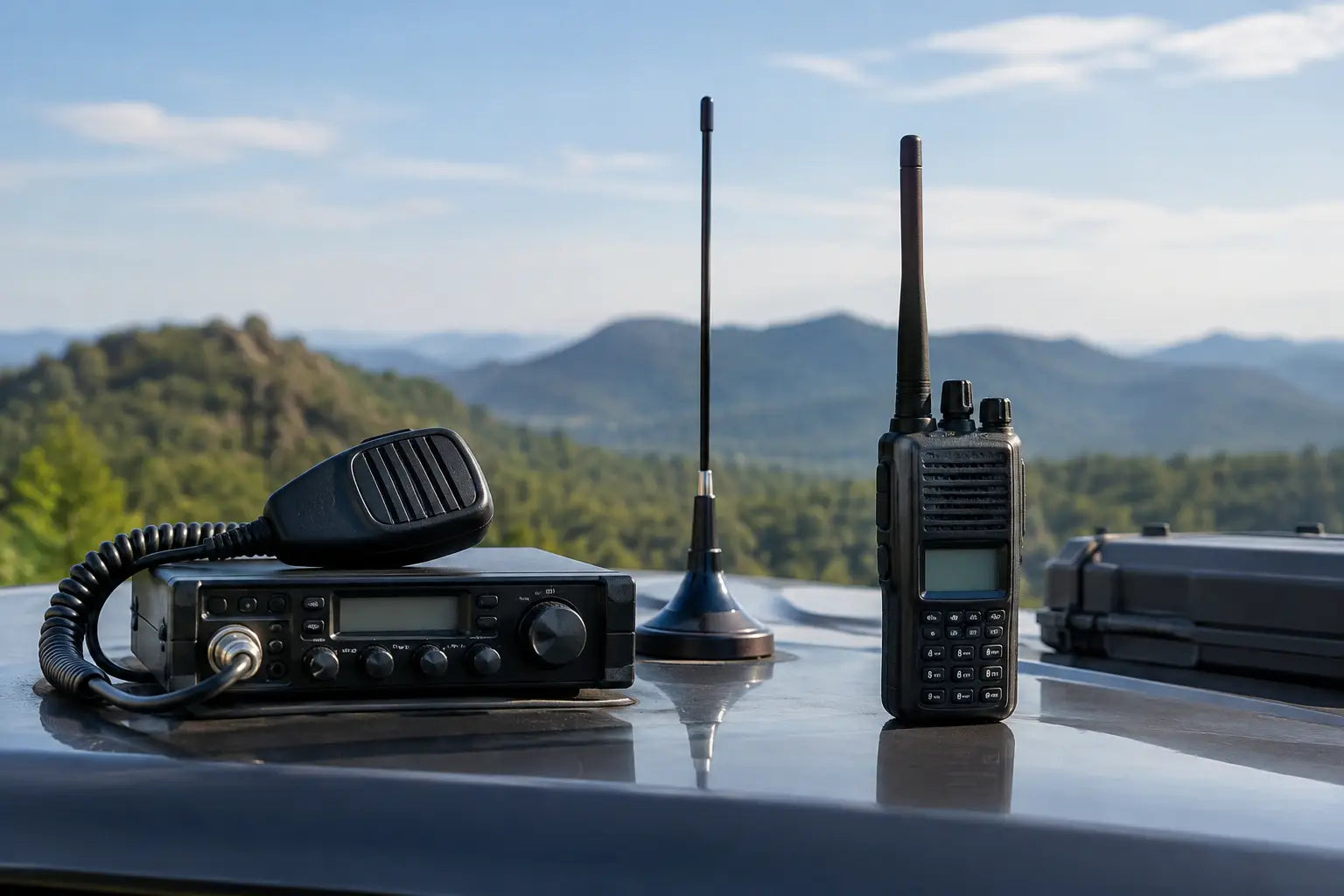
A radio can be a working tool, a weekend hobby, a lifeline on the trail, or the one piece of gear that keeps a long haul from getting lonely. The CB versus ham radio decision is not about which crowd is better. It is about what you need the radio to do when you key the microphone.
CB is fast, familiar, and built for immediate local communication. Ham radio offers far more bands, modes, technical depth, and long-distance potential, but it asks more from the operator. One can be installed in a pickup this afternoon. The other can turn into a lifelong station-building habit with antennas in places your neighbors may not fully appreciate.
CB Versus Ham Radio at a Glance
Citizens Band radio operates on 40 channels around 27 MHz. In the United States, no individual license or exam is required for legal CB operation. That is the big attraction. Buy a properly certified radio, install a properly tuned antenna, follow the FCC rules, and you are on the air.
Amateur radio, commonly called ham radio, requires an FCC license to transmit. Most newcomers start with the Technician class license, earned by passing a 35-question exam. That license opens useful VHF and UHF privileges for local communication and repeaters, plus limited access to parts of the HF bands. General and Amateur Extra licenses add considerably more HF access.
The practical difference is simple. CB is a common-language, ready-to-go service for nearby traffic, travel, off-road groups, and casual calling. Ham radio is a licensed radio service designed for experimentation, learning, public service, local networks, and contacts that can stretch around the country or around the globe.
Why CB Still Earns Its Place
CB has been declared dead more times than a garage-sale base station, yet it remains useful because it solves a real problem with very little barrier to entry. Truckers still use Channel 19 for road information in many areas. Off-road clubs use CB because nearly anyone can join the conversation without studying for a test. Farmers, campers, and road-trip families appreciate a radio that works beyond cellular coverage without requiring a subscription.
A good CB setup is more than a radio bolted under the dash. Antenna location, ground plane, coax condition, SWR adjustment, microphone condition, and power connections all matter. A modest radio with a correctly installed antenna will often outperform an expensive unit fed through damaged coax or a poorly mounted antenna. That is not glamorous, but radio never has been impressed by a shiny faceplate.
CB range depends heavily on terrain, installation, antenna height, and local noise. Vehicle-to-vehicle communication might be a few miles under normal conditions, sometimes less in dense terrain or city traffic. Under favorable conditions, CB signals can travel much farther through atmospheric skip. That can be exciting, but it also means distant stations may cover up the local conversation you actually need.
Legal CB operation has limits. The FCC restricts transmitter power and prohibits modified or non-certified equipment on CB. A radio labeled for 10 meters is not automatically legal to use as an 11-meter CB, even if somebody says it has been “converted.” If dependable communication is the goal, a legal radio, a quality antenna, and a properly checked installation beat folklore every time.
What Ham Radio Gives You That CB Cannot
Ham radio is not one band or one kind of operator. It covers a large collection of frequencies and operating styles. A Technician operator with a 2-meter or 70-centimeter mobile radio can use local repeaters to extend practical coverage far beyond simple radio-to-radio range. In many communities, repeaters are maintained by clubs and volunteers who keep coverage available for travelers, weather spotters, events, and everyday contacts.
Move into HF privileges and the map gets much bigger. Amateur operators can make contacts across states and countries using voice, Morse code, digital modes, and other techniques. The results vary with propagation, antenna design, band conditions, time of day, and operating skill. Ham radio is not a guaranteed worldwide intercom. It is better than that for people who enjoy figuring out why the signal is there one minute and gone the next.
Ham also supports a wider technical playground. You can build antennas, restore vintage gear, experiment with digital communication, participate in emergency preparedness nets, chase distant stations, or collect contacts through contests and awards. The rules permit meaningful experimentation within license privileges, which is a major reason many radio people eventually catch the bug.
That freedom comes with responsibility. You must identify your station with your call sign, operate within your license class and authorized frequencies, and understand basic FCC regulations. The exam is manageable, but it is not optional. That requirement filters out some buyers, while others find it is exactly what makes ham radio more rewarding.
Range Is Not a Fair One-Number Comparison
People often ask which has more range, CB or ham. The honest answer is ham radio, but that answer needs some repair work before it is useful.
A 50-watt VHF ham mobile radio talking directly to another mobile may have a similar line-of-sight limitation to a CB installation, depending on antennas and terrain. Put that ham radio through a well-placed repeater, however, and the coverage area can expand dramatically. Use an HF amateur station with the right antenna and band conditions, and contacts hundreds or thousands of miles away are possible.
CB can also make very long contacts when 27 MHz propagation opens. Those conditions are not controllable, and they are not a substitute for dependable local communications. If your priority is talking to the vehicles in your convoy, a well-tuned CB remains practical. If your priority is reaching a regional net, a distant friend, or a repeater during a trip, amateur radio has more options.
Equipment Costs: Start Small, Buy Smart
Neither service requires a fortune, but both punish bad shortcuts. For CB, the core system is a radio, antenna, mount, coax, power wiring, and an SWR meter or antenna analyzer. A replacement microphone, external speaker, noise-canceling mic, or better antenna can make an older radio enjoyable again without replacing the whole setup.
For ham, a handheld radio is often the lowest-cost entry point after licensing. It is useful for learning local repeater operation, but it is not the final answer for every operator. A mobile radio with a properly mounted external antenna is usually a much stronger vehicle setup. HF gear adds cost and installation complexity, especially when antenna space, grounding, and power supply requirements enter the picture.
Used equipment can be a smart buy when it is inspected carefully. Look for intact controls, clean connectors, correct power leads, readable displays, unmodified circuitry when legality matters, and model-specific accessories that actually fit. A missing bracket, oddball microphone plug, damaged meter, or unavailable switch can turn a bargain into a parts hunt. Then again, some of us enjoy the parts hunt. Scott Radio & Electronics was built for people who refuse to retire a good radio just because one hard-to-find component gave up.
Choose CB If Your Need Is Immediate and Local
CB makes the most sense when you want simple communication with other CB-equipped people. That includes highway travel, trail rides, work vehicles, family trips, and local groups that already use the 40-channel band. It is also a solid choice for someone who enjoys classic radios and wants a straightforward restoration project with a real-world purpose.
Choose your antenna with as much care as your radio. A compact antenna may fit a garage or trail rig better, but it often gives up efficiency compared with a longer, well-positioned whip. Check SWR before transmitting regularly, protect the coax from pinches and water, and do not assume every noise problem starts inside the radio. Ignition noise, poor grounds, LED accessories, and cheap USB chargers are frequent offenders.
Choose Ham Radio If You Want More Room to Grow
Ham radio is the better fit when you want repeaters, regional coverage, emergency communication training, technical experimentation, or long-distance operating. It is also ideal for the person who looks at an antenna project and thinks, “I could build that,” instead of, “Absolutely not.”
Start with the license class that gets you moving, then choose equipment around how you will actually operate. A handheld is great for walking around an event or checking into a nearby repeater. A 50-watt mobile rig is better for serious vehicle use. A base station deserves planning around antenna placement, grounding, feed line, and power. Buy for the job, not for the biggest number printed on the box.
The Better Radio Is the One You Will Use
CB and ham radio can live in the same garage, truck, or hobby room without starting a family feud. Plenty of operators use CB for road chatter and ham for repeaters, public-service events, and technical fun. The services do different jobs, and a radio enthusiast is allowed to enjoy both.
If you need a radio now for local conversation, start with a legal CB, a quality antenna, and an SWR check. If you want broader capabilities and do not mind earning the privilege, study for the ham license and build from there. Either way, keep the installation clean, respect the rules, and never underestimate what a properly maintained older radio can still do when the microphone clicks.
